UK’s Biome Bioplastics to investigate new source of organic chemicals for bioplastic manufacture

wood in ukThe UK’s innovation agency, the Technology Strategy Board, has awarded a grant to a consortium led by Biome Technologies, to investigate a bio-based alternative for the oil derived organic chemicals used in the manufacturer of bioplastics.

The research will be undertaken by the group’s bioplastic division Biome Bioplastics, one of the UK’s leading developers of natural plastics, in conjunction with the University of Warwick’s Centre for Biotechnology and Biorefining.

The £150,000 grant (approximately 215,000 €) is part of the Technology Strategy Board’s ‘Sustainable high value chemical manufacture through industrial biotechnology’ technical feasability competition, which funds projects that apply sustainable bio-based feedstocks and biocatalytic processes in the production of chemicals.

Continue reading

Sprin Technologies: Trieste’s response to the Danish giant Novozymes

trieste“Currently what happens is that innovation created in Italy is then exploited abroad, due to a  lack of direct access to on-site manufacturing facilities or industrial pilot plants. Closer cooperation between SMEs and large companies could accelerate the  scale-up and industrialization steps, which often represent  demanding  investments for SMEs and –in particular at this rather difficult economical stage that translate in very unlikely access to credit, making it not always affordable”.

To say it is Sara Cantone, co-founder and Chief Operating Officer of Sprin, a spin-off of the University of Trieste founded in December 2007 that operates in the research, development, production and commercialization of advanced products for implementing sustainable chemical processes. In particular, Sprin – that since 2010 has had the participation of  Venture Capital, AlAdInn Venture – is focused on the production of immobilized enzymes and the supply of services for the development of bio-catalyzed processes. With Cantone, we talk about the bioeconomy and in particular the role played by the enzymes in its development.

Interview by Mario Bonaccorso


Continue reading

Abengoa starts operations at the plant that uses waste-to-biofuel technology

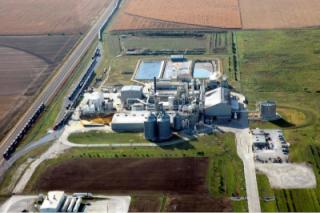
abengoa-york.jpgAbengoa, the Spanish sustainable technologies company, has started operations at the demonstration plant that uses waste-to-biofuels (W2B) technology. The plant has a capacity to treat 25,000 tons of municipal solid waste (MSW), from which up to 1.5 million liters of bioethanol will be produced for use as fuel.

The demonstration plant in Babilafuente (Salamanca, Spain) uses W2B technology developed by Abengoa (7,089 million euros sales in 2012 and 90.6 million euros/year of investment in R&D) to produce second generation biofuels from MSW using a fermentation treatment and enzymatic hydrolysis. During the transformation process, the organic matter is subjected to various treatments to produce organic fiber that is rich in cellulose and hemicellulose, which can subsequently be converted into bio-ethanol.

Continue reading