Interview with Simão Soares, Ceo of SilicoLife. The bioeconomy is the key to overcome the economic crisis in Portugal

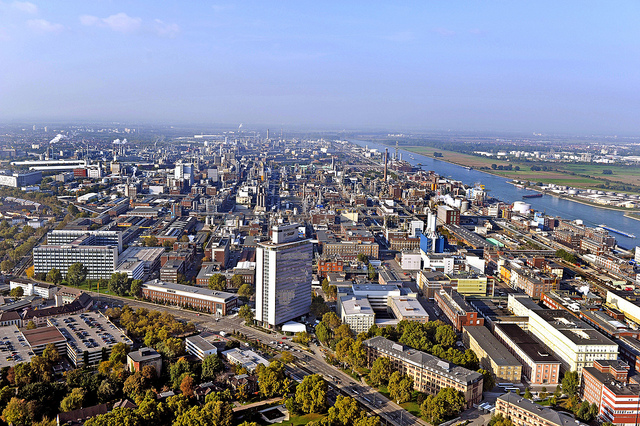
parliament in lisbonIn Portugal, the unemployment rate has reached a record level of 17.7 percent, the highest in the European Union after Greece (26.4%) and Spain (26.3%), compared to an EU average of 10.9%. 952,000 people are unemployed, out of a total population of 10,5 million inhabitants.

For 2013, the center-right government led by Pedro Passos Coelho provides additional anti-crisis measures to comply with the financial assistance program of the Troika (EU, ECB, IMF), whose inspectors have already been twice in Lisbon to control the progress of the accounts. Among the measures there is the reduction of approximately 5 percent of public employees (30,000 of 700,000).

The bioeconomy could also be for Portugal an important way out of the crisis. We speak with Simão Soares, Ceo of the young company SilicoLife, one of several companies involved in the fields of bioeconomy created in Portugal in recent years, specialized in bioinformatics.

Interview by Mario Bonaccorso

Continua a leggere

Bioeconomia: il rilancio italiano passa da Massa Marittima

platea.jpgIn Italia si comincia a parlare seriamente di bioeconomia. L’ultima occasione è stata offerta da un seminario che si è tenuto lo scorso 9 maggio a Massa Marittima, organizzato dalla Fondazione Arare dell’ex presidente di Confagricoltura, Federico Vecchioni, con la partecipazione di esperti, accademici, imprenditori e politici. Tra questi Paolo Bortolozzi, relatore al Parlamento europeo della Comunicazione sulla bioeconomia.

Proprio Bortolozzi nel suo intervento ha sottolineato come il settore della bioeconomia sia stimato oggi in Europa in 2000 miliardi di euro e dia lavoro a 22 milioni di persone. Si tratta perciò di un’area su cui investire con forza per generare lavoro e nuovi posti di lavoro. La Commissione europea stima inoltre che per ogni euro investito nei settori della bioeconomia oggi si possa generare un valore aggiunto di 10 euro entro il 2025.

A Massa Marittima si è discusso di come l’Italia possa agganciare questo sviluppo grazie all’uso intelligente delle risorse biologiche e rinnovabili, provenienti dalla terra e dal mare, finalizzato ad uno sviluppo industriale ed energetico ecologicamente e socialmente sostenibile. La Commissione europea sta sostenendo infatti un processo decisionale volto a tradurre in atti normativi coordinati una strategia indirizzata all’innovazione per una crescita sostenibile dell’economia continentale, rendendola più efficiente e competitiva, con un positivo e significativo impatto sui livelli occupazionali.

Continua a leggere

Now is the time in Europe to bring advanced second-generation biofuels to the market

mazda_bp_biobutanol.jpgThe Leaders of Sustainable Biofuels (LSB), a group composed by the Chief Executive Officers of seven Leading European biofuel producers and European airlines, met the European Parliament (EP) in Brussels last week. The meeting was hosted by the ITRE (Industry, Research and Energy) Committee, chaired by Mrs Amalia Sartori, to discuss the positions of the EP ITRE Committee on the European Commission revision of the Renewable Energy Directive – RED. The positions expressed by Mr Alejo Vidal Quadras, the Rapporteur of the ITRE Committee, and reported in his draft ITRE Draft Opinion, were supported by the Leaders of Sustainable Biofuels.

The Leaders, whose chairman is Guido Ghisolfi, President of Mossi & Ghisolfi Group, headquartered in Tortona (Piedmont, Italy), sent a clear message to the Parliament members: “Second Generation Advanced Biofuel technologies are ready to compete with conventional biofuels, with companies keen to invest in commercial projects given appropriate conditions”.

Continua a leggere

Solazyme and AkzoNobel enter into an agreement targeting the development of advanced tailored oils

AkzoNobel.jpgSolazyme, Inc., a renewable oil and bioproducts company headquartered in South San Francisco (California, USA), and AkzoNobel, a leading global paints and coatings company and a major producer of specialty chemicals headquartered in Amsterdam (The Netherlands), announced that they have entered into an agreement targeting the development of advanced tailored oils and commercial sales for near-term product supply.

“Tailored oils – is written in a press release of both companies – can enhance or replace petroleum-derived chemicals, and improve upon the performance of plant oils and animal fats”. The Solazyme and AkzoNobel agreement is rooted in a shared commitment to sustainability and high-performance products derived from triglyceride oils.

Continua a leggere

Interview with Richard Riggs, BASF Venture Capital. Looking for start-ups in the bioeconomy

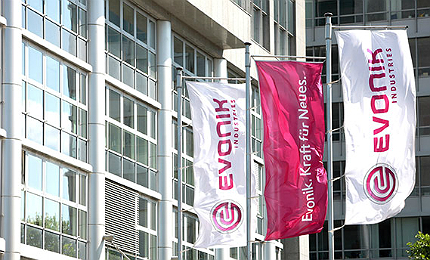
BASF_flags“Europe is indeed very competitive in terms of new scientific discoveries. Innovation is about more than developing new technologies however, but also about transferring these technologies from the lab into a sustainable business. It is clear in this respect that the USA is in the lead globally – in the USA it is easier for startups to obtain adequate capital for growth as well as to obtain industry experienced managers”. To say it is Richard Riggs, one of the thirteen managers that has around the world, looking for strategic and profitable investments, BASF Venture Capital, the venture fund of the global chemical giant BASF (over 72 billion euros turnover in 2012 and income before special items of approximately 6.6 billion). In this interview, Riggs talks about bioeconomy and investment options in this area carried out by the German chemical company based in Ludwigshafen, because “bio-based chemicals and materials, also known as white biotechnology are gaining more and more interest worldwide and also at BASF Venture Capital”.

Interview by Mario Bonaccorso


Continua a leggere

The Bioeconomy Leadership Award to DuPont

dupont-industrial-bioscience.jpgThe Symposium on Biotechnology for Fuels and Chemicals (SBFC) has awarded DuPont with its 2013 Bioeconomy Leadership Award. 2013 marks the first year of this award, aimed at honoring an organization for demonstrated and sustained leadership excellence in advancing the development of the biobased economy. DuPont was recognized for its pioneering work in two strategic areas: renewably sourced materials and fuels.

The annual SBFC conference brought together from 29 April to 2 May in Portland (Oregon, Usa) industrial, academic and government experts to discuss the latest progress and breakthroughs in the research, development and deployment of biobased fuels and materials.

Continua a leggere

EFIB 2013: Brussels world capital of the bioeconomy from 30 September to 2 October

square-brussels-cube-by-dayEuropaBio, The European Association for bio-industries, and Smithers Rapra unveil highly-anticipated agenda for the European Forum for Industrial Biotechnology (EFIB) from 1-2 October 2013 taking place in the heart of Brussels at SQUARE. Officially launched by Elio di Rupo, Prime Minister of Belgium, EFIB’s opening plenary brings together a host of keynote speakers including Rudolf Strohmeier, Deputy Director General R&I at the European Commission; Maria da Graça Carvalho, Rapporteur on Horizon 2020 in the European Parliament and CEOs of Ecover and Galactic. Followed by exciting partnership perspectives from the Plant PET Technology Collaborative and a session lead by Ian Hudson, President of DuPont EMEA, examining the triggers for big business to make the shift towards the biobased economy. All speakers set the scene for another outstanding year, and transform the event from conference to congress.

Continua a leggere

Cereplast announces new bioplastic resin grade with 51% algae biomass

Seymour-plant-CereplastCereplast, Inc., a leading manufacturer of proprietary biobased, compostable and sustainable bioplastics, has announced a new bioplastic resin grade Biopropylene(R) A150D, an injection molding grade manufactured with 51% post-industrial algae biomass.

The post-industrial algae grade is the first offering with 51% algae content and will be commercially available this quarter. Additionally, the biomass content dramatically reduces the carbon footprint of the final product while reducing the petroleum-based plastic content. Biopropylene A150D has low to no odor due to the discovery of a post-industrial process that significantly reduces the distinctive smell that is inherent to algae biomass.

Continua a leggere

Synergy in two approaches to breaking down cell walls of biomass

nrelEnzymes could break down cell walls faster – leading to less expensive biofuels for transportation – if two enzyme systems are brought together in an industrial setting, new research by the Energy Department’s National Renewable Energy Laboratory suggests. A paper on the breakthrough, “Fungal Cellulases and Complexed Cellulosomal Enzymes Exhibit Synergistic Mechanisms in Cellulose Deconstruction,” appears in the current edition of Energy and Environmental Science. Co-authors include five scientists from NREL, the U.S. Department of Energy’s primary national laboratory for renewable energy and energy efficiency research and development, and one from the Weizmann Institute in Israel.

Continua a leggere

The Italian new government and the bioeconomy: everything needs to change, so everything can stay the same

Enrico Letta and President of the Italian Republic, Giorgio NapolitanoItaly’s new government has been sworn in, ending two months of political deadlock, after politicians agreed on Saturday to form a three-party coalition, which will also include technocrats in key positions.

The impression, however, is to be faced with a handful of men and women engaged in a desperate defense of a power gained in many ways fortuitously, on the verge of sinking at any time in front of a chaos which is hard to dominate. With Silvio Berlusconi came out again as big winner and ready to pull the plug as soon as the polls will comfort him about the possibility of winning elections (even with the current electoral law, which does not guarantee the governability and for no other called by its author, Senator of Lega Nord Roberto Calderoli, like “a crap”). In short, it seems that once again in Italy, to quote from The Leopard by Giuseppe Tomasi di Lampedusa, “everything needs to change, so everything can stay the same”. Continua a leggere