Biotechnology company LanzaTech partnered with lululemon athletica inc., an athletic apparel company, to create the world’s first yarn and fabric using recycled carbon emissions that would otherwise be emitted to the atmosphere as pollution. LanzaTech uses nature-based solutions to produce ethanol from waste carbon sources, and is working with partners India Glycols Limited (IGL) and Far Eastern New Century to convert ethanol to polyester.
After a challenging time during the pandemic, for the first time in over a year the ethanol industry will gather at large in Iowa, hoping also to welcome innovations that provide a substantial boost in efficiency and counteract other production challenges. At the Fuel Ethanol Workshop (FEW), the world’s largest ethanol event, Novozymes will be introducing two advanced technologies, in yeast and fiber, that have significant potential to achieve this and more.
“By continuing to combine the biological synergies and sustainability of our enzymes, yeast, and technical service platforms, Novozymes is establishing new performance expectations for ethanol production,” said Brian Brazeau, Novozymes’ President for North America and Vice President, Agricultural & Industrial Biosolutions, Americas. “We love taking on tough challenges to create something meaningful and sustainable for our customers and the world – and we cannot wait to bring these two new innovations to FEW this year after such an extraordinary time for the industry.”
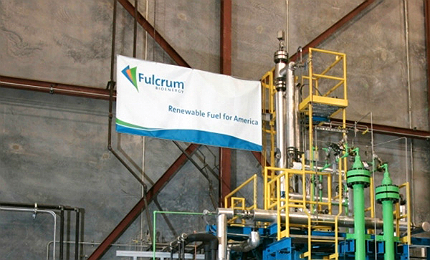
Fulcrum BioEnergy, Inc., a pioneer in the production of low-carbon fuels, completed construction of the world’s first commercial-scale plant converting household garbage into low-cost, zero-carbon transportation fuels. Through Fulcrum’s revolutionary process, the Sierra BioFuels Plant located east of Reno, Nevada, will convert 175,000 tons of prepared municipal solid waste (MSW) into approximately 11 million gallons of zero-carbon syncrude annually, which will then be upgraded to transportation fuels such as sustainable aviation fuel, renewable diesel and renewable gasoline – Fulcrum FuelTM. With construction complete, start-up and commissioning on the plant has commenced and fuel production is expected to begin during the fourth quarter of 2021.
Clariant, a focused, sustainable and innovative specialty chemical company, and India Glycols Limited (IGL), a leading company in the manufacturing of green technology-based chemicals, successfully created their 51-49% joint venture for renewable ethylene oxide (EO) derivatives after receiving all necessary regulatory approvals. The joint venture will operate under the name Clariant IGL Specialty Chemicals Private Limited.
The Danish Energy Technology Development and Demonstration Program (EUDP) awards 81 million DKK (app. 11 billion €) to the green ammonia project managed by the three partners Skovgaard Invest, Vestas, and Haldor Topsoe. The project aims at building a 10 MW green ammonia plant directly coupled to local wind and solar power generation. The plant is expected to be operational by 2023, making it the world’s first green ammonia plant of its kind.
Total Corbion PLA, a 50/50 joint venture between Total and Corbion, kicked off the front-end engineering design stage for its new 100,000 tons per annum Poly Lactic Acid (PLA) plant in Grandpuits, France. The plant, due to be operational in 2024, will be the first of its kind in Europe. It would make Total Corbion PLA the global market leader in PLA, firmly positioned to cater for the rapidly growing demand for Luminy® PLA resins.
Neste and Boston Consulting Group (BCG) have signed a new agreement for the purchase of Neste MY Sustainable Aviation Fuel™, to be delivered to airlines SAS and Finnair, covering the volume of all the flights with these carriers taken by BCG employees in the Nordics. Through this new partnership, BCG expects to significantly reduce greenhouse gas emissions on flights with these airlines.
Nouryon has signed a 10-year agreement with Metsä Fibre, part of Metsä Group. Under the long-term agreement, the Dutch company will provide Metsä Fibre with sodium chlorate for its new bioproduct mill in Kemi, Finland.
Metsä Group is investing 1.6 billion euros to build the mill which, once operational, will produce 1.5 million tons of softwood and hardwood pulp each year. As a key element of the partnership, Nouryon will invest in its Oulu production facility in Finland by expanding its production capacity and upgrading the facility to manufacture sodium chlorate with renewable energy.
Marco Reus. Evonik is popular as main sponsor of German Football team Borussia Dortmund
Evonik has made a follow-up investment in the biotechnology start-up In Ovo through its venture capital unit. The investment comes as the young company reaches the commercialization stage for its technology and is bringing its gender-testing machine for eggs to the market. Together with co-investor VisVires New Protein Capital, Evonik Venture Capital has provided several million euros in further funding. Evonik Venture Capital first invested in the Leiden, Netherlands-based company in 2018, providing support for a technology that helps solve one of the egg industry’s biggest ethical problems.
The Spanish private research organisation CARTIF has completed the first assessment focusing on the environmental and social performance of Metsä Group’s Kuura textile fibre. Kuura is still in a R&D phase and the production process to make it is currently being tested and further developed at a tonne per day demo plant in Äänekoski, Finland. The outcome of the assessment conducted by CARTIF is very good for Kuura. In regard to environmental performance, when comparing to other commercial man-made cellulosic fibres (viscose and lyocell), and to cotton, Kuura shows the lowest impact on climate change, supporting its viability as a sustainable solution in the market of textile fibres.