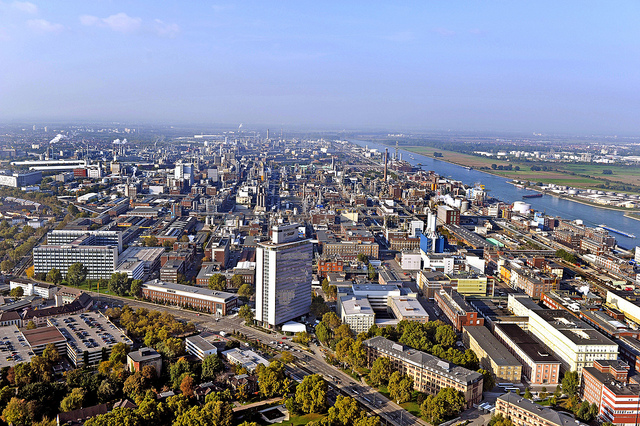
BASF and Renmatix will jointly scale up the Renmatix Plantrose process for the production of industrial sugars based on lignocellulosic biomass. The two companies signed a non-exclusive joint development agreement. The parties have agreed to key financial terms for future commercial licenses, which BASF can exercise at its discretion. The collaboration follows BASF’s $30 million investment in Renmatix in January 2012.
“Canada has a tremendous biomass base. In Alberta we have 22m+ ha of agricultural land and 35+m of forest land. We see groups coming from around the world to access our biomass”. To say it is Stan Blade, Chief Executive Officer at Alberta Innovates – Bio Solutions, a research agency funded by the Government of Alberta that works with partners to identify, coordinate and fund research projects. It helps solve industry challenges with solutions that deliver economic, environmental and social benefits. In this interview with Blade we talk about the bioeconomy in Canada, with a special focus on Alberta, which is investing strongly in converting the province’s biomass resources beyond traditional commodities into higher value products. These new products increase economic returns from Alberta’s natural resources. Biomass includes agriculture and forestry fibre, by-products and other feedstocks such as livestock manure and municipal solid waste.
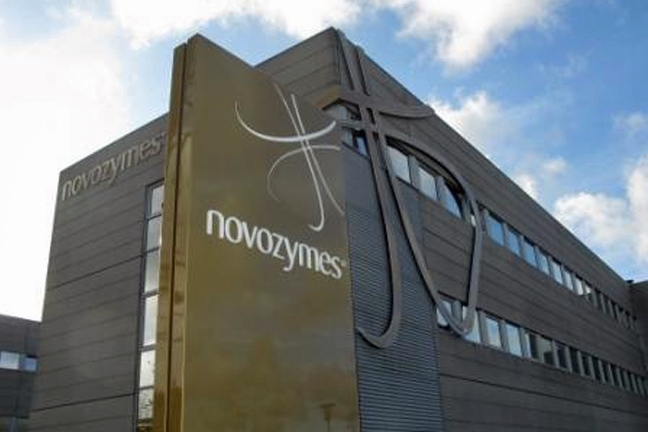
“The biobased economy has an unprecedented ability to reconcile growth, jobs, rural development and sustainability. The World Economic Forum estimates that by 2020, biorefining could generate globally over € 225 billion Euro per year across the whole biomass value chain. Policy makers around the globe are waking up to the potential of the biobased economy progressively”. To say it in this exclusive interview with Il Bioeconomista is Sebastian Søderberg, Vice President, Biomass Conversion, of Novozymes, the Danish biotech company with a strong focus on enzyme production and world leader in bioinnovation. With Søderberg we talk about bioeconomy, with a special focus on European policies to encourage the development of the sector: “A comprehensive policy – says the Danish top manager – should therefore stimulate both the demand (tax incentives, production support and feed in tariff) and supply (feedstock collection and supply-chain incentives) for biobased products as well as unlock the necessary investments for demonstration and first-of-its-kind commercial-scale plants (e.g. through the PPP on Biobased Industries)”.
A Spanish researcher has demonstrated, for the first time, the viability of using specific tobacco proteins (known as thioredoxins) as biotechnological tools in plants.
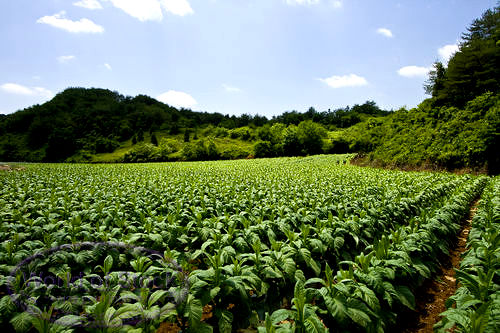
In her PhD thesis Ruth Sanz-Barrio, an agricultural engineer of the NUP/UPNA-Public University of Navarre and researcher at the Institute of Biotechnology (mixed centre of the CSIC-Spanish National Research Council, Public University of Navarre and the Government of Navarre), has managed to increase the amount of starch produced in the tobacco leaves by 700% and fermentable sugars by 500%. “We believe that these genetically modified plants” – she explained – “could be a good alternative to food crops for producing biofuels, and could provide an outlet for the tobacco-producing areas in our country that see their future in jeopardy owing to the discontinuing of European grants for this crop.”
European Parliament, BrusselsThe European Parliament called for a cap on the use of traditional biofuels and a speedy switchover to new biofuels from alternative sources such as seaweed and waste, in a vote on draft legislation yesterday. So called “first-generation” biofuels – from food crops – should not exceed 6% of fuel used in transport by 2020, amending the target from 10%.The measures aim to reduce greenhouse gas emissions that result from the increasing turnover of agricultural land to biofuel production.
Michael Carus, managing director of the nova-Institut
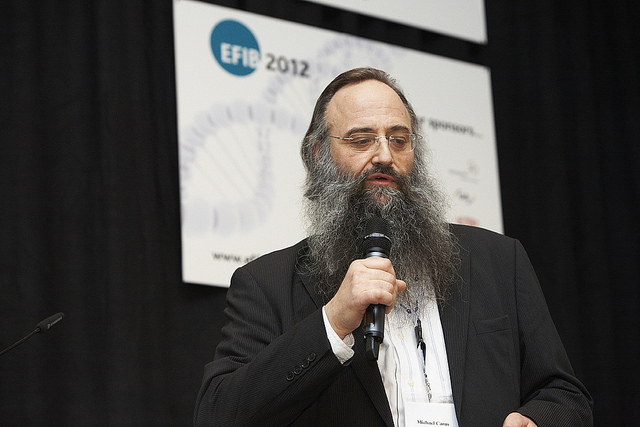
“A comprehensive analysis of hurdles carried out by nova-Institut shows that the RED (which will in future be associated with the FQD – Fuel Quality Directive 9870 – in the transport sector) is one of the main causes of the longstanding and systematic discrimination between material and energy uses. The RED hinders the development of material use and therefore that of the whole bio-based economy. Unfavorable framework conditions combined with high biomass prices and uncertain biomass supplies deter investors from putting money into bio-based chemistry and plastics – even though these would produce higher value and greater resource efficiency”. To say it is Michael Carus, physicist and managing director of the nova-Institut, the German private and independent Scientific Institute specialized in the bioeconomy, one of the most prestigious at the European level. In this interview with Il Bioeconomista, Carus uses the phrase “Misallocation of biomass” to define the effects of the RED (Renewable Energy Directive), since “this is blocking higher value material uses like chemicals and plastics from coming to fruition”. And explains his point of view on the first generation vs. second generation biofuels issue.
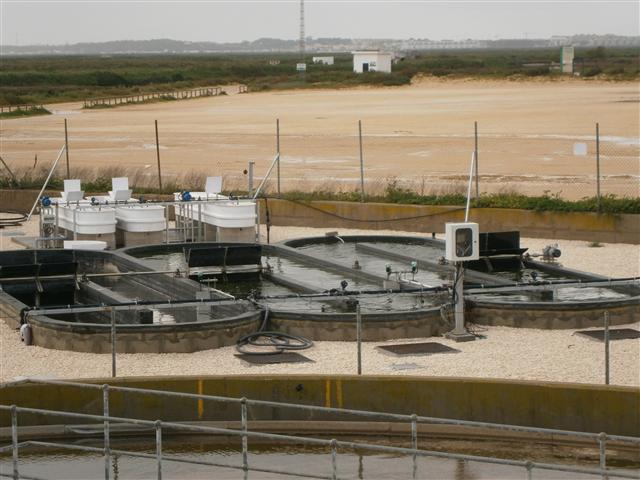
The raceways located at the Chiclana WWTP (march 2013)
A European Union-backed project to produce biofuels from algae moved a step forward last Thursday by producing its first crop of algae biomass at its site in Southern Spain. The “All-gas” project will cultivate fast-growing micro-algae by using the nutrients in wastewater and then by further processes generate biomethane which can be captured and used in transport fuel. Continue reading →
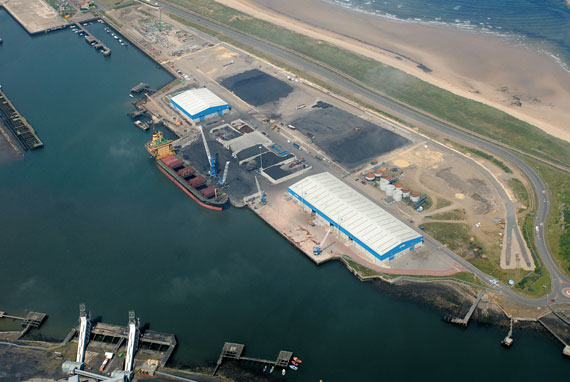
Computer-generated aerial view of the North Blyth biomass power station
North Blyth Energy Ltd has been given permission to build the 100mw plant at Battleship Wharf, Blyth Harbour. Parent company RES, leading British renewable energy company, said the project would provide “significant investment” and jobs in the area. Once operational the 100mw power station will be able to generate low carbon electricity to power the equivalent of over 170,000 UK households every year using sustainably sourced wood-based fuel.
Michael Carus, managing director of the nova-Institut
Food or non-food: Which agricultural feedstocks are best for industrial uses? This is the title of the new paper published by the German nova-Institut led by Michael Carus, who is one of the author, together with Lara Dammer. In less than ten pages the two authors analyze one of the most controversial issues of the bioeconomy, also underlined by the recent decision of the European Parliament’s environment committee to limit the share of food-based biofuel used in cars and trucks to 5.5% of the total consumption. Continue reading →
National Prawn Company (NPC) of Saudi Arabia and German firm Basf have agreed to collaborate in the field of algae technology. “The signed contract is marking once more the ability of Saudi Companies to be equal partners with World Class enterprises like Basf. It also shows that we are capable of offering solutions for domestic and global needs,” said NPC’s chairman Sulaiman Bin Abdul Aziz Al Rajhi.



 IL BIOECONOMISTA