Researchers at York discover a family of enzymes for advanced biofuels

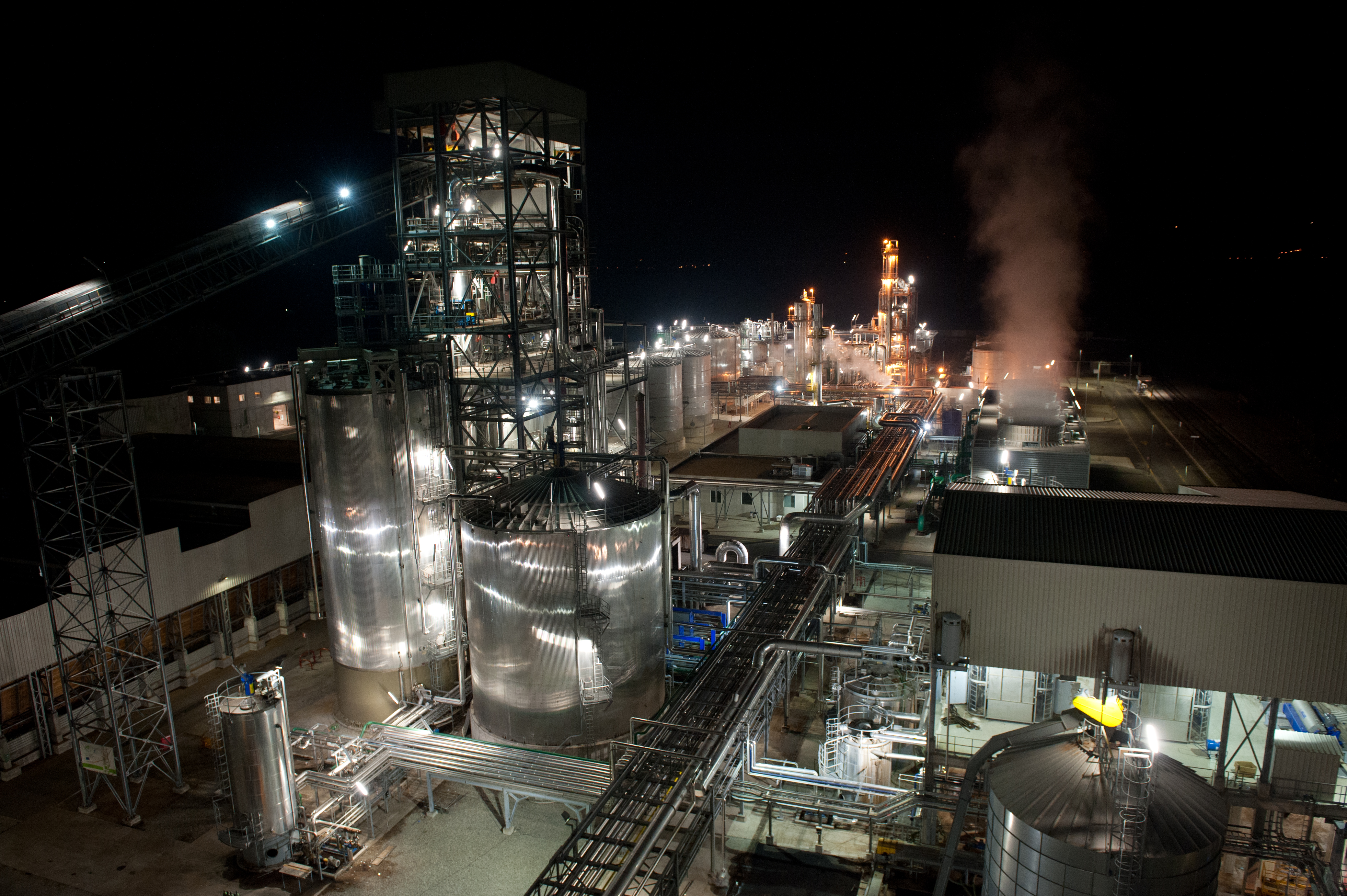
Crescentino Plant View: 2G biofuels biorefinery
Researchers from the Department of Chemistry at York University have discovered a family of enzymes that can degrade hard-to-digest biomass into its constituent sugars. 

Continue reading

The $3 billion industrial enzyme industry now speaks German: BASF takes Verenium

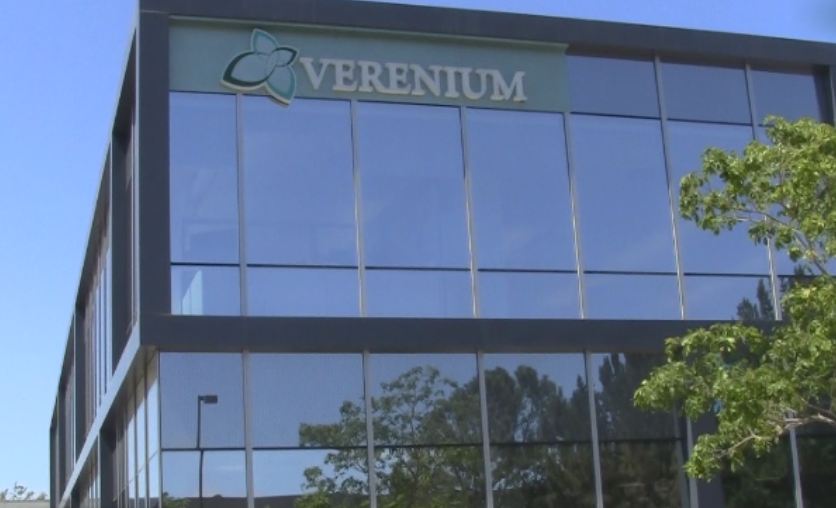
Verenium Headquarter in San Diego, California

BASF grows in biotechnology field and closes the gap on market leaders DuPont and Novozymes in the $3 billion industrial enzyme industry. The German world’s leading chemical company yesterday announced that it has successfully completed the previously announced tender offer to purchase all outstanding shares of common stock of Verenium Corporation, San Diego, California, for US$4.00 per share in cash. The tender offer expired at 9:00 a.m. Eastern Standard Time (USA) on October 31, 2013. As of the expiration of the tender offer, 11,337,044 Verenium shares were validly tendered and not withdrawn in the tender offer, representing approximately 71% of Verenium’s outstanding shares, according to the depositary for the tender offer. Based on all outstanding shares and including all net financial liabilities, the enterprise value would be approximately US$62 million (approximately €48 million).

Continue reading

Mossi & Ghisolfi and Novozymes open in Northern Italy the world’s first advanced biofuels biorefinery

Crescentino Plant View

Beta Renewables, a global leader in cellulosic biofuels and part of the Mossi & Ghisolfi Group, and Novozymes, the world’s largest producer of industrial enzymes, today marked the official opening in Crescentino (Northern Italy) of the world’s largest advanced biofuels facility. Situated in fields in the Piedmont region, it is the first plant in the world to be designed and built to produce bioethanol from agricultural residues and energy crops at commercial scale using enzymatic conversion.

Continue reading

New turmoil in the $3 billion industrial enzyme industry: Basf agreed to buy Verenium

Kurt Bock, Ceo of Basf

Basf, the world’s biggest chemical maker based in Ludwigshafen (Germany), agreed to buy Verenium Corp., a leading industrial biotechnology company focused on the development and commercialization of high-performance enzymes, to pursue growth in biotechnology and close the gap on market leaders DuPont and Novozymes in the $3 billion industrial enzyme industry.

Continue reading

In Vienna Molecular Switch for Cheaper Biofuel

Vienna University of Technology

At the Vienna University of Technology, genetic engineers have found a trick, thanks to which fungi can be used for the production of biofuels far more cost effectively than before.

Lignocellulosic waste such as sawdust or straw can be used to produce biofuel – but only if the long cellulose and xylan chains can be successfully broken down into smaller sugar molecules. To do this, fungi are used which, by means of a specific chemical signal, can be made to produce the necessary enzymes. Because this procedure is, however, very expensive, Vienna University of Technology has been investigating the molecular switch that regulates enzyme production in the fungus. As a result, it is now possible to manufacture genetically modified fungi that produce the necessary enzymes fully independently, thus making biofuel production significantly cheaper.

Continue reading

Synergy in two approaches to breaking down cell walls of biomass

nrelEnzymes could break down cell walls faster – leading to less expensive biofuels for transportation – if two enzyme systems are brought together in an industrial setting, new research by the Energy Department’s National Renewable Energy Laboratory suggests. A paper on the breakthrough, “Fungal Cellulases and Complexed Cellulosomal Enzymes Exhibit Synergistic Mechanisms in Cellulose Deconstruction,” appears in the current edition of Energy and Environmental Science. Co-authors include five scientists from NREL, the U.S. Department of Energy’s primary national laboratory for renewable energy and energy efficiency research and development, and one from the Weizmann Institute in Israel.

Continue reading

Sprin Technologies: Trieste’s response to the Danish giant Novozymes

trieste“Currently what happens is that innovation created in Italy is then exploited abroad, due to a  lack of direct access to on-site manufacturing facilities or industrial pilot plants. Closer cooperation between SMEs and large companies could accelerate the  scale-up and industrialization steps, which often represent  demanding  investments for SMEs and –in particular at this rather difficult economical stage that translate in very unlikely access to credit, making it not always affordable”.

To say it is Sara Cantone, co-founder and Chief Operating Officer of Sprin, a spin-off of the University of Trieste founded in December 2007 that operates in the research, development, production and commercialization of advanced products for implementing sustainable chemical processes. In particular, Sprin – that since 2010 has had the participation of  Venture Capital, AlAdInn Venture – is focused on the production of immobilized enzymes and the supply of services for the development of bio-catalyzed processes. With Cantone, we talk about the bioeconomy and in particular the role played by the enzymes in its development.

Interview by Mario Bonaccorso


Continue reading

New enzyme reduces the cost of cellulosic sugar production for biofuels and bio-based chemicals

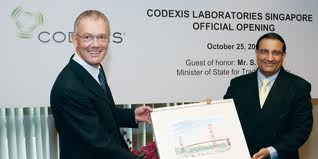
codexis in singaporeCodexis, Inc., a developer of engineered enzymes for pharmaceutical, biofuel and chemical production, announced during the World Biofuels Conference in Rotterdam (The Netherlands) the launch of CodeXyme 4 and CodeXyme 4X cellulase enzyme packages for use in producing cellulosic sugar for production of biofuels and bio-based chemicals.

Codexis’ latest generation of advanced cellulase enzymes, CodeXyme4 for dilute acid pretreatments and CodeXyme 4X for hydrothermal pretreatments, exhibits excellent performance, converting up to 85% of available fermentable sugars at high biomass and low enzyme loads. Combined with high strain productivity using the CodeXporter enzyme production system, this allows for a cost-in-use that the company believes will be among the lowest available once in full-scale commercial production.

Continue reading