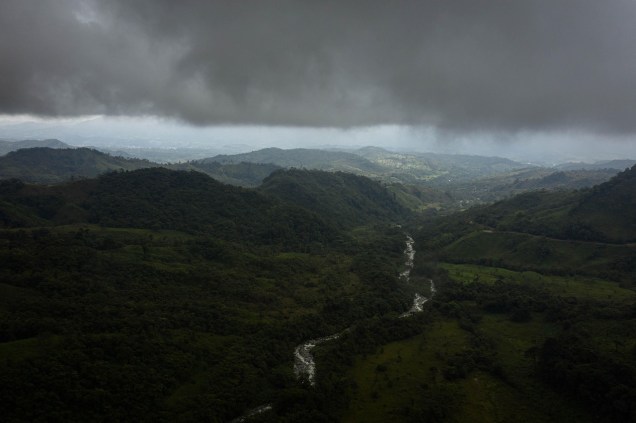
Within the framework of the World Food Forum, the Food and Agriculture Organization of the United Nations (FAO) and the Amazon Cooperation Treaty Organization (ACTO) reaffirmed their commitment to sustainable development by presenting the Amazon Bioeconomy Investment Program to representatives of the private sector, multilateral banks, governments, and institutions committed to transforming agrifood systems.
The proposal seeks to mobilize a total of US$70.3 million to improve rural livelihoods and expand income opportunities through the creation of digital ecosystems that promote the traceability of selected Amazonian products and strengthening public goods, and to strengthen the sustainable management of fisheries through regional regulatory agreements that allow for improved commercialization.
During the opening of the session, FAO’s Chief Economist and Regional Representative for Latin America and the Caribbean a.i., Máximo Torero, emphasized that “the Amazon must play a central role in the bioeconomy of the future. To achieve this, we must act better together, promoting solutions based on science, innovation, technology, and the invaluable traditional knowledge of local and indigenous communities.”
For her part, Vanessa Grazziotin, ATO’s Executive Director, emphasized that “what we need to demonstrate in each of our countries, and also collectively, is that standing forests have significantly greater value than felled forests. To do so, we must strongly back the region, and that means investing in it.”
Luiz Beduschi, FAO’s Senior Territorial Development Officer for Latin America and the Caribbean, noted that: “When small producers have access to digital services, banking and economic formalization levels can increase by up to 20%. However, as long as we do not address the digital divide that restricts the Amazonian population’s access to digital services, our progress will be limited.
The Amazon Bioeconomy Program, developed with the geospatial, biophysical, and socioeconomic information and analysis tools provided by the Hand-in-Hand initiative, responds to the commitments assumed by the eight ACTO member countries (Bolivia, Brazil, Colombia, Ecuador, Guyana, Peru, Suriname, and Venezuela) in the 2023 Belém Declaration and the Bogotá Declaration signed in August of this year.
The program’s core principles are aimed at avoiding the tipping point of the Amazon ecosystem, reducing levels of poverty and inequality, respecting the knowledge of Indigenous Peoples and other traditional communities, and ensuring sustainable agricultural practices.
It is estimated that its implementation could generate a return on investment of 17.6% and directly benefit approximately 14,500 people living in the eight countries that make up the Amazon region.
 IL BIOECONOMISTA