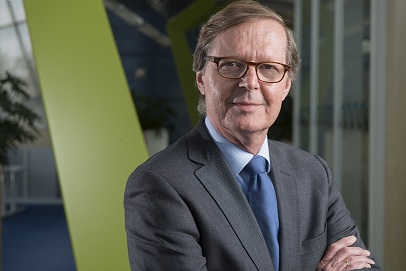
Ilkka Hämälä, CEO of Metsä Fibre, a part of Metsä Group
Metsä Group, the Port of Helsinki and the City of Helsinki have reached an agreement on the use of the harbour and the lease of an area for a terminal building of around 30,000 square metres. The terminal will serve as an export warehouse for the bioproduct mill and will be completed before the mill is inaugurated in the third quarter of 2017.
Boeing, Aeromexico and Mexico’s Airports and Auxiliary Services (ASA) will collaborate with a biojet program supported by Mexico’s Sector Fund for Energy Sustainability (SENER-CONACYT) to advance research and development of sustainable aviation biofuel in Mexico.
The initiative, announced last Thursday and coordinated through the Mexican Bioenergy Innovation Center, will support Mexico’s aviation sector as well as its environmental and socio-economic goals. Executives at Boeing, Aeromexico, ASA and the Potosinian Institute of Scientific and Technological Research (IPICYT) formalized the initiative at a ceremony in Mexico City.
“At the moment biobased is seen as a niche alternative. It’s well-respected and is seen to be developing in the right way, but it hasn’t achieved the market penetration to be considered a genuine competitor to the conventional industry – yet. For me, it’s all about reaching that ‘tipping point’. Many stars must align for this to happen, but we’re quite positive that they will in due course”. To say this – in this exclusive interview with Il Bioeconomista – is Henri Colens, Public Affairs Manager, Renewable Chemicals, at Braskem Europe, the European subsidiary of the Brazilian petrochemical giant. With Colens we talk about bioeconomy and circular economy. “The bioeconomy – he says – is a way of harnessing the power of nature in order to create more sustainable products and processes. We all need to work harder on raising public awareness, so that citizens understand what we are doing and the potential of the bioeconomy.”
Bioeconomy every day @ BioBased World 2015 in Frankfurt am Main
Covestro invests in the circular economy. The German materials manufacturer is testing an innovative and environmentally friendly process for recycling saline process wastewater in plastics production. The pilot plant for the process is localized at the Krefeld-Uerdingen site in Germany. The new technology reduces the salt levels in waters such as the Rhine and conserves potable water resources. It is being used in the production of polycarbonate, a high-performance plastic required in many sectors, including automotive engineering, electronics and medical technology. The German Federal Ministry for the Environment has provided some 740,000 euro in funding to support the project as an outstanding example of how a closed-cycle approach can be put into practice in industry. The total cost of investment is around 3.7 million euro.
Mathieu Flamini and Pasquale Granata with Sean Penn at COP21 in Paris. Source: GFBiochemicals
GFBiochemicals expands in the United States and puts itself in a position of world leadership in the levulinic acid production from biomass. The Italian company, co-founded in 2008 by the young Italian entrepreneur Pasquale Granata and Arsenal midfielder Mathieu Flamini, bought the production facilities and intellectual property rights of Segetis, which is based in Minnesota, according to a statement. Terms weren’t disclosed.
Comet Biorefining, a leading provider of sustainable and cost-competitive cellulosic dextrose technology for applications in renewable biochemicals and biofuels, has announced the location of its commercial-scale biomass-derived sugar facility in the TransAlta Energy Park in Sarnia, Ontario. The 60 million pounds per year plant will come online in 2018, producing dextrose sugar from locally-sourced corn stover and wheat straw. Corn stover consists of residues left in the field after harvest including stalks, leaves, husks and cobs.
It is not a good time to Versalis. But, despite the uncertainty about its future, the chemical company of Italian oil giant Eni continues to focus on green chemistry together with Elevance Renewable Sciences. The high-growth company (headquartered in Woodridge, Illinois), that creates novel specialty chemicals from natural oils, has recently and successfully completed scale-up of a second-generation biorefinery technology of the company’s olefin metathesis technology, utilizing ethylene and natural oil feedstocks.
BioAmber has been listed on the NYSE since May 2013
Mitsui & Co., one of the most diversified and comprehensive trading, investment, and service enterprises in the world (with 140 offices in 66 countries) and BioAmber’s partner in the Sarnia bio-based succinic acid plant, is investing an additional CDN$ 25 million in the joint venture for 10% of the equity, increasing its stake from 30% to 40%. Mitsui will also play a stronger role in the commercialization of bio-succinic acid produced in Sarnia, providing dedicated resources alongside BioAmber’s commercial team. BioAmber will maintain a 60% controlling stake in the joint venture.
Cool Terra earns the USDA Certified Biobased Product Label. The product developed by Cool Planet – Cool Terra Engineered Biocarbon – fulfills all federal purchasing requirements for biobased products through the USDA BioPreferred program.
Finnish bioeconomy confirms its dynamism. KaiCell Fibers has embarked on a venture to construct a state-of-the-art biorefinery mill as core component in an industry park projected to house several downstream operators drawing on wood as primary raw material.
The project is based on an alliance between Kainuun Liitto (The Regional Council of Kainuu) and NC Capital Partners. KaiCell will tap into the Kainuu region’s extensive and currently under-utilised fibre wood resources, and incorporate BAT (best available technology) to ensure high value-added products, maximum raw material efficiencies and minimum environmental loads throughput the process. Production is planned to commence by 2020.