BASF presented an industrial compostable biopolymer for greenhouse twines

BASF
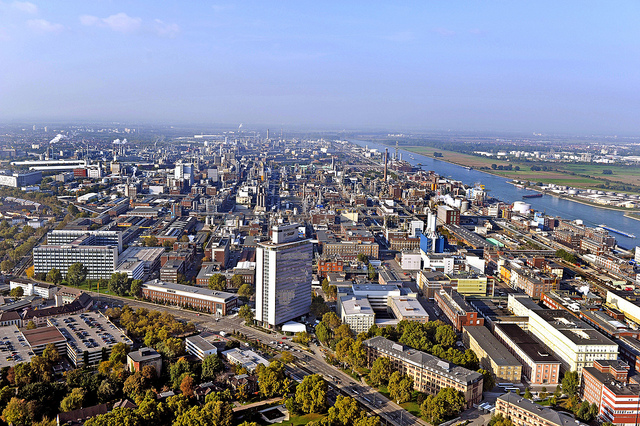
Headquarter of Basf in Ludwigshafen

BASF expands its offering for sustainable food production: Its certified compostable biopolymer ecovio® can now also be used to manufacture black twines used to grow annual fruit and vegetables in commercial greenhouses. The grade ecovio® T 2206 is certified industrial compostable according to EN13432. This means that after harvesting the twines can be collected together with the plant residues and transported to industrial composting facilities (depending on local regulations) where they biodegrade. With this new end-of-life option for twines, persistent microplastics in organic waste can be avoided while at the same time more green waste can be turned into valuable compost. The industrial compostable ecovio® thus supports organic recycling and helps to close the nutrient loop to achieve a circular economy.

Continue reading

Technip Energies and Anellotech to Jointly Develop Sustainable Plastics Recycling

David Sudolsky - Il Bioeconomista
David Sudolsky

Technip Energies and Anellotech, Inc. signed a global joint development agreement to work cooperatively to further develop and then license Anellotech’s Plas-TCat process, a one-step thermal-catalytic recycling technology that converts mixed plastic wastes back into its constituent basic chemicals, with a specific focus to benzene, toluene, and xylene (BTX) that can be used to make most virgin plastics.

Continue reading

Evonik strengthens its biosolutions offering with new Botanicals & Natural Actives business segment 

wpid-evonik_methionine_singapore.jpg

Evonik is strengthening its offering of botanical extracts and natural actives by bringing its expertise together under a newly established business segment. The Botanicals & Natural Actives segment draws on expertise built up through legacy products together with a series of recent acquisitions. Evonik – the German company claims – can now better meet the growing demand for botanical extracts and claim-substantiated natural actives, which are supported by its recently established Skin Institute.

Continue reading

Boeing to purchase 9.4 million gallons of SAF

klm
KLM Boeing powered by biofuel

Boeing is buying 9.4 million gallons (35.6 million liters) of blended sustainable aviation fuel (SAF) to support its 2024 U.S. commercial operations, reducing its carbon emissions and working to help grow the supply of the fuel globally. This is the company’s largest annual SAF purchase, more than 60% higher than its buy in 2023. The blended fuel – 30% SAF made from waste by-products such as fats, oils, and greases and 70% conventional jet fuel – will support the Boeing ecoDemonstrator program and Boeing U.S. commercial operational flights.

Continue reading

Repsol enters biomethane production with acquisition of 40% stake in Genia Bioenergy

IMG_0058

Repsol is entering the biomethane market with an agreement to take a 40% shareholding in Genia Bioenergy. This alliance allows Repsol to add significant human and technical capabilities to position itself early in this growing sector. Biomethane is considered strategic by the European Union – which has set itself an ambition to increase its production eightfold by 2030 compared to that recorded in 2022 – in its RePower EU program. The Spanish Gas Association (Sedigas) estimates that biomethane could account for almost half of Spain’s natural gas consumption.

Continue reading

UPM launched new biostimulant product range as a long-term solution for sustainable agriculture

16B81049-CB2D-4FA3-9F29-CD3B8DF32939
Source: http://www.upm.com

UPM Biochemicals launched a new range of bio-based plant stimulants, UPM SolargoTM. This launch marks UPM’s entry into the large and profitable agrochemicals market with an innovative, sustainable alternative to fossil raw materials-based products.  

Continue reading

Neste supplying sustainable aviation fuel to Emirates for flights from Amsterdam Airport Schiphol

IMG_0031
Photo: Emirates A380 refueling at Amsterdam Airport Schiphol. Source: Emirates

Neste has started supplying sustainable aviation fuel (SAF) to Emirates at Amsterdam Airport Schiphol, expanding the partnership the two companies announced in October last year. Over 6,000 tons (2 million gallons) of blended SAF will be supplied into the fueling system at Amsterdam Airport Schiphol over the course of 2024.

Continue reading

In Italy Eni, Fincantieri and RINA establish partnership for maritime transport decarbonization

Eni
Headquarter of Eni in San Donato Milanese (Milan)

Eni, a global energy company, Fincantieri, one of the world’s largest shipbuilding groups, the only one active in all high-tech marine industry sectors, and RINA, a multinational inspection, certification, and engineering consultancy, have signed an agreement to develop joint initiatives for the energy transition. The partnership formalises the commitment to develop joint projects, in line with the partners’ strategies, to decarbonise the maritime sector in the medium to long term with the goal of Net Zero by 2050. Additionally, the establishment of a permanent global observatory regarding future technological, regulatory, and market developments will be evaluated.

Continue reading

Korean water producer Sansu joined force with TotalEnergies Corbion to develop and embossed label bottle made of PLA bioplastics

Total Corbion Thailande
TotalEnergis Corbion is a global technology leader in Poly Lactic Acid (PLA) and lactide monomers.

Together with TotalEnergies Corbion, Korean water producer Sansu is developing an embossed label water bottle made of Luminy® PLA bioplastics to speed adoption of recycled PLA as feedstock. This innovation is set to revolutionize recycled PLA production processes – both companies claim – marking a significant leap towards a more sustainable future.

Continue reading

EU Commission launched its own Biotechnology and Biomanufactoring Communication

The EU Parliament in Brussels

Today, the Commission has proposed a series of targeted actions to boost biotechnology and biomanufacturing in the EU. The Communication on Building the future with nature identifies the challenges and barriers and proposes to tackle them, in line with the Communication on the long-term competitiveness of the EU.

Continue reading