BASF and IFF — a global leader in flavors, fragrances, food ingredients, health and biosciences — joined forces to accelerate the development of IFF’s Designed Enzymatic Biomaterials™ technology platform and create next-generation enzyme technologies for fabric, dish and personal care as well as industrial cleaning applications.
BASF Coatings has launched a new digital solution to calculate the carbon footprint (Product Carbon Footprint, PCF) of its sales portfolio. The solution replaces an internally developed application that BASF Coatings has used for several years to provide reliable CO2 data to customers worldwide.
BASF and ExxonMobil have formed a strategic collaboration to advance methane pyrolysis technology, a next step toward delivering efficient, cost-competitive low-emission hydrogen solutions for industrial use. The companies have signed a joint development agreement to co-develop methane pyrolysis technology, including plans to construct a demonstration plant aimed at commercial readiness.
Chemovator, the business incubator and early-stage investor of BASF, has successfully finalized an investment in Heartland. The Detroit-based startup is a frontrunner in the production of natural fiber plastic additives, and the latest addition to Chemovator’s external-facing Elevate program.
BASF expands its offering for sustainable food production: Its certified compostable biopolymer ecovio® can now also be used to manufacture black twines used to grow annual fruit and vegetables in commercial greenhouses. The grade ecovio® T 2206 is certified industrial compostable according to EN13432. This means that after harvesting the twines can be collected together with the plant residues and transported to industrial composting facilities (depending on local regulations) where they biodegrade. With this new end-of-life option for twines, persistent microplastics in organic waste can be avoided while at the same time more green waste can be turned into valuable compost. The industrial compostable ecovio® thus supports organic recycling and helps to close the nutrient loop to achieve a circular economy.
BASF will expand its global alkyl polyglucosides (APG®s) production capacity with two expansions at its sites in Bangpakong, Thailand, and Cincinnati, Ohio. By expanding in two regions in parallel, BASF, the global market leader for APGs, can strengthen its position and serve customers even faster and more flexible from the regional supply points, while at the same time reducing cross-regional volume flows. The additional capacities are expected to come on stream in 2025.
At the IPPE fair in Atlanta, BASF and Cargill announced their expanded cooperation, adding the United States (US) to their existing feed enzymes development and distribution agreement. Together, the two companies are committed to bringing innovative enzyme-based solutions to the market, generating distinctive value for animal feed customers. By combining the enzyme research and development strengths of BASF with Cargill’s know-how in application and broad market reach, the partners will form a joint innovation pipeline for animal protein producers.
German chemical giant Basf presented its current research projects and examples of innovation for various value chain steps. The event focused on technologies where microorganisms contribute to greater sustainability. Our researchers worldwide are working on innovative solutions to tap alternative raw material sources and to develop climate-friendly production processes and products, said Melanie Maas-Brunner, member of the Board of Executive Directors of Basf SE and Chief Technology Officer.
Basf and Sulzer Chemtech (GTC Technology) have signed a Memorandum of Understanding (MoU) with the goal of advancing technologies for renewable fuels and chemically recycled plastics that will further expand the partners’ portfolio of sustainable solutions. The companies agreed to enter a strategic partnership to reduce the carbon intensity of renewable diesel and aviation fuel. They will also drive the development of innovative, cost-effective chemical processing solutions to improve the conversion of plastic waste into new plastics. The collaboration combines complementary areas of expertise, integrating Sulzer Chemtech’s capabilities in licensed processing technologies and mass transfer equipment with BASF’s cutting-edge high-performance adsorbents and catalysts.
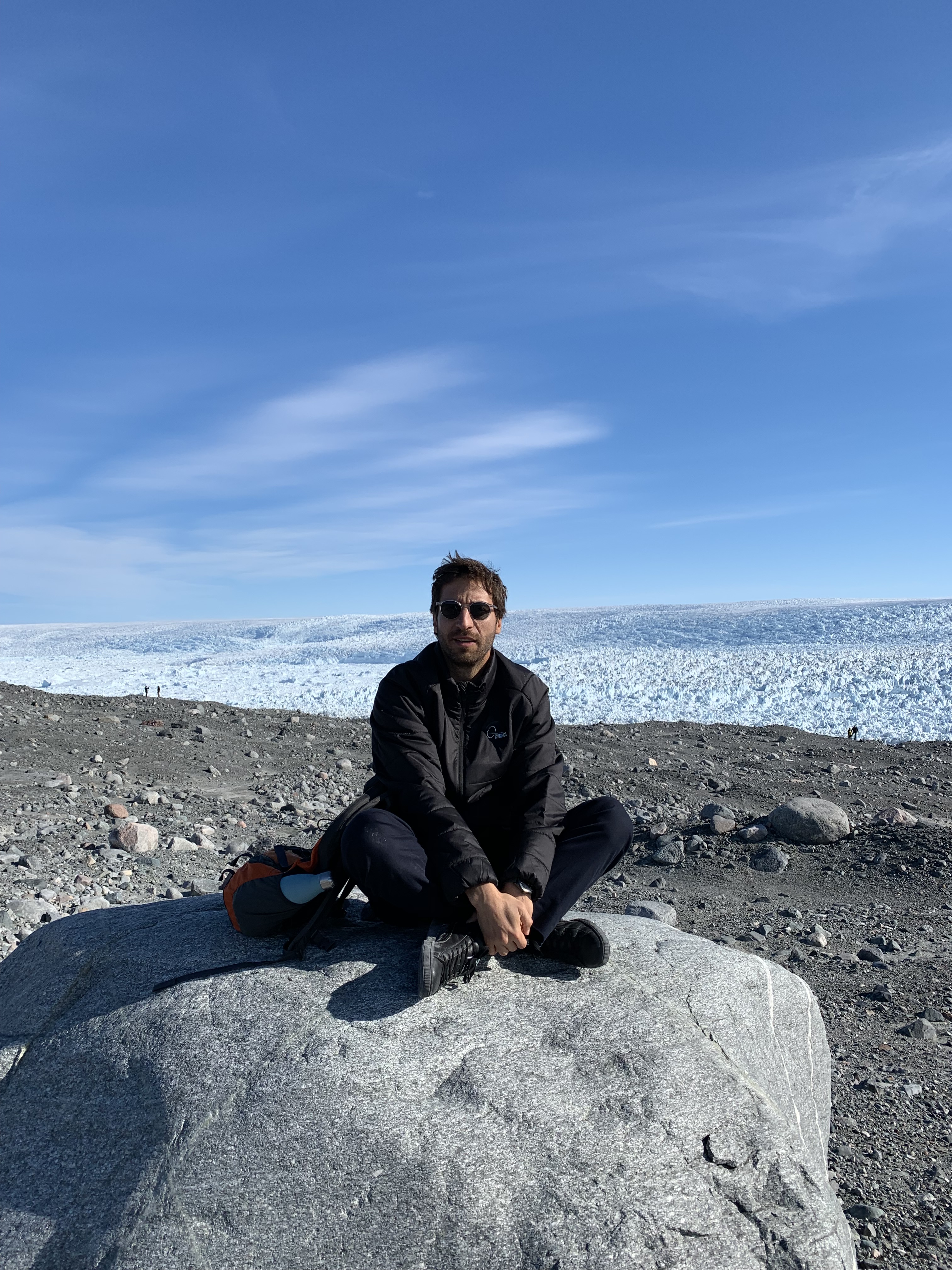
Mathieu Flamini, CEO GFBiochemicals. In Greenland. Courtesy of Mathieu Flamini
After announcing its €15 million Serie A funding round, the sustainable chemical company GFBiochemicals entered into an agreement with German chemical giant BASF. Specifically, BTC Europe GmbH, BASF’s European distribution organization, and NXTLEVVEL Biochem, a joint venture and manufactoring arm of GFBiochemicals, signed an agreement on the distribution of biobased and biodegradable solvents derived from levulinic acid for the European market.
 IL BIOECONOMISTA