BASF and Genomatica have expanded the scope of their license agreement for the production of 1,4-butanediol based on renewable feedstock (renewable BDO) using Genomatica’s patented process. The parties added certain countries in Southeast Asia to their initial agreement, which focused on North America.
“The bio-based PolyTHF 1000 is identical in quality to the petrochemical-based product.” To say it is Andrej Brejc, director Renewable Diols from BASF’s Intermediates division (sales to third parties of about 2.8 billion euro in 2014), which has made bio-based Polytetrahydrofuran 1000 (PolyTHF® 1000) available for the first time. The chemical company headquartered in Ludwigshafen is now providing this intermediate to selected partners for testing various applications in a large scale.
Chemical giant Basf has decided to exit the current R&D collaboration with Novozymes and Cargill to develop a bio-based process for producing 3-hydroxypropionic (3-HP) and acrylic acid from renewable raw materials.
BASF, Cargill and Novozymes announced the achievement of another milestone in their joint development of technologies to produce acrylic acid from renewable raw materials. The team has demonstrated the successful conversion of 3-hydroxypropionic acid (3-HP) to glacial acrylic acid and superabsorbent polymers. Moreover they have selected the process for further scale-up.
Succinity GmbH, the joint venture between Corbion Purac, the worldwide market leader in lactic acid, lactic acid derivatives and lactides, and BASF, German chemical giant, for the production and commercialization of biobased succinic acid, has announced the successful start-up of its first commercial production facility.
BASF and Renmatix will jointly scale up the Renmatix Plantrose process for the production of industrial sugars based on lignocellulosic biomass. The two companies signed a non-exclusive joint development agreement. The parties have agreed to key financial terms for future commercial licenses, which BASF can exercise at its discretion. The collaboration follows BASF’s $30 million investment in Renmatix in January 2012.
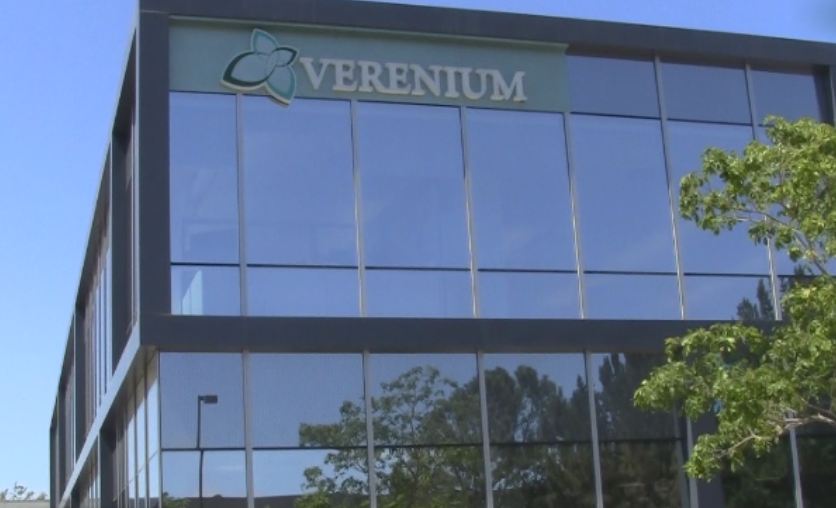
BASF grows in biotechnology field and closes the gap on market leaders DuPont and Novozymes in the $3 billion industrial enzyme industry. The German world’s leading chemical company yesterday announced that it has successfully completed the previously announced tender offer to purchase all outstanding shares of common stock of Verenium Corporation, San Diego, California, for US$4.00 per share in cash. The tender offer expired at 9:00 a.m. Eastern Standard Time (USA) on October 31, 2013. As of the expiration of the tender offer, 11,337,044 Verenium shares were validly tendered and not withdrawn in the tender offer, representing approximately 71% of Verenium’s outstanding shares, according to the depositary for the tender offer. Based on all outstanding shares and including all net financial liabilities, the enterprise value would be approximately US$62 million (approximately €48 million).
Basf, the world’s biggest chemical maker based in Ludwigshafen (Germany), agreed to buy Verenium Corp., a leading industrial biotechnology company focused on the development and commercialization of high-performance enzymes, to pursue growth in biotechnology and close the gap on market leaders DuPont and Novozymes in the $3 billion industrial enzyme industry.
National Prawn Company (NPC) of Saudi Arabia and German firm Basf have agreed to collaborate in the field of algae technology. “The signed contract is marking once more the ability of Saudi Companies to be equal partners with World Class enterprises like Basf. It also shows that we are capable of offering solutions for domestic and global needs,” said NPC’s chairman Sulaiman Bin Abdul Aziz Al Rajhi.
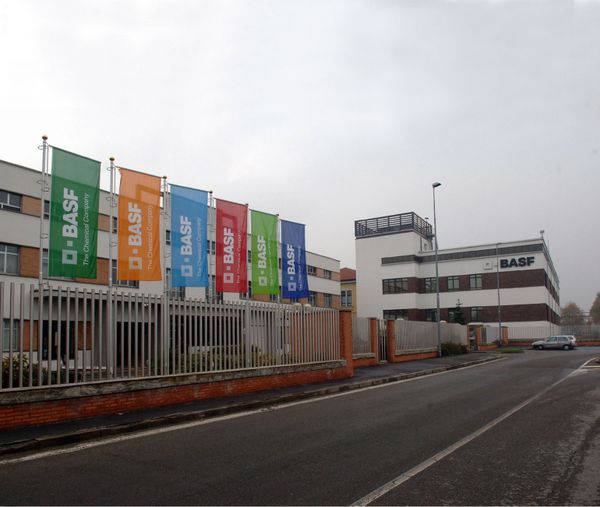
Italian Headquarter of Basf in Cesano Maderno (Milan)
Basf, Cargill and Novozymes have announced the achievement of an important milestone in their joint development of technologies to produce acrylic acid from renewable raw materials by successfully demonstrating the production of 3-hydroxypropionic acid (3-HP) in pilot scale.
3-HP is a renewable-based building block and one possible chemical precursor to acrylic acid. The companies also have successfully established several technologies to dehydrate 3-HP to acrylic acid at lab scale. This step in the process is critical since it is the foundation for production of acrylic acid. In August 2012, Basf, Cargill and Novozymes announced their joint agreement to develop a process for the conversion of renewable raw materials into a 100 percent bio-based acrylic acid.


 IL BIOECONOMISTA