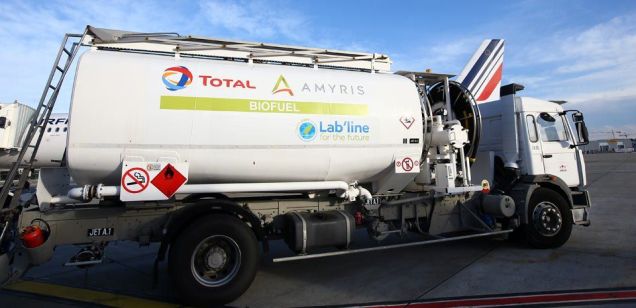
 Amyris, the U.S. industrial bioscience company, has won a three-year multi-million dollar contract from the U.S. Department of Energy (DOE) to further the manufacturing of cellulose-derived farnesene for biofuels. The company led by John Melo, in cooperation with Renmatix and Total New Energies USA, will work to develop a manufacturing-ready process utilizing wood as the cellulosic feedstock to produce farnesene, a hydrocarbon building block used to manufacture a variety of products ranging from cosmetics to detergents, as well as base oils, lubricants, diesel and jet fuel.
biofuels
US biofuels compliance credits jumped to three-year highs last Monday

Prices in the niche market for biofuels compliance credits jumped to three-year highs last Monday as traders fretted about supplies because of higher U.S. government mandates to increase the use of biofuels next year.
Trading in the opaque market for Renewable Identification Numbers (RIN) – the paper credits that can be bought and sold to meet government requirements for biofuels – has picked up in recent days.
New merger in the US bioeconomy: Aemetis acquires Edeniq

Aemetis and Edeniq, both headquartered in California (USA), announced they have entered into a definitive agreement under which Aemetis will acquire all of Edeniq’s outstanding shares in a stock plus cash merger transaction.
Edeniq, a leading cellulosic ethanol technology company, has developed patented innovations that unlock cellulosic and starch sugars through a combination of mechanical and biological processes. Its capital light and operationally efficient solutions can be easily integrated into existing corn ethanol plants. The company, founded in 2008, has raised approximately $100 million from some of the world’s leading venture capital firms, including Kleiner Perkins Caulfield & Byers, Draper Fisher Jurvetson, Angeleno Group, The Westly Group, I2BF Global Ventures, and other leading investors, as well as US Department of Energy (DOE) grant funding.
EU current policy suppresses measures that could greatly contribute to climate mitigation

We receive and publish with pleasure this comment by James Cogan related to the land use impacts of biofuels comsumption in Europe. James is a technology, industry and policy analyst collaborating with PNO Innovation in Brussels and with a number of public and private organisations with stakes in the future of biofuels and transport energy. We are delighted to promote the debate.
On March 10 2016 the European Commission was obliged to release an essential report on the land use impacts of biofuels consumption in Europe as determined by the Commission’s own policy on the matter. The Commission has had the report since the Summer of 2015. The report goes a long way to answering the question of how much better are biofuels for the environment than continued use of fossil fuels. In recent years some parts of the Commission have been sharply critical of conventional biofuels yet unable to produce evidence as to why. Reaching a fact-based consensus on the matter is essential for transport decarbonisation for 2030.
So what are the implications of the report findings for EU and member state transport energy planners who urgently require robust and practical guidance?
Ten billion euros of investment in advanced biofuels

We receive and publish with pleasure this comment by James Cogan. He is a technology, industry and policy analyst collaborating with PNO Innovation in Brussels and with a number of public and private organisations with stakes in the future of biofuels and transport energy. In the run up to the climate emergency conference in Paris he has been considering the options open to the designers of the new European governance system for climate and energy and to the 28 teams charged with creating member state climate and energy plans for publication by 2018. We are glad to promote the debate.
“At a time when carbon emissions should be dropping by 40%-80% EU transport emissions will actually increase by that amount, becoming the number one EU contributor to catastrophic global warming.
Transport emissions can only be reduced in the 2030 timeframe by traffic efficiencies, biofuels and lower tailpipe emissions. To date the EU has not taken bold measures to pursue such avenues and any gains have been offset many times over by traffic growth. Electric vehicles comprise only a miniscule fraction of the EU vehicle fleet, sales are under 1% and even the most optimistic forecasts for sales growth would not lead to an impact until well after 2040.
Al Costa talks to Il Bioeconomista. An interview with the Ceo of Alkol Biotech
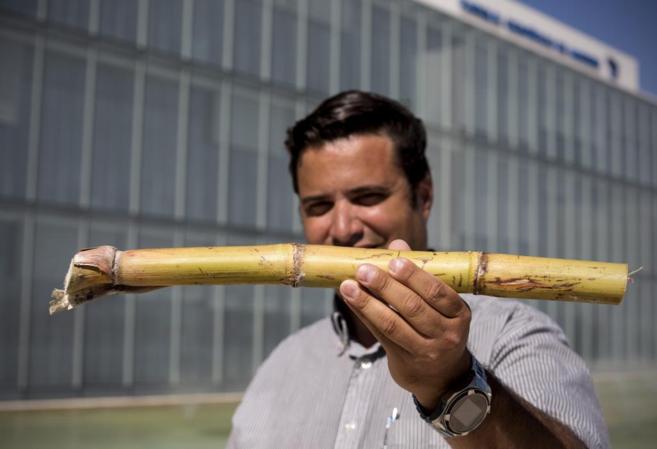
“A biobased economy starts from the feedstock and ends at the consumer, and the processing is just the middle: we need thus to tackle the 3 steps if we really want to call it “economy”. Also, we need to bring new technologies regardless of where they come from. Brazil for example may be thought of a place of soccer and samba but the hard fact is that it is the only economy in the world which uses biofuels widely. We should study examples such as that, bring them to Europe, and stop thinking we have the answers, but the H2020 rules basically forbid that, as we found out ourselves”. To say this – in this exclusive interview with Il Bioeconomista – is Al Costa, Ceo of Alkol Biotech, a Spanish genetic engineering company focused on the research of new crops.
With Costa we talk about crops, the role of farmers and the policies to support the bioeconomy.
Interview by Mario Bonaccorso
UPS signed agreements for up to 46 million gallons of renewable fuels over the next three years

United Parcel Service, the world’s largest package delivery company, has signed agreements for up to 46 million gallons of renewable fuels over the next three years. The company, also known as UPS, says the deal represents a 15-fold increase over its prior contracts and make it one of the largest users of renewable diesel in the world.
The agreements with three leading suppliers of renewable fuels, secure access to an advanced renewable diesel fuel in order to meet the company’s objectives for alternative fuel utilization. Neste, Renewable Energy Group and Solazyme will supply renewable diesel to UPS to help facilitate the company’s shift to move more than 12 percent of its purchased ground fuel from conventional diesel and gasoline fuel to alternative fuels by the end of 2017.
Novozymes supplies enzyme technology to a new biorefinery in Finland
Novozymes announced a deal to supply enzyme technology to a new biorefinery that will be built by St1 Biofuels in Kajaani, Finland. The facility will be co-located at a sawmill site, and will be the first facility in the world to use sawdust (sawdust or wood dust is a by-product of the forestry industry and is composed of fine particles of wood) from softwood as feedstock to produce cellulosic ethanol at commercial scale. The process uses steam-explosion to open up the cellulosic structures of the sawdust, followed by enzymatic hydrolysis to extract the sugars for ethanol fermentation.
US researchers modify and optimize the microbes to convert waste into fuel or chemicals

Scientists focused on producing biofuels more efficiently have a new powerful dataset to help them study the DNA of microbes that fuel bioconversion and other processes.
In a paper published in Nature Scientific Data, researchers from the Department of Energy’s Oak Ridge National Laboratory, North Carolina State University and LanzaTech describe methods and results for sequencing the Clostridium autoethanogenum bacterium. These and other microorganisms play important roles in biofuels, agriculture, food production, the environment, health and disease.
The bioeconomy speaks Dutch: today starts in Amsterdam the World Bio Markets

Today starts in Amsterdam the 10th annual World Bio Markets, an event which will focus on three bioeconomy core topics: biofuels, bio-based chemicals and feedstock supply, security and selection.
 IL BIOECONOMISTA