MetGen and NewEnergyBlue join forces to create full array of biochemicals refined from agricultural waste

1EAF2447-0040-402C-B895-B054D162BBE1
Alex Michine, CEO MetGen, with the Frost & Sullivan Award in London. Michine was also awarded The Most Innovative Bioeconomy CEO in 2019 by our blog’s readers.

NewEnergyBlue, the clean-technology designer of biomass refineries that turn agricultural waste into highly decarbonized biofuels and biochemicals, and MetGen, the Finnish pioneer in advanced enzymes and lignin fractionization, began integrating their renewable technologies and business units to vigorously compete with fossil-carbon products not just environmentally but economically.

Continue reading

UPM Biochemicals and URSA joined forces to develop new sustainable building insulation

16B81049-CB2D-4FA3-9F29-CD3B8DF32939
Source: http://www.upm.com

UPM Biochemicals and URSA, one of the leading producers of glass wool and mineral wool in Europe, joined forces to develop more environmentally friendly building insulation that will help to reduce energy consumption and lower CO2 emissions. URSA will produce sustainable glass wool made from an innovative, binder based on UPM BioPiva™ lignin. It will be one of the most natural insulation material available on the market.

Continue reading

UPM Biochemicals grows lignin business with new Domtar Paper supply agreement

Biofore Concept Car. Full rights owned by UPM. Photographer: Sami Kulju

UPM and the US-based pulp and paper producer Domtar Paper Company LLC signed an agreement for UPM to acquire the total annual kraft lignin production of Domtar’s Plymouth Mill in North Carolina, USA as of January 2021. This step enables UPM to expand its role in the growing lignin business and different application segments.

Continue reading

Sekab and Vertoro to build large-scale demo plant to produce a new platform for sustainable fuels, chemicals, and materials

A new demo plant in Örnsköldsvik will be the first in the world to produce a 2G platform for sustainable fuels, chemicals and materials, coined GOLDILOCKS®, from pulp and paper industry residues. The plant will be built by the Swedish chemical and clean tech company Sekab together with the Dutch oil company Vertoro.

Continue reading

Stora Enso takes a step forward to replace fossil-based materials with renewable solutions

Stora Enso paper mill in Hyltebruk (Sweden)

Stora Enso launched bio-based lignin as renewable replacement for oil-based phenolic materials. Lignin is one of the main building blocks of a tree and makes up 20-30% of the composition of wood. Yet it has traditionally been discarded by the pulp and paper industries. However, Stora Enso has recognised the potential of this versatile raw material, which can be used in a range of applications where fossil-based materials are currently used.

Continue reading

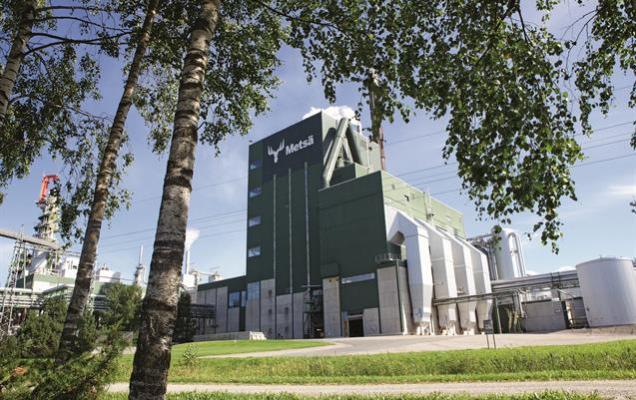
Metsä Group leads the Finnish bioeconomy

image
Ilkka Hämälä, CEO of Metsä Fibre, a part of Metsä Group

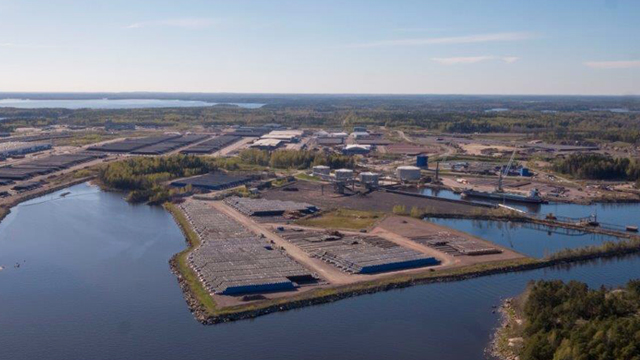
Metsä Group, the Port of Helsinki and the City of Helsinki have reached an agreement on the use of the harbour and the lease of an area for a terminal building of around 30,000 square metres. The terminal will serve as an export warehouse for the bioproduct mill and will be completed before the mill is inaugurated in the third quarter of 2017.

Continue reading

In Belgium field trial with lignin modified poplars shows potential for bio-based economy

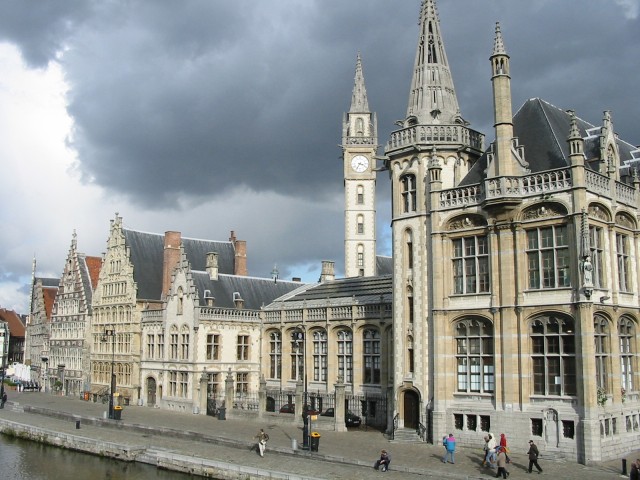
Ghent, Belgium
Ghent, Belgium

The results of a field trial with genetically modified poplar trees in Zwijnaarde, Belgium, led by VIB – a life sciences research institute in Flanders funded by the Flemish government – shows that the wood of lignin modified poplar trees can be converted into sugars in a more efficient way. These sugars can serve as the starting material for producing bio-based products like bio-plastics and bio-ethanol.

Continue reading

UK’s Biome Bioplastics to investigate new source of organic chemicals for bioplastic manufacture

wood in ukThe UK’s innovation agency, the Technology Strategy Board, has awarded a grant to a consortium led by Biome Technologies, to investigate a bio-based alternative for the oil derived organic chemicals used in the manufacturer of bioplastics.

The research will be undertaken by the group’s bioplastic division Biome Bioplastics, one of the UK’s leading developers of natural plastics, in conjunction with the University of Warwick’s Centre for Biotechnology and Biorefining.

The £150,000 grant (approximately 215,000 €) is part of the Technology Strategy Board’s ‘Sustainable high value chemical manufacture through industrial biotechnology’ technical feasability competition, which funds projects that apply sustainable bio-based feedstocks and biocatalytic processes in the production of chemicals.

Continue reading