European Union agrees a deal to limit production of food-based biofuels

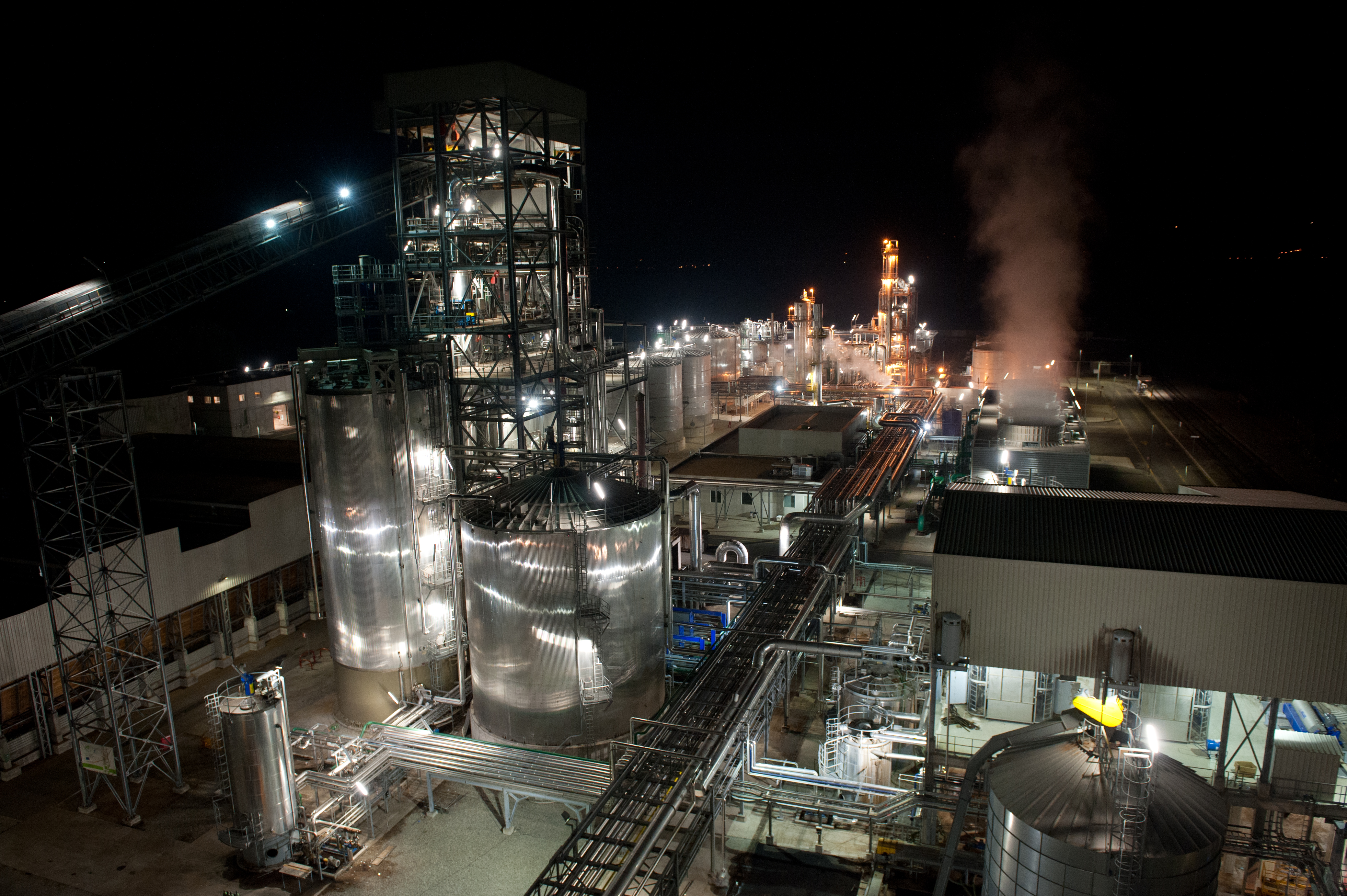
Crescentino Plant View: 2G biofuels biorefinery

EU energy ministers agreed a deal on Friday to limit production of biofuels made from food crops, responding to criticism these stoke inflation and do more environmental harm than good. The ministers’ endorsement of a new compromise overcomes a stalemate hit late last year when European Union governments failed to agree on a proposed 5 percent cap on the use of biofuels based on crops such as maize or rapeseed.

Continue reading

Novozymes launches LpHera, an enzyme to make starch conversion more efficient

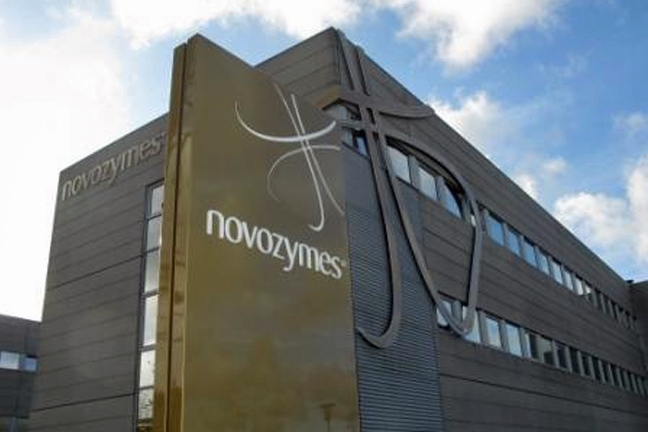
Novozymes Headquarter

Novozymes – the Danish biotech company which is world leader in industrial enzymes  – announced yesterday the launch of a new enzyme solution (LpHera) that helps make starch conversion more efficient.  The starch industry is one of the longest-standing markets for enzymes, and within the food industry helps to produce a wide range of sweeteners and ingredients used in products ranging from soft drinks to sauces.

Continue reading

M&G Chemicals will construct a second-generation biorefinery in China

The M&G Biorefinery in Crescentino, Italy

M&G Chemicals, among the three largest producers of PET resin for packaging applications in the world, announced last Monday its decision to construct a second-generation biorefinery in the region of Fuyang, Anhui Province of China, for the conversion of one million metric tons of biomass into bio-ethanol and bio-glycols.

The project is expected to be realized through a joint-venture with Chinese company Guozhen which will make available one million metric tons of straw biomass and use the lignin resulting as a by-product from the bio-refinery to feed a 45 MW cogeneration plant which will be constructed at the same time as the bio-refinery in the same site. M&G Chemicals will be majority partner of the biorefinery and minority partner of the power plant.

Continue reading

Exclusive interview with Sebastian Søderberg, VP Novozymes: “The Bioeconomy reconciles growth, jobs and sustainability”

Novozymes Headquarter

“The biobased economy has an unprecedented ability to reconcile growth, jobs, rural development and sustainability. The World Economic Forum estimates that by 2020, biorefining could generate globally over € 225 billion Euro per year across the whole biomass value chain. Policy makers around the globe are waking up to the potential of the biobased economy progressively”. To say it in this exclusive interview with Il Bioeconomista is Sebastian Søderberg, Vice President, Biomass Conversion, of Novozymes, the Danish biotech company with a strong focus on enzyme production and world leader in bioinnovation. With Søderberg we talk about bioeconomy, with a special focus on European policies to encourage the development of the sector: “A comprehensive policy – says the Danish top manager – should therefore stimulate both the demand (tax incentives, production support and feed in tariff) and supply (feedstock collection and supply-chain incentives) for biobased products as well as unlock the necessary investments for demonstration and first-of-its-kind commercial-scale plants (e.g. through the PPP on Biobased Industries)”.

Interview by Mario Bonaccorso

Continue reading

Mossi & Ghisolfi and Novozymes open in Northern Italy the world’s first advanced biofuels biorefinery

Crescentino Plant View

Beta Renewables, a global leader in cellulosic biofuels and part of the Mossi & Ghisolfi Group, and Novozymes, the world’s largest producer of industrial enzymes, today marked the official opening in Crescentino (Northern Italy) of the world’s largest advanced biofuels facility. Situated in fields in the Piedmont region, it is the first plant in the world to be designed and built to produce bioethanol from agricultural residues and energy crops at commercial scale using enzymatic conversion.

Continue reading

New turmoil in the $3 billion industrial enzyme industry: Basf agreed to buy Verenium

Kurt Bock, Ceo of Basf

Basf, the world’s biggest chemical maker based in Ludwigshafen (Germany), agreed to buy Verenium Corp., a leading industrial biotechnology company focused on the development and commercialization of high-performance enzymes, to pursue growth in biotechnology and close the gap on market leaders DuPont and Novozymes in the $3 billion industrial enzyme industry.

Continue reading

Basf, Cargill and Novozymes realize another step towards the biobased economy

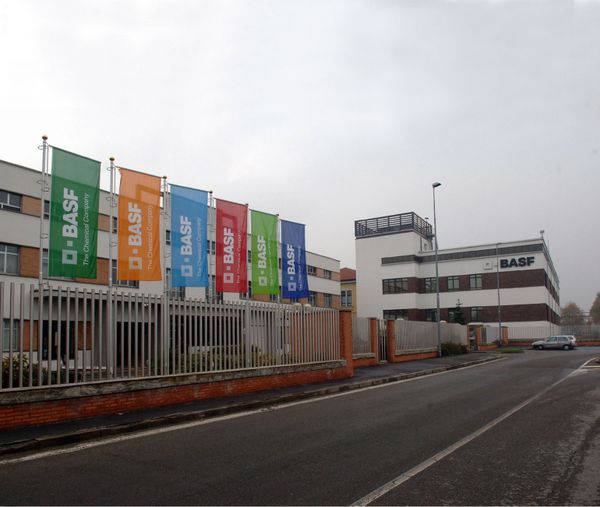
Italian Headquarter of Basf in Cesano Maderno (Milan)

Basf, Cargill and Novozymes have announced the achievement of an important milestone in their joint development of technologies to produce acrylic acid from renewable raw materials by successfully demonstrating the production of 3-hydroxypropionic acid (3-HP) in pilot scale.

3-HP is a renewable-based building block and one possible chemical precursor to acrylic acid. The companies also have successfully established several technologies to dehydrate 3-HP to acrylic acid at lab scale. This step in the process is critical since it is the foundation for production of acrylic acid. In August 2012, Basf, Cargill and Novozymes announced their joint agreement to develop a process for the conversion of renewable raw materials into a 100 percent bio-based acrylic acid.

Continue reading

Novozymes and Novo Nordisk utilize wastewater to produce biogas

Novo Nordisk's production site in Kalundborg
Novo Nordisk’s production site in Kalundborg

Novozymes and Novo Nordisk, Danish big companies, have in collaboration installed a 36 meter tall, high-performance biogas reactor. The new biogas reactor utilizes wastewater from both Novo Nordisk and Novozymes’ large production in Kalundborg for an efficient production of biogas.
There are two specific reasons for Novozymes’ investment in the new biogas reactor. “Firstly, we can reduce CO2 emissions from our production. This enables us to reduce our CO2 emission with 21,000 tons annually, equivalent to emissions from 12,000 households or 1000 trucks each driving a 1000 kilometers,” explains Line Sandberg, Vice President in Novozymes’ Danish production.

Continue reading

Sprin Technologies: Trieste’s response to the Danish giant Novozymes

trieste“Currently what happens is that innovation created in Italy is then exploited abroad, due to a  lack of direct access to on-site manufacturing facilities or industrial pilot plants. Closer cooperation between SMEs and large companies could accelerate the  scale-up and industrialization steps, which often represent  demanding  investments for SMEs and –in particular at this rather difficult economical stage that translate in very unlikely access to credit, making it not always affordable”.

To say it is Sara Cantone, co-founder and Chief Operating Officer of Sprin, a spin-off of the University of Trieste founded in December 2007 that operates in the research, development, production and commercialization of advanced products for implementing sustainable chemical processes. In particular, Sprin – that since 2010 has had the participation of  Venture Capital, AlAdInn Venture – is focused on the production of immobilized enzymes and the supply of services for the development of bio-catalyzed processes. With Cantone, we talk about the bioeconomy and in particular the role played by the enzymes in its development.

Interview by Mario Bonaccorso


Continue reading