
A New study conducted by nova-Institute and ordered by CropEnergies, which will be presented and discussed for the first time in Brussels on 26 September 2017, conducts quantitative and qualitative sustainability assessment of biofuels against the background of the EU’s REDII negotiations. This comprehensive sustainability assessment carried out by the German company led by Michael Caurs “shows that first generation bioethanol is as advantageous as second generation bioethanol for a feasible climate strategy”. According the nova-Institute “the results clearly indicate that the systematic discrimination against first generation biofuels of the current Commission proposal is in no way founded on scientific evidence. It would be counterproductive to further lower the share of first generation fuels in the EU’s energy mix”.


 Starting in July, the airport buses at Helsinki Airport has been fuelled by diesel manufactured wholly from waste and residue. Finavia – a limited corporation owned fully by the Finnish state, which is responsible for maintaining and developing its 21 airports and Finland’s air navigation system – started a gradual conversion to using renewable diesel in all buses travelling between the terminal and aircraft at Helsinki Airport. It is also Finavia’s goal to encourage other companies operating at its airports to use renewable fuels.
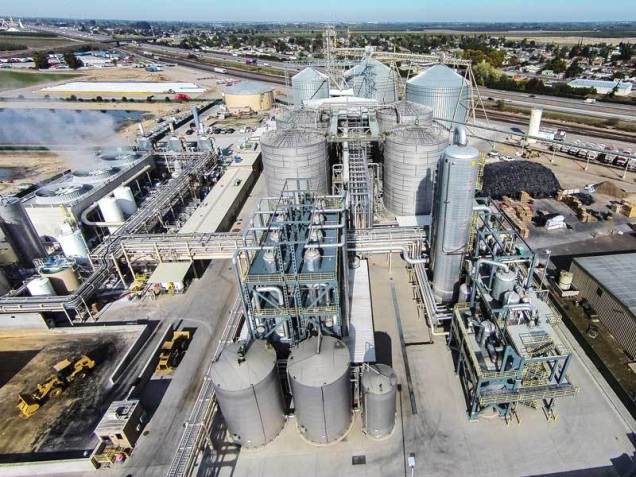 Ethanol Production Facility in Keyes, CA
 Amyris, the U.S. industrial bioscience company led by John Melo, closed the second and final tranche of its previously announced financing. The second tranche of $50 million in a private placement was led by a $25 million investment from Koninklijke DSM N.V. (Royal DSM) with the remaining $25 million contributed by Vivo Capital.

 IL BIOECONOMISTA