 LanzaTech, Virgin Atlantic and partners are one-step closer to building the world’s first large scale Alcohol to Jet (ATJ) facility producing commercial quantities of fuel in the UK. The commercial facility would convert low carbon ethanol produced from waste emissions, to jet fuel.
Author: Il Bioeconomista
Tour de France: Royal DSM partners with Team Sunweb. A natural ingredient can reduce the toxic effects of exercise by more than half
 Royal DSM, the Dutch global science-based company in Nutrition, Health and Sustainable Living, is helping professional cyclists Team Sunweb to recover faster in this year’s Tour de France with its dietary antiplatelet, Fruitflow®. This forms part of the innovation partnership between DSM and Team Sunweb that aims to improve the health, nutrition and cycling materials of the professional athletes.
Saipem signed a MoU for the development of new California bioethanol plant
 Italian company Saipem signed a Memorandum of Understanding as well as an exclusive agreement with California Ethanol & Power, LLC, for the realisation of a low carbon emission plant for the production of ethanol fuels, electricity from renewable sources, biomethane and other secondary products derived from sugar cane cultivated on site.
Avantium is ready to open a pilot biorefinery for its Zambezi technology in Delfzijl, Netherlands

Amsterdam-based Avantium, a leading technology development company and forerunner in renewable chemistry, will officially open a pilot biorefinery for its Zambezi technology in Delfzijl, Netherlands. Opening ceremonies will take place in Amsterdam on 10 July and in Delfzijl on 13 July. The province of Groningen is supporting the pilot biorefinery with a RIG (‘Regionale Investeringssteun Groningen’) subsidy of €1.8 million.
Leaf Resources is the first bioeconomy company to be selected by Unreasonable Impact

Leaf Resources has been selected by Unreasonable Impact, a global partnership between Barclays and Unreasonable Group focused on scaling up ventures that have the potential to solve major environmental and societal problems while creating the jobs of tomorrow. Leaf is the only Australian company – as well as the only bioeconomy company – chosen for the current programme, focused on the Asia-Pacific region.
An interview with Andreas Kiesel, University of Hohenheim. “A CO2tax for fossil-based products”

“Cascade use and reuse/-cycling are important factors for the success of the bioeconomy, but the products need to be designed in an appropriate way for recycling. For sure, carbon storage in the material is a positive side effect, but I see this more as a leverage to increase competitiveness of bio-based products compared to fossil-based products, e.g. through a CO2tax for fossil-based products”. To say it – in this interview with Il Bioeconomista – is Andreas Kiesel, a researcher at the University of Hohenheim, who is coordinating the BBI JU Demo Project GRACE, “which is demonstrating the feasibility of 10 bio-based value chains for hemp and miscanthus biomass at an industry relevant scale”.
Interview by Mario Bonaccorso
Bio-on inaugurated its plant to produce 100% biodegradable PHAs bioplastics for cosmetics

Bio-on, the Italian company operating in the high quality bioplastic sector, yesterday inaugurated its first owned plant designed to produce 100% natural and biodegradable special PHAs bioplastics for high added value niche markets, such as the microbeads used in the cosmetics sector.
Stora Enso opened Europe’s largest wood fibre-based biocomposite plant in South-west Sweden
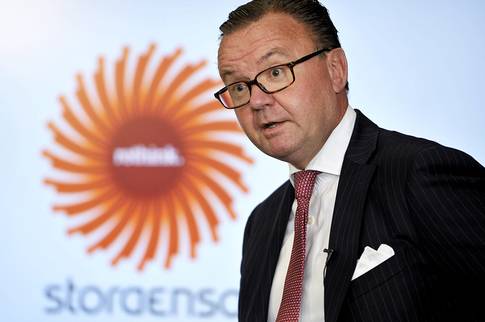
Scandinavian multinational company Stora Enso opened Europe’s largest wood fibre-based biocomposite plant. The opening ceremony took place last June 4 at the company’s Hylte Mill outside of Halmstad in South-west Sweden, and was attended by more than 150 guests. Stora Enso’s investment of €12 million in a biocomposite plant is part of the company’s ongoing process of becoming a renewable materials company. It aims at showing that Stora Enso is a leader in the bioeconomy, with the ability to provide innovative, more sustainable alternatives to plastic.
BASF Venture Capital is to invest in LanzaTech

BASF Venture Capital is to invest in LanzaTech, a biotech company headquartered in Chicago (USA). Using special microbes, LanzaTech has developed a technology for gas fermentation that first enables ethanol to be produced from residual gases containing carbon monoxide and hydrogen. By re-using waste streams instead of incinerating them, industrial companies can reduce carbon dioxide emissions.
LanzaTech and Shougang Group towards a carbon-smart economy in China

LanzaTech, and its joint venture partner, Shougang Group, a leading Chinese iron and steel producer, announced the successful start-up of the world’s first commercial facility converting industrial emissions to sustainable ethanol. The facility, located at the Jingtang Steel Mill in Caofeidian in Hebei Province, began operations on May 3.
 IL BIOECONOMISTA