UN Report: Rising demand for energy, from biofuels to shale gas, is a threat to freshwater supplies

The UN Building in New York City

Rising demand for energy, from biofuels to shale gas, is a threat to freshwater supplies that are already under strain from climate change, the United Nations said in a report last Friday. March 22 was World Water Day in the UN calendar. It urged energy companies to do more to limit use of water in everything from cooling coal-fired power plants to irrigation for crops grown to produce biofuels.

Continue reading

Bio-based tourism in the Maldives

image

Cardia Bioplastics, a global developer, manufacturer and marketer of sustainable resins derived from renewable resources based in Melbourne (Australia), announced the delivery of 60,000 large waste management bags as initial order by Maldives Truly Green, an entrepreneurial start-up venture in the Maldives, dedicated to both the awareness of and fight against environmental degradation of the Maldives. As an initial step towards a greener Maldives, Truly Green offers environmentally friendly products that are made from renewable resources with a lower carbon footprint replacing traditional plastics packaging and waste management products. The Cardia Biohybrid waste management bags will be used throughout Maldives resorts and by the expansive tourism sector, with annual orders of more than 1,000,000 bags expected.

Continue reading

Lux Research: Biofuel industry is poised for a huge slowdown in capacity growth

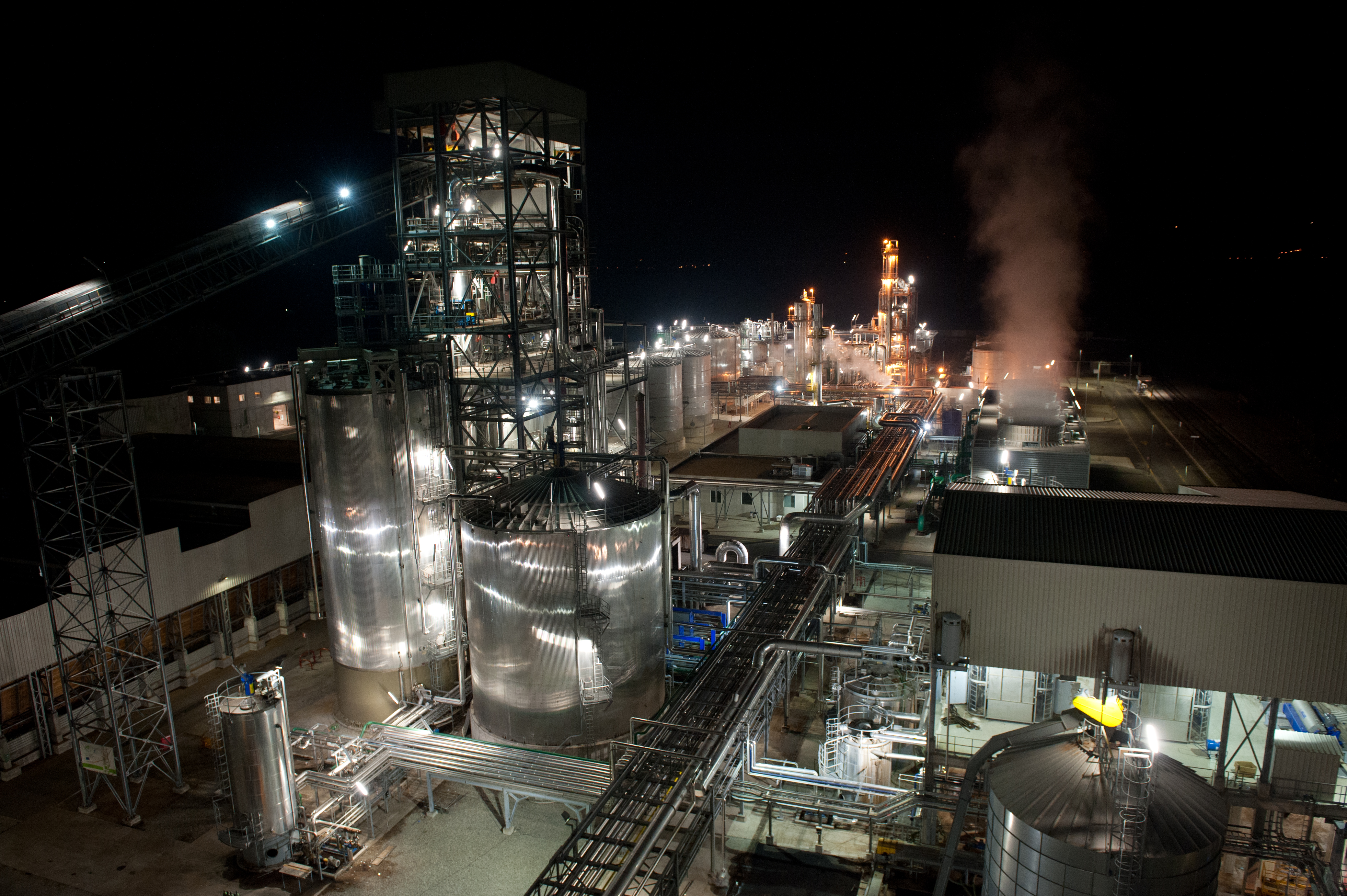
Crescentino Plant View: 2G biofuels biorefinery

The 53.2 billion gallon a year (BGY) biofuel industry is poised for a huge slowdown in capacity growth, to a 3.2% annual rate from 2013 to 2017 – reaching 60.4 billion gallons – off from 19.6% annually from 2005 to 2013, according to Lux Research. The sharp decline is on account of a significant industry transition to novel fuels and feedstocks, to enable long-term growth in the face of impediments like the food vs. fuel debate and the imminent blend limits for biodiesel and ethanol. Next-generation biofuels – such as renewable diesel and butanol – that can offer higher blends, in contrast, are not quite mature.

Continue reading

Exclusive interview with Barbara Secchi, Bridgestone Technical Center Europe: “The tire’s future is bio-based”

Bridgestone trucks. The Japanese company is MotoGP tires supplier

“The bioeconomy is challenged by the fact that bio-products have to be anyway competitive vs traditional ones, but it can also open new opportunities if we set our minds not (only) to make copies of petroleum products but also to take completely new approaches to the material world”. To say it in this exclusive interview with Il Bioeconomista is Barbara Secchi, Senior expert Bio-materials and EU network at Bridgestone (the world’s largest tire and rubber company) Technical Center Europe based in Rome. With Mrs Secchi we talk about bioeconomy and the bio-based future of the tire’s industry, “possibly using biomass that is not competing with food (2nd generation biomass)”.

Interview by Mario Bonaccorso

Continue reading

The American Chemistry Council creates a new Biobased Chemistry Network

The American Chemistry Council

The American Chemistry Council (ACC) – focused on anticipating and preventing accidents, as well as on educating the public about how to use chemical products safely – created a new Biobased Chemistry Network to help educate policymakers on how to develop workable regulatory programs for the growing biobased chemistry industry. Global sales of this segment range from $13.5 billion to $20 billion, with the US accounting for approximately 20 percent of those sales, or $2.7 billion to $4 billion.

Continue reading

Iowa cellulosic ethanol plant of POET-DSM will be operating by June

Headquarter of Royal DSM in Heerlen (The Netherlands)

An Iowa ethanol plant that will be one of the first producers of biofuels made from crop waste will be operating by June, Steve Hartig, General Manager for Licensing of POET-DSM Advanced Biofuels, said at the National Ethanol Conference in Orlando, Florida.

POET-DSM, a joint operation between leading U.S. ethanol maker POET LLC and Dutch food and chemicals group DSM, will be among the largest to make so-called advanced biofuels on a commercial scale. The $250 million facility in Emmetsburg, in the north-central part of the No. 1 corn-growing state, will produce 7 million to 12 million gallons of ethanol this year using cobs and other corn “stover”.

Continue reading

Mitsubishi Chemical develops a high-transparency bio-based engineering plastic

Mitsubishi Asx interior

Mitsubishi Chemical Corporation, Japanese chemical giant based in Tokyo, announced the development of a new grade of high-performance, high-transparency bio-based engineering plastic called DURABIOTM, using plant-derived isosorbide as its raw material. The new material features excellent optical properties and high resistance to heat and humidity.

Continue reading

Versalis launches an innovative green chemistry project for the Porto Marghera site

Daniele Ferrari, Ceo of Versalis-Eni

Versalis (the chemichal subsidiary of Eni), Industrial Relations Eni and the trade unions have reached an important agreement on the project at the Porto Marghera site (close to Venice) to redesign production facilities and regain competitiveness.

Continue reading

Bio-on and Magna sign agreement to advance R&D on bioplastics for the automotive industry

Marco Astorri, Ceo and co-founder of Bio-on

Bio-on, an Italian company founded in 2007 to create 100% natural products based on renewable resources or agricultural processing waste materials, and Magna International Inc., a leading global automotive supplier, have signed a cooperation agreement to start exclusive R&D activities on the use of bioplastics for the automotive industry.

Bio-on has developed a new kind of bioplastic created through the use of naturally occurring bacteria which feed off sugar beet by-products. In the process of fermentation, the material is turned into plastic (polyhydroxyalkanoate or PHA). The result is fully biodegradable in water and soil, an environmentally friendly product that does not rely on food as a natural resource and could provide alternatives to conventional plastics for the automotive industry.

Continue reading

The new Kia Soul EV is bio-based

Chicago Auto Show (February 8-17, 2014)

Korean automaker Kia has revealed that the company’s new Soul EV (electric vehicle), which will have its world premiere at the 2014 Chicago Auto Show starting later this week (February 8-17), has achieved UL (Underwriter Laboratoires) Environment validation for bio-based organic carbon content for ten per cent of its interior materials. UL Environment describes itself as a global independent safety science company.

Continue reading