Clariant, Haltermann and Daimler together for an advanced biofuel of the latest generation

Mercedes-Benz Museum in Stuttgart, Germany

A fuel of the future is being introduced to the streets in a fleet test launched by the joined forces of Clariant, a globally leading specialty chemicals company, based in Muttenz near Basel (Switzerland), Haltermann, one of the leading suppliers of high purity refinery chemicals used in the automotive, pharmaceutical and cosmetics industries, based in Hamburg (Germany), and Mercedes-Benz (Daimler AG). The Clariant sunliquid® process converts wheat straw into cellulosic ethanol. The company Haltermann then mixes the cellulosic ethanol with conventional fuel components to form the new fuel. The production of cellulosic ethanol is virtually CO2-neutral, saving almost 100 % of CO2 emissions when compared to gasoline. Sunliquid®20 is 20 % cellulosic ethanol, i.e. the well-to-wheel comparison shows reductions in greenhouse gas emissions of around 20 % with consistent engine power. There is no competition with food production or for agricultural acreage. A high octane number (RON) of over 100 guarantees optimal efficiency.

Continue reading

Canadian Iogen announces a new method to make drop-in cellulosic biofuels from biogas

Iogen Headquarter in Ottawa, Canada

Canadian corporation Iogen has developed and patented a new method to make drop-in cellulosic biofuels from biogas using existing refinery assets and production operations. The company estimates there is refining capacity in place to incorporate 5-6 billion gallons per year of renewable hydrogen content into gasoline and diesel fuel. Iogen will initially commercialize the approach using landfill biogas, and then expand production using biogas made in the cellulosic ethanol facilities it is currently developing.

Continue reading

Exclusive interview with Daniel Gibbs (General Biomass Company)

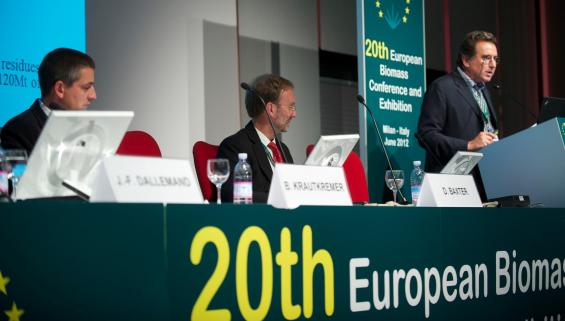
20th European Biomass Conference

“The central question for the development of any new field, such as the bioeconomy, is: ‘Who’s going to do it?’ Which countries and which companies are going to make the investments and do the hard development work to achieve the technology and the infrastructure which are necessary to move forward?  Technologies are important, feedstocks are important, but at the end of the day it is all about who has the will and motivation to fund and develop these systems”. To say it in this exclusive interview with Il Bioeconomista is Daniel Gibbs, Founder and Ceo of the General Biomass Company, which is currently developing advanced industrial enzymes and other technology to convert nonfood cellulosic feedstocks to sugars for bioplastics, sustainable packaging, renewable chemicals and biofuels. With Gibbs we talk about the bioeconomy in US,  the different roles played by America, Europe and Asia, considering the strategic role of cheap nonfood biomass to the further development of the bioeconomy. “We need to realize- says Gibbs –  that production of biobased chemicals and plastics from biomass may be a very significant driver of technology development, since the monomers for bioplastics have a higher oxygen content and thus a higher yield than the alkanes needed, e.g., for biojetfuel or biodiesel. Both chemically and financially, this becomes attractive for consumer brands and sustainable packaging

Interview by Mario Bonaccorso

Continue reading

Il Bioeconomista: 2013 in review

The WordPress.com stats helper monkeys prepared a 2013 annual report for this blog.

Here’s an excerpt:

The concert hall at the Sydney Opera House holds 2,700 people. This blog was viewed about 32,000 times in 2013. If it were a concert at Sydney Opera House, it would take about 12 sold-out performances for that many people to see it.

Click here to see the complete report.

South Africa launched the National Bioeconomy Strategy last Tuesday

Derek Hanekom, South African Minister of Research and Technology
Derek Hanekom, South African Minister of Science and Technology

The Minister of Science and Technology of South Africa, Derek Hanekom, launched the National Bioeconomy Strategy last Tuesday in Pretoria. The science-based Bioeconomy Strategy, approved by South African Cabinet in November last year, positions bio-innovation as essential to the achievement of government’s industrial and social development goals. The strategy calls for industry, science councils, government departments and academia to cooperate closely to ensure that biotechnology and bio-innovations are market relevant and find easier application in South Africa.

Continue reading

In Belgium field trial with lignin modified poplars shows potential for bio-based economy

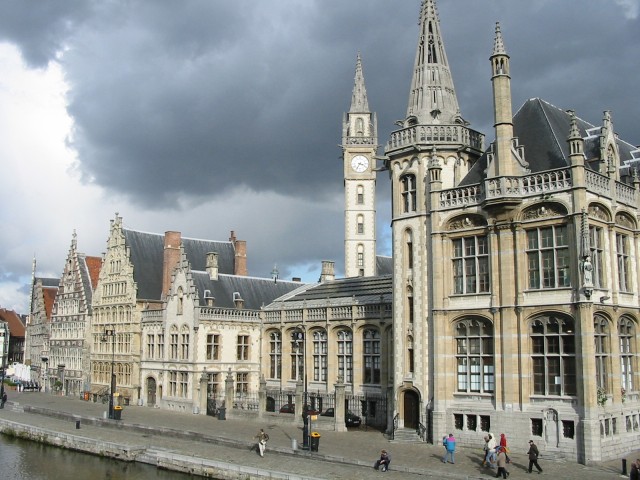
Ghent, Belgium
Ghent, Belgium

The results of a field trial with genetically modified poplar trees in Zwijnaarde, Belgium, led by VIB – a life sciences research institute in Flanders funded by the Flemish government – shows that the wood of lignin modified poplar trees can be converted into sugars in a more efficient way. These sugars can serve as the starting material for producing bio-based products like bio-plastics and bio-ethanol.

Continue reading

Exclusive interview with Anton Glieder (Ceo of ACIB): We translate academic knowledge into new industrial applications

In the middle: Anton Glieder, Ceo of ACIB GmbH

“Sustainable production and use of bioresources from agriculture and forestry have a long tradition in Austria and besides the use of wood for construction, composite materials and energy production, the use of renewables and organic waste for the production of fibres, paper, chemicals, biodiesel, food&feed and pharmaceuticals are crucial to internationally leading Austrian industries active in production and engineering”. To say it in this exclusive interview with us is Anton Glieder, associate professor at the Institute of Molecular Biotechnology of Graz University of Technology and Scientific Director, Ceo and Cso of the Austrian Centre of Industrial Biotechnology (ACIB GmbH). With Glieder we talk about industrial biotechnology and the role of Austria in the European bioeconomy.

Interview by Mario Bonaccorso

Continue reading

Amyris aims at becoming a great player in the bioeconomy. Together with Firmenich and Total

Bill and Melinda Gates: their Foundation supported the start-up of Amyris in 2005

The US biotech company Amyris aims at becoming a great player in the world bioeconomy. Founded in 2003 in the San Francisco Bay Area by a group of scientists at the University of California, Berkeley, Amyris – as anticipated during its prior quarter results call – has begun the production of its first fragrance oil at a specialty contract manufacturing facility. In 2014, building on the successful results of its initial fragrance oil production and based on feedback from its partner, Amyris plans to also produce this fragrance oil at its own Brotas production facility. The Brotas biorefinery currently produces Biofene, Amyris’s brand of farnesene, a renewable hydrocarbon used for a range of applications. Following planned improvements to the Brotas plant in early 2014, Amyris expects to be able to produce both Biofene and a range of other fermentation products, including its fragrance oils, at the plant.

This announcement follows the one of last December, when Amyris announced together with the French oil giant Total the formation of Total Amyris Biosolutions, a 50-50 joint venture that will produce market renewable diesel and jet fuel.

Continue reading

Happy New Year of economic growth and employment recovery

Berlaymont, European Commission's Headquarter in Brussels
Berlaymont, European Commission’s Headquarter in Brussels

Happy New Year to all. The just begun 2014 must be the year of economic growth and employment recovery. Especially for Old Europe. There are no alternatives. Meanwhile, the CEBR has told us about how it will change the economic geography of the world by 2030, reporting even unusual overtakings such as the United Kingdom, which is preparing to oust Germany from the throne of Europe. The latest research conducted by the Centre for Economics and Business Research (CEBR) ranks the world economies of “greater weight”.

Continue reading

Australian Bioeconomy: Leaf Energy to fund first trial program on Actinogen’s bioethanol project

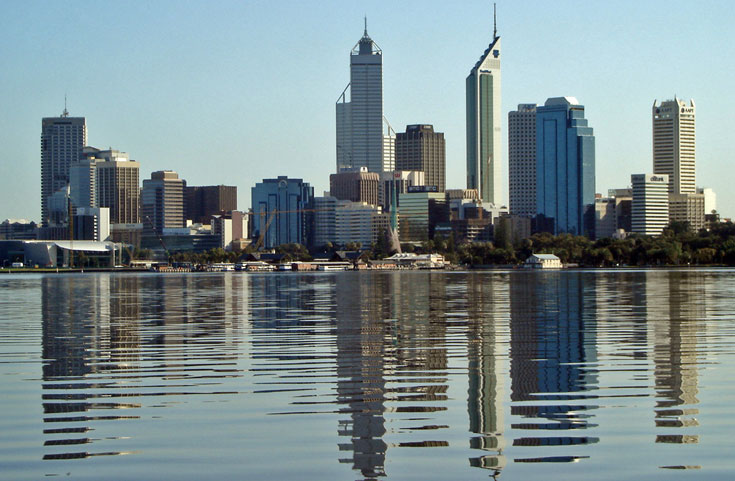
Perth, the capital of Western Australia

Actinogen Limited, heaquartered in Western Australia, has entered into a collaborative and royalty agreement with Leaf Energy Ltd in the company’s Bioethanol project. Under the terms of the agreement Leaf Energy, an Australian company focused on turning waste into biofuels, bioplastics and green chemicals, will fund further studies in Actinogen’s Bioethanol project; in which the company previously identified strains of actinomycetes capable of producing cellulases. Cellulase are enzymes used to breakdown cellulose from plant material, papers and industrial waste glycerols (biomass), and are an important step in the production of second generation bioethanols.

Continue reading