EFIB returns to Brussels. From 30th September to 2nd October the European Forum for Industrial Biotechnology and the Biobased Economy (EFIB) returns to Europe’s capital, where it was first launched 5 years ago. Since then, the event has grown tenfold in size but remains true to its goal of providing the premier meeting place for business and policy throughout the biobased value chain.
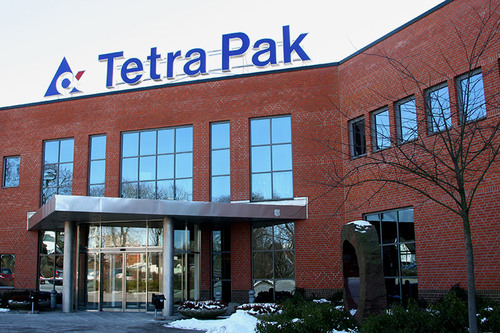
The bio-based revolution extends to the carton packaging industry. In a first for this field, Tetra Pak, the Swedish multinational giant with net sales in 2012 of 11.15 billion euros, plans to sign an agreement with Braskem, the largest thermoplastic resins producer in the Americas, for the supply of low-density polyethylene (LDPE) made from sugar cane to its packaging material factories in Brazil.
According to the Global Renewable Fuels Alliance, a global biofuels federation representing over 65% of the world’s renewable fuels production from 44 different countries, 62 countries now have biofuels friendly policies in place whose ethanol production alone has replaced the need for over 2 million barrels of crude oil per day.
A fungus and E. coli bacteria have joined forces to turn tough, waste plant material into isobutanol, a biofuel that matches gasoline’s properties better than ethanol. University of Michigan research team members said the principle also could be used to produce other valuable chemicals such as plastics.
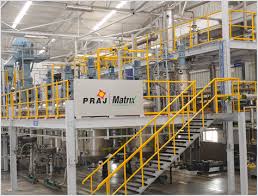
PRAJ-Matrix – The Innovation Center (a division of Praj Industries)
Praj Industries – the Indian global process solutions company for bioethanol, alcohol and brewery, water and wastewater – has emerged as the first Company in South Asia to set up an integrated 2nd Generation (2G) Cellulosic ethanol plant. Praj’s Executive Chairman, Pramod Chaudhari, did the groundbreaking at Shirala in Sangli District in Maharashtra (India) along with Chairman of Viraj Alcohols & Allied Industries Limited (VAAIL), Mansinghrao Naik.
The University of California-Berkeley, University of Minnesota, Northeastern University and 10 other colleges and universities that have signed the Green Chemistry Commitment, intended to increase the number of green chemists and scientists in the US and the business opportunities available to them.
One of the most crucial problems affecting the world today is the scarcity of potable water. In a bid to make clean water available at low cost, Ramakrishna Mallampati, a PhD candidate at the National University of Singapore (NUS), experimented with water treatment techniques using materials that are easily available, and came up with novel ways to purify water using the peels of apples and tomatoes. This is the first time that the peels of the two fruits have been used to remove different types of pollutants in water.
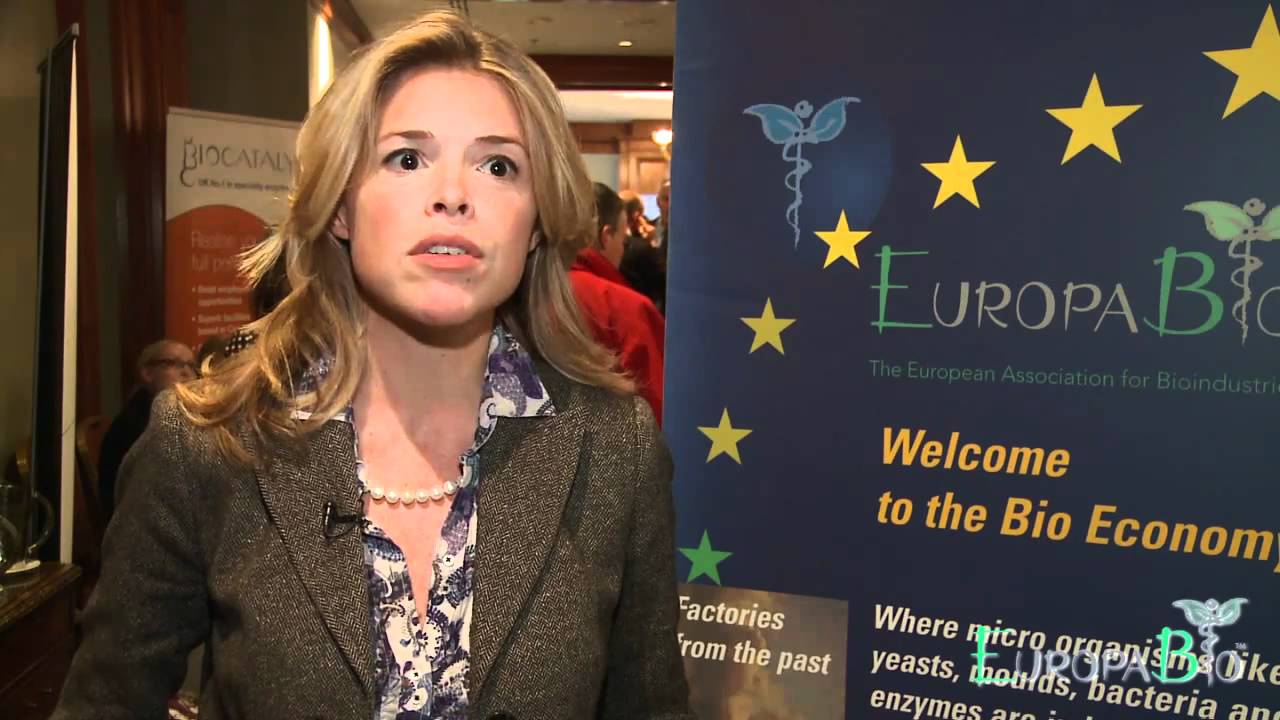
“We believe that EFIB (European Forum for Industrial Biotechnology and Bio-based Economy, editor’s note), taking place during the first European Biotech Week, contributes to increase the awareness of Europeans to the bioeconomy.” To say it is Nathalie Moll, Secretary General of EuropaBio, The European Association for Bioindustries, one of the organizers, with Smithers Rapra, of the event which will be held in Brussels from 30 September to 2 October. In this interview with Il Bioeconomista, Moll talks about EFIB – “a single platform for European business leaders, innovators and policymakers to meet, discuss and shape the future of the bioeconomy” – and the latest development of European Bioeconomy, focusing on the Public Private Partnership for Biobased industries (Bridge), “a multisector initiative whose vision is that of a society and economy which increasingly makes everyday products, such as food, feed, textiles, chemicals and fuels, from locally sourced biomass and wastes, rather than from fossil fuels.”
Alaska Airlines, a subsidiary of Alaska Air Group, and Hawaii BioEnergy LLC announced yesterday they have signed an agreement for the carrier to purchase sustainable biofuel for its aircraft. Founded in 2006, Hawaii BioEnergy is a consortium of three of Hawaii’s largest landowners (Kamehameha Schools, Grove Farm Company Inc., and Maui Land & Pineapple Inc.) and three venture capital companies who plan to use locally grown feedstocks to produce biofuels.
Europe’s first multi-purpose fermentation plant for the continuous production of bio-based chemicals has been recently inaugurated in Leuna, Saxony-Anhalt (Germany). Built at a cost of around 20 million euros, the facility will enable the German multinational conglomerate corporation ThyssenKrupp, one of the world’s largest steel producers (more than 43 billion euros in revenue), to further expand its research and development activities in the area of biochemicals based on renewable raw materials.






 IL BIOECONOMISTA