
“To increase awareness of the financing opportunities promoted by the European Union to support the development and growth of the European bio-based sector, focusing particularly on demonstration and flagship projects”. This is the aim of a new report presented yesterday by the Bio-based Industries Consortium (BIC).
“BBI JU calls see project proposals receiving excellent evaluation scores, but are often not granted due to budget limitations”.
The report outlines the opportunities available for financing these activities, allowing companies to pursue their investments in Europe.
 Our readers have voted: the most innovative bioeconomy CEO 2017 is Tony Duncan, CEO of Circa Group, the Australian company headquartered in Melbourne that is converting waste biomass into advanced biochemical materials. For the second consecutive year is the CEO of an Australian company to win the award (in 2016 was Ken Richards, CEO of Leaf Resources).
 The bioeconomy is innovation, the result of the skills and passion of researchers and managers able to create value and new high-qualified jobs. At the end of 2014 Il Bioeconomista launched a new initiative: The 10 Most Innovative Bioeconomy CEOs.
 Titan Hemp, a leading provider of hemp commodities and extracts based in Seattle (USA), has formed a joint venture with Green Growers Technology Alliance (GGTA) to create a new company, Titan BioPlastics, a manufacturing and development entity focused on creating plant-based composites and products for a wide variety of manufacturing applications, including packaging, nanotechnology, bio-polymers, construction, and bioplastics.
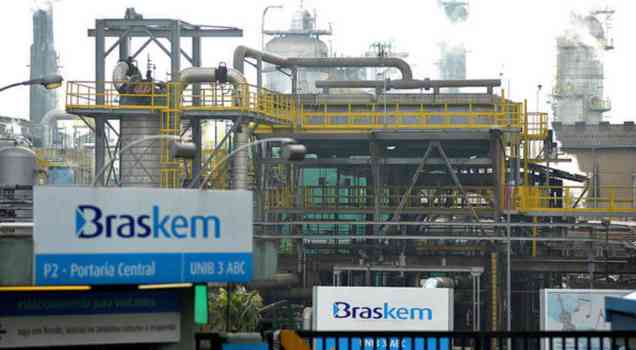 There is a new Brazilian-Danish partnership in the world bioeconomy. Braskem, the Americas’ leading producer of thermoplastic resins, and Danish-based Haldor Topsoe, a world leader in catalysts and surface science, have signed a technological cooperation agreement to develop a pioneering route to produce monoethylene glycol (MEG) from sugar. The agreement calls for the construction of a demonstration plant in Denmark, with operation slated to begin in 2019.
 ExxonMobil and Renewable Energy Group (REG) have demonstrated the ability to convert sugars from a variety of non-edible biomass sources into biodiesel by utilizing REG’s patented fermentation technology
 IL BIOECONOMISTA