 ExxonMobil and Renewable Energy Group (REG) have demonstrated the ability to convert sugars from a variety of non-edible biomass sources into biodiesel by utilizing REG’s patented fermentation technology
Business
Clariant is ready to invest in a new full-scale commercial plant in Romania

Clariant, a world leader in specialty chemicals, will invest in a new full-scale commercial plant for the production of cellulosic ethanol from agricultural residues using its sunliquid® technology. The new plant, with an annual production capacity of 50.000 tons, will be built in the southwestern part of Romania. The facility will be a flagship site, confirming competitiveness and sustainability of the sunliquid® technology at commercial scale thus supporting Clariant’s sunliquid® licensing business strategy.
Eni denies the Ipo of Versalis and invests €500 million for the next 4 years in green chemistry

“The Ipo (Initial public offering, editor’s note) of Versalis is not yet in Eni’s plans”, Massimo Mondazzi, CFO of the Italian oil giant, said last Friday during a conference call with analysts answering the question about the chemical quotation hypothesis. “We want to maintain and strengthen Versalis, there are no Ipo projects. The option is not in the plans,” he said.
UPM moves forward with the development of biochemicals business in Germany

Finnish pulp and paper giant UPM moves forward with the development of biochemicals business by evaluating the potential of building a biorefinery in the Chemical Park Frankfurt-Höchst in Germany. The new-to-the-world biorefinery would combine novel technologies and utilize sustainable wood raw material in an innovative way. This opportunity is the outcome of more than five years of extensive technology development and piloting.
Leaf Resources enters biodegradable packaging market leveraging Glycell strategy

Australia-based Leaf Resources has secured a license for an innovative biodegradable coating product for the packaging market. The product is based on lignin and also utilizes glycerol, two of the products that Leaf’s Glycell process will produce. According to the company, “Leaf’s Glycell process break down plant biomass at lower temperature and pressure and generate a higher yield of cellulose than conventional approaches”.
Statoil, Shell and Total entered CO2 storage partnership to meet the global climate target
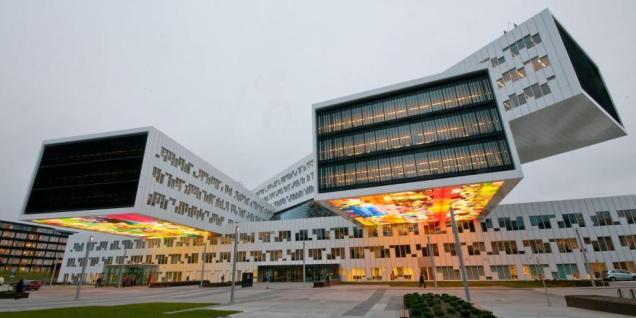
Statoil, Shell and Total entered CO2 storage partnership. The three partners aims at maturing the development of carbon storage on the Norwegian continental shelf (NCS). The project is part of the Norwegian authorities’ efforts to develop full-scale carbon capture and storage in Norway.
Mossi Ghisolfi is considering selling its business in the biofuels sector

Italian biochemicals multinational Mossi Ghisolfi is considering selling its Italian business in the biofuels sector as part of a restructuring deal, a source close to the matter said to the International press agency Reuters.
The company, Italy’s second-biggest chemicals business behind that of oil group Eni, has hired Mediobanca to run the process, the source said to Reuters.
Eight promising bioeconomy start-ups pitched in Delft at an event organized by Royal DSM

A total of eight promising start-ups were invited to pitch at the event “Connecting Bright Innovations 2017” organised by Royal DSM and held this year in Delft (Netherlands), which focused on new and innovative products and biotechnologies for food, health and (bio)tech applications. A panel of expert venturing and innovation specialists is evaluating the pitches with a view to their suitability for further financing and partnering opportunities.
Rome: the eternal city becomes the bioeconomy city
 More than 300 delegates from EU, USA, Russia, Turkey, Israel, Latin America and Canada, 40 presentations, 20 scientific posters and a round table on “The role of Shared pilot facilities in fostering the bioeconomy”. These are the numbers of IFIB, the Italian Forum on Industrial Biotechnology and Bioeconomy, which opens today to the world in Rome at Palazzo Rospigliosi.
An interview with Marco Astorri, CEO of Bio-on. “It is necessary to make a step forward to more circular processes”

Interview by Mario Bonaccorso

