Dutch biochemical company Corbion is building its new PLA bioplastics polymerization plant at the existing Corbion site in Rayong, Thailand. Upon completion in 2018, it will be able to produce the complete Luminy® portfolio of PLA neat resins: from standard PLA to innovative, high heat resistant PLA.
Yesterday, at COP22, in Marrakech (Morocco), a coalition of leading countries in the clean energy and the bioeconomy fields announced the launching of the Biofuture Platform, a new collective effort to accelerate development and scale up deployment of modern sustainable low-carbon alternatives to fossil based solutions in transport fuels, industrial processes, chemicals, plastics and other sectors.
Finally Italy has its own strategy on bioeconomy. This was announced by Paolo Bonaretti, representative of the Ministry of Economic Development, last week in Rimini, Emilia Romagna Region, during an event on the bioeconomy in the Mediterranean organized within the Ecomondo Fair, with the presence, among others, of John Bell, Director for BioEconomy, DG Research & Innovation EU Commission, and Philippe Mengal, executive director of the Bio-based Industries Joint Undertaking. Good news, then, for the bioeconomy in Italy. The new strategy will be published on the web site www.agenziacoesione.gov.it starting from 20th November for an open public consultation, which will last a month.
Biossance™, the consumer beauty brand from Amyris, Inc., the US integrated renewable products company, announced its planned launch in Sephora’s retail stores where the brand’s expansive line of high-performance skin care products will be available to consumers. The rollout to initial participating stores will begin in February 2017 and coincide with launching on Sephora online. Additional in-store and online marketing activities with Sephora to highlight the Biossance brand shortly following launch are planned.
Leaf Resources Ltd, the Australian company focused on making sustainable products from plant biomass, together with Leaf Development, its US-based joint development partner, achieved significant milestones related to the development in Malaysia of at least one commercial-scale, second-generation, bio-chemical production facility.
The Biotechnology Innovation Organization (BIO) urges U.S. Congress to advance a multi-year extension of renewable energy tax credits slated to expire at the end of 2016.
Mathieu Flamini and Pasquale Granata launch The BioJournal
Published “to take part in a severe contest between intelligence, which presses forward, and an unworthy, timid ignorance obstructing our progress.”
We can borrow this mission statement written on the contents page of the first issue of The Economist, published by James Wilson in September 1843, to define exactly the reason that today, 173 years later, leads to the launch of The BioJournal.
Ginkgo Bioworks and Genomatica announced an alliance to more rapidly deliver biology-based solutions for the world’s highest-volume intermediate and specialty chemicals. Mainstream chemical producers can now in-license technology to manufacture their widely-used chemicals with cost-effective and sustainable whole-process solutions that include engineered microorganisms, complete process designs and technology transfer support. The alliance is structured as a deep collaboration, with two-way sharing of technology and intellectual property, along with joint technology development, to provide a single unified offering to the market.
She has created the Italian bioeconomy. Thanks to her passion, her tenacity, her ability, Italy today can rightly claim to be a leading country in this field. All this in the total lack of an Italian strategy on bioeconomy.
The inauguration last Friday of Mater Biotech’s plant in Bottrighe di Adria, the first in the world capable of producing butanediol from renewable sources, is her umpteenth great victory. The demonstration that the bioeconomy is a reality, that creates wealth and jobs in an environmentally friendly way. That the goals can be achieved with passion and determination, putting into practice a new idea of sustainable enterprise.
Mater Biotech, a 100% company owned by Novamont, today proved Genomatica’s revolutionary technology that converts renewable feedstocks into 1,4 butendiol (BDO) at the Grand Opening of its first commercial bio-BDO plant in Bottrighe di Adria (Rovigo, Italy).

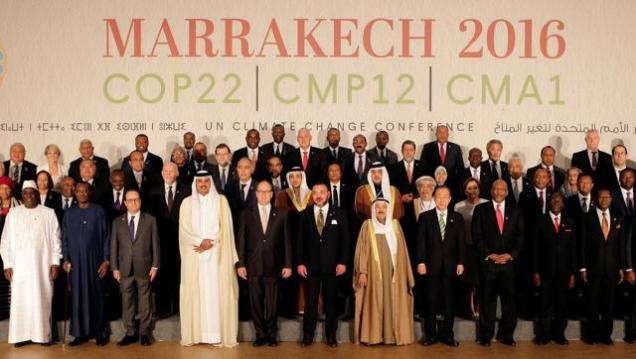 Yesterday, at COP22, in Marrakech (Morocco), a coalition of leading countries in the clean energy and the bioeconomy fields announced the launching of the Biofuture Platform, a new collective effort to accelerate development and scale up deployment of modern sustainable low-carbon alternatives to fossil based solutions in transport fuels, industrial processes, chemicals, plastics and other sectors.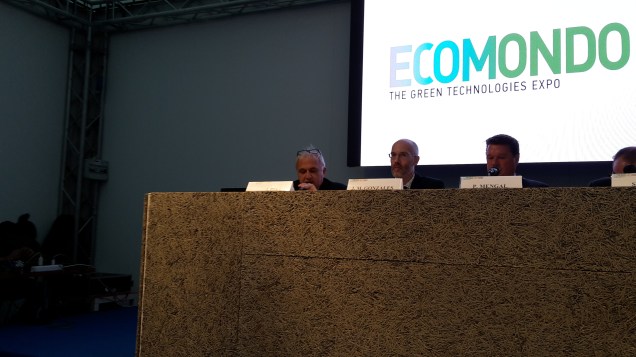
 Biossance™, the consumer beauty brand from Amyris, Inc., the US integrated renewable products company, announced its planned launch in Sephora’s retail stores where the brand’s expansive line of high-performance skin care products will be available to consumers. The rollout to initial participating stores will begin in February 2017 and coincide with launching on Sephora online. Additional in-store and online marketing activities with Sephora to highlight the Biossance brand shortly following launch are planned.



 She has created the Italian bioeconomy. Thanks to her passion, her tenacity, her ability, Italy today can rightly claim to be a leading country in this field. All this in the total lack of an Italian strategy on bioeconomy.

