Prices in the niche market for biofuels compliance credits jumped to three-year highs last Monday as traders fretted about supplies because of higher U.S. government mandates to increase the use of biofuels next year.
Trading in the opaque market for Renewable Identification Numbers (RIN) – the paper credits that can be bought and sold to meet government requirements for biofuels – has picked up in recent days.
Marc Delcourt, co-founder and CEO of Global Bioenergies
Global Bioenergies, IBN-One and Lantmännen Aspen, world market leader in alkylate gasoline for two and four stroke small engines, yesterday announced a partnership on renewable isooctane for specialty fuel applications.
CropEnergies is restarting the bioethanol plant in Wilton, UK. The goal is to intensively test the modifications to increase reliability and improve energy efficiency which were implemented during the standstill and to regulate production according to market conditions.
Samsill Corporation today joins Agriculture Secretary Tom Vilsack and an array of biobased stakeholders in Washington, D.C. at the United Soybean Board’s Biobased Stakeholders’ Dialogue held at the USDA headquarters.
Samsill will be displaying its new Earth’s Choice Biobased ring binders. The company combined 100% post-consumer recycled chipboard – with plastic containing 25% of Green Polyethylene, a bioplastic made from sugarcane ethanol, a 100% renewable source which promotes the reduction of greenhouse gasses. The finished product is at least 69% bio-based and is a USDA Certified Bio-based Product.
Evonik, one of the world leaders in specialty chemicals, signed a purchase agreement for acquisition of the probiotics business of the Spanish company Norel, a global supplier of animal feed ingredients.
The agreement sees Evonik acquiring Norel’s probiotics product portfolio as well as the company’s site in León (Spain). The business will be integrated into Evonik’s Animal Nutrition Business Line. The parties have agreed not to disclose details of the transaction.
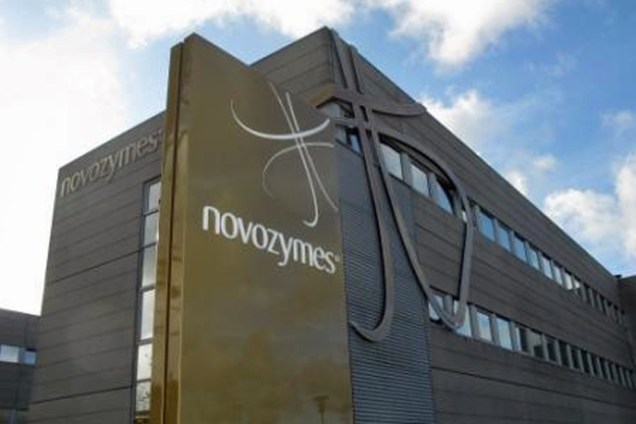
Danish Dong Energy and Novozymes have agreed that Novozymes will deliver enzymes for the coming REnescience plant in Northwich in the North West of England. It will be the first full-scale bio plant in the world capable of handling household waste by means of enzymes.
Ginkgo Bioworks and Amyris, Inc. announced a new partnership, which will enable the companies to jointly develop products more efficiently and cost effectively, accelerating time to market.
This breakthrough biotech partnership creates clear leadership with a combined offering that has successfully introduced more bio-based products than any other company known in the field. The combined R&D capabilities of Ginkgo and Amyris put both partners at a significant advantage in the industry by leveraging the joint end-to-end technology platform. This partnership is expected to deliver more new cultured ingredients into the global market in the next three years than the total industry has achieved in the last 10 years.
In Duisburg yesterday Johanna Wanka, German Minister of Education and Research, announced funding of more than 60 million euros for the Carbon2Chem project initiated by thyssenkrupp. The aim of Carbon2Chem is to convert process gases from steel production – including the CO2 they contain – into base chemicals. The greenhouse gas CO2 would then no longer be discharged into the atmosphere. The energy required for the conversion process is to come from renewable sources.
Sixteen partners from the areas of basic and applied research and various sectors of industry are involved in the project. thyssenkrupp and the Max Planck Institute for Chemical Energy Conversion have carried out preparatory planning and scientific work. “Carbon2Chem can be an important contribution to climate protection and the transition to renewables,” said Heinrich Hiesinger, CEO of thyssenkrupp AG.Continue reading →
Asia is the new center of gravity of the world bioeconomy. Thailand’s largest energy company, PTT Pcl, plans to invest about 40 billion baht (approximately 1 bln euro) to develop biochemical products over the next five years.
The move will help Thailand become a centre for the bioplastic industry in the Asia Pacific region, Chansin Treenuchagron, senior executive vice president for PTT’s petrochemical unit, said, adding that biochemicals are expected to contribute about 2 percent of PTT’s revenue by 2020.
British voters have voted in favor of Brexit: British exit from the European Union. That means that in the coming months, British and European leaders will begin negotiating the terms of Britain’s departure. Britain’s exit will affect British and EU economies, and also the bioeconomy. It will take years for the full consequences to become clear. From our point of view, as Europeans, it is an absurd. Obviously we do not put in discussion the result of the vote. We simply think that Great Britain is an integral part of the European Union. The development of the European bioeconomy needs Great Britain and viceversa.


 Samsill Corporation today joins Agriculture Secretary Tom Vilsack and an array of biobased stakeholders in Washington, D.C. at the United Soybean Board’s Biobased Stakeholders’ Dialogue held at the USDA headquarters.


 IL BIOECONOMISTA