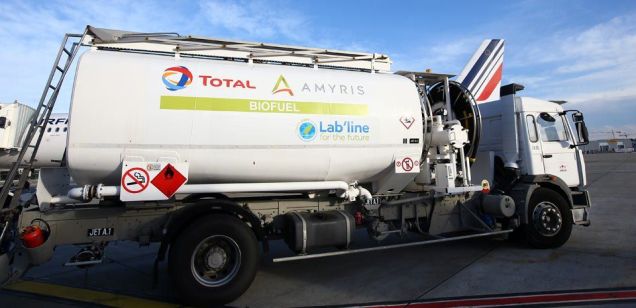
 Amyris, the U.S. industrial bioscience company, has won a three-year multi-million dollar contract from the U.S. Department of Energy (DOE) to further the manufacturing of cellulose-derived farnesene for biofuels. The company led by John Melo, in cooperation with Renmatix and Total New Energies USA, will work to develop a manufacturing-ready process utilizing wood as the cellulosic feedstock to produce farnesene, a hydrocarbon building block used to manufacture a variety of products ranging from cosmetics to detergents, as well as base oils, lubricants, diesel and jet fuel.
Economy
Enerkem obtains the ISCC certification and is ready to export biomethanol as a biofuel in EU

Enerkem Inc., a Canadian waste-to-biofuels and chemicals producer, yesterday announced it has obtained certification from the International Sustainability and Carbon Certification (ISCC) system for the biomethanol production of its Enerkem Alberta Biofuels full-scale facility in Edmonton, Canada. This biorefinery therefore becomes the first ISCC certified plant in the world to convert municipal solid waste into biomethanol.
The County of Sacramento uses Neste Renewable Diesel to reduce GHG emissions from its fleet
 California goes green. Neste Renewable Diesel, the biodiesel developed by the Finnish company Neste, is now being used by the County of Sacramento. In moving to this renewable diesel, the County Sacramento joins California’s cleanest and greenest fleets that include the City of San Francisco, City of Oakland, City of Walnut Creek, City of Carlsbad, Google, and UPS.
IFIB 2016: Vicenza will be the center of gravity of the world bioeconomy on 22-23 September

Everything is ready in Altavilla Vicentina (Vicenza, Italy) to host the Italian Forum on Industrial Biotechnology and Bioeconomy. Taking place on 22-23 September at CUOA Business Center, IFIB 2016 will bring together the European bioeconomy stakeholders, from universities and research centers to big companies.
In Canada a new Centre for Commercialization of Sustainable Chemistry Innovation

Bioindustrial Innovation Canada (BIC) has launched the creation of the $27 million Centre for Commercialization of Sustainable Chemistry Innovation (COMM SCI) through a $12 Million non-repayable contribution from the Federal Economic Development Agency for Southern Ontario’s (FedDev Ontario) Investing in Regional Diversification (IRD) initiative, a $3 Million grant from the Province of Ontario and a minimum $12 Million in matching contributions from BIC and their partners.
Italy to invest $450 million in bioethanol project in Iran
Continue reading
Brexit? No, thanks. EFIB 2016 goes to Scotland

Everything is ready in Glasgow, Scotland, to host the European Forum for Industrial Biotechnology and Bioeconomy. Taking place on 18-20 October at the Scottish Exhibition and Conference Centre, EFIB 2016 – organised by EuropaBio and Smithers Rapra – will take advantage of the opportunity to increase engagement between policy makers and a broad range of stakeholders connected with the existing biobased value chain, and reach a new network of end users from a range of industries.
Flow Festival in Helsinki will be a carbon-neutral event
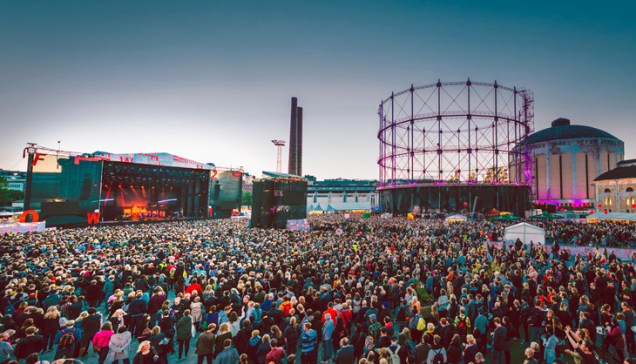
Flow Festival, which will take place between 12 and 14 August in Suvilahti, Helsinki, will be a carbon-neutral event, seeking to minimize emissions through comprehensive environmental work. Neste, the world’s leading producer of renewable diesel, will provide Neste Renewable Diesel made 100% from wastes and residues to the generation of electricity requirements of Flow. Most of the electricity required for the festival will come from generators, as the electric grid in the area can only supply a small fraction of the power required for the event.
Arno van de Ven, Stora Enso Biomaterials: Growth in the bioeconomy needs to be sustainable
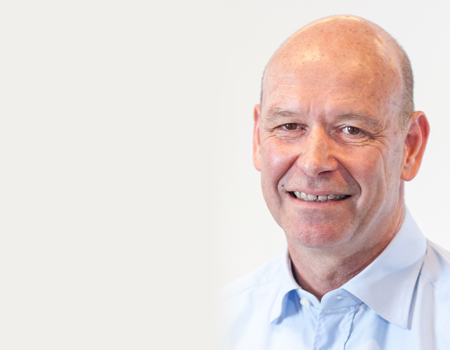
“Creating a common framework and standardised system to evaluate the bio-based products, along with mandatory targets for biosourced products in public procurement, would certainly provide a boost the European bioeconomy. Improving access to finance for research and innovation would also foster growth.” Arno van den Ven, Senior Vice President, Innovation in Stora Enso’s Biomaterials division, talks to Il Bioeconomista. In this long exclusive interview he talks about Stora Enso Biomaterials, the wood-based economy and how to foster growth in the European bioeconomy.
Interview by Mario Bonaccorso
Christian Kemp Griffin, Ceo of CelluComp: “Investments should be made in the bioeconomy because it is the future”

“Investments should be made in the bioeconomy because it is the future. Although it is still in the early years of development, there is little doubt that this area will become important.” To say it, in this exclusive interview with Il Bioeconomista, is Christian Kemp Griffin, executive director and Ceo of CelluComp, a dynamic material science company based in Scotland that develops high performance products based on sustainable resources. With Kemp-Griffin we talk about CelluComp and the development of the bioeconomy.
Interview by Mario Bonaccorso
 IL BIOECONOMISTA