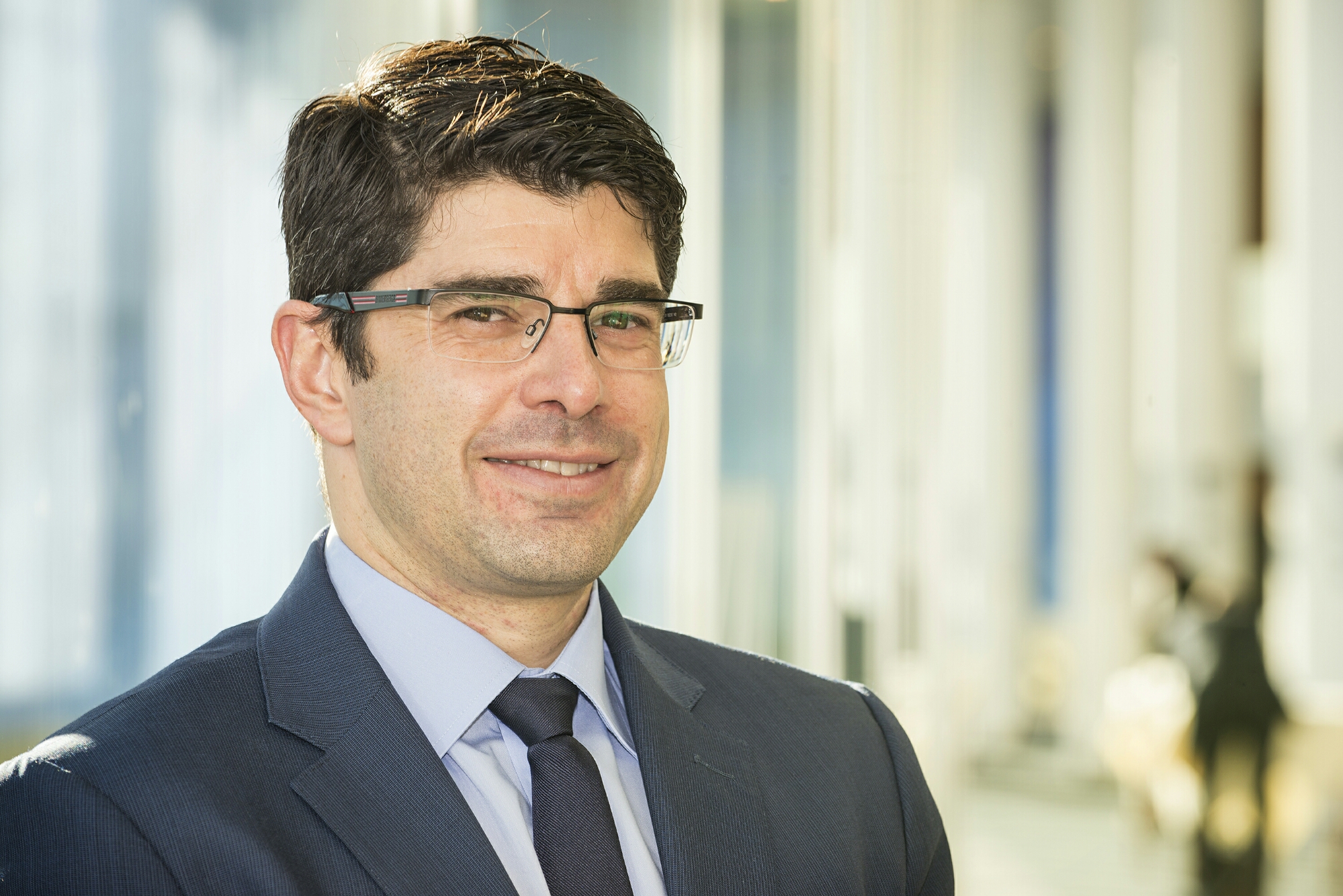
The bioeconomy to re-industrialize Brazil. An interview with Bernardo Silva, President at ABBI

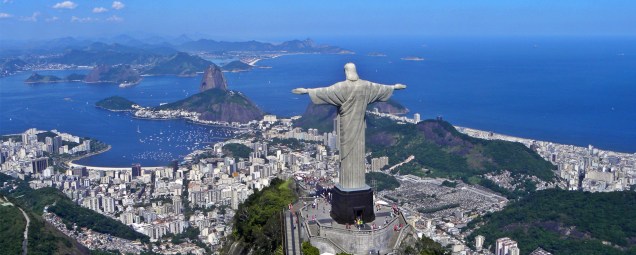
rio de janeiro“The bioeconomy can and should be the path for the re-industrialization of Brazil, fostering much needed innovations and development of products and processes that will fast-track the establishment of the this new norm in a global scale”. To say this – in this exclusive interview with Il Bioeconomista – is Bernardo Silva, Executive President at Brazilian Industrial Biotechnology Association (in Portuguese ABBI – Associação Brasileira de Biotecnologia Industrial), a trade association that brings together companies and institutions developing and using microorganisms and its derivatives to deliver renewable products for industries and consumers worldwide. The founding members of ABBI are Amyris, BASF, BioChemtex, BP, Centro de Tecnologia Canavieira, Dow, DSM, DuPont, GranBio, Novozymes, Raízen and Rhodia. With Silva we talk about Brazilian bioeconomy and the country’s national strategy to support the field. “The ambition to establish a vibrant bioeconomy in Brazil, which values our comparative advantages and is able to realize the opportunities arising from this new model of development, entails a joint effort between government, business and civil society to discuss, define and practice a plan that ensures the alignment of policies in place and long-term strategies, paving the way for Brazil fulfill its role as a leader a global bio-based economy.”

Interview by Mario Bonaccorso

Continue reading

The European Commission adopts a new Circular Economy Package

Jean-Claude Juncker, President of the European Commission

Yesterday the European Commission adopted a new Circular Economy Package to stimulate Europe’s transition towards a circular economy which will boost global competitiveness, foster sustainable economic growth and generate new jobs.
Continue reading

The bioeconomy at COP21: BioAmber joins the American Business Act on Climate Pledge

cop-parisThe bioeconomy is protagonist at COP21 in Paris. BioAmber, a leader in renewable materials, yesterday announced that it has joined the American Business Act on Climate Pledge, alongside more than 140 companies from across the American economy that are standing with the Obama Administration to demonstrate an ongoing commitment to climate action and to voice support for a strong outcome to the COP21 Paris climate negotiations.

Continue reading

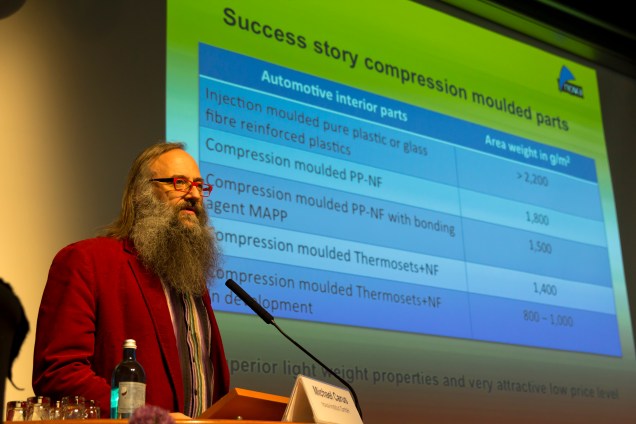
Michael Carus talks to Il Bioeconomista. An interview with the founder of the nova-Institut

Carus Nova_Wesseling_05-2015_MG_1079
Michael Carus, founder and managing director of the nova-Institut. Photo by: von Pigage, Art Vision. Copyright: nova 2015

“It was a very interesting event, because for the first time the material use of biomass was really in the focus, instead of playing the second violin to bioenergy and biofuels only.” It is the opinion of Michael Carus, founder and managing director of the nova-Institut, relatively to the Bioeconomy Investment Summit which was held in Brussels on 9 and 10 November. With Carus, one of the most influential scientists in Europe, we talk about nova-Institut’s new study on biomass supply and demand, the CO2 economy and the circular economy.

Interview by Mario Bonaccorso

Continue reading

Berlin world capital of the bioeconomy

image
Christine Lang, chairwoman of the German Bioeconomy Council, presents the Communique

Germany leads the world bioeconomy. Berlin was for three days (24-26 November) the venue of the Global Bioeconomy Summit which was attended by many of the protagonists of this meta-sector from Europe, Asia, Africa and America (approximately 700 people).

Continue reading

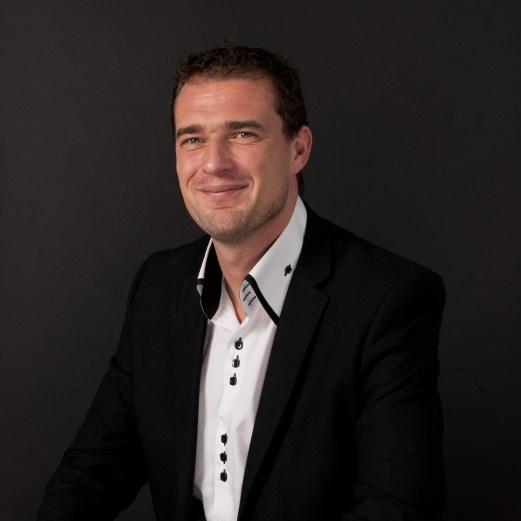
France is a global leader in the bioeconomy. An interview with Boris Dumange, DG of IAR Pole

B. Dumange 2011 credit photo IAR
Boris Dumange, Copyright IAR

“Building on a strong and competitive agricultural and forest sector as well as on its technological expertise, the strategy should fully engage France on the bioeconomy road and position the country as a global leader in this field”. Boris Dumange, Director General of IAR Pole (French Cluster Industries and Agro Resources), talks to Il Bioeconomista about the bioeconomy in France, where the government announced its own strategy by the end of this year, the role played by IAR Pole, the goals of the intercluster 3BI and the measures the European Union needs to be more competitive. “We believe – Dumange says – actions such as a European preferred public procurement programme or temporary tax incentives for bio-based products could help to bridge the gap between innovation and market uptake and allow sufficient economies of scale to make bio-based products a competing alternative to fossil-based equivalents.”

Interview by Mario Bonaccorso

Continue reading

Marc Palahí talks to Il Bioeconomista. An interview with the director of EFI

image
Marc Palahi, Photo by Simon Pugh

“The European forest-based sector is clearly becoming more diversified, interlinked, and cross-sectorial. It is increasingly affected by issues such as climate change impacts and policies, energy policies, advances in new technologies, the increasing role of services, and trends towards low carbon bioeconomy. Furthermore, the forest sector is becoming more integrated with other industrial sectors such as construction, energy, chemicals and textile industries. The concepts of ‘forest-based sector’ and ‘forest-based bioeconomy’ are beginning to replace the conventional and a more limited concept of ‘forest sector’.” To say this – in this exclusive interview with Il Bioeconomista – is Marc Palahí, director of EFI, the European Forest Institute. With him we talk about the forest-based economy and its connection with the bioeconomy.

Interview by Mario Bonaccorso

Continue reading

Chris Patermann talks to Il Bioeconomista. An interview with the “father” of EU bioeconomy

Chris Patermann at the Bioeconomy Investment Summit, Brussels, 9-10 November

Chris Patermann is simply the “father” of the European bioeconomy. Since January 2004 he was Programme Director for “Biotechnology, Agriculture & Food” Research at the Research Directorate-General of the European Commission, which from 2007 also comprised Aquaculture and Fisheries as well as Forestry. During these years he was responsible for the elaboration of the new concept of the Knowledge Based Bioeconomy (KBBE), which today is known as bio-based economy or more simply bioeconomy in Europe. He was also appointed Chairman of the oldest Committee between EU Member States and the European Commission, the Standing Committee on Agricultural Research, SCAR. He also served for 4 years as co-chair in the important EC-US Task Force Life Sciences and Biotechnology Research. In August 2007 Christian Patermann retired. He now lives in Bonn and advises public and private institutions and companies, among them the largest German Land NorthRhine-Westphalia, the Fraunhofer Society, the Swiss Agricultural Research Council etc.

With Chris Patermann, who is one of the most influential people in the European bioeconomy, we talk – in this long exciting exclusive interview – about what was the vision that inspired the beginnings of the European strategy on bioeconomy, but also the future of this meta-sector through which the European Union can aspire to economic growth, creation of jobs and environmental sustainability.

Interview by Mario Bonaccorso

Continue reading

Arsenal midfielder Mathieu Flamini scores a goal in the bioeconomy

image
Mathieu Flamini

Former AC Milan and France midfielder Mathieu Flamini is a bioeconomy’s supporter. He has revealed that he is one of the people behind GFBiochemicals, a bio-based company that has developed a process to produce levulinic acid on an industrial scale.

Continue reading

We are all French

image