A group of European partners launches InnProBio to help promote innovative bio-based products. InnProBio is a Forum for Bio-Based Innovation in Public Procurement and can now be found on the world-wide web at http://www.innprobio.eu.
A group of European partners launches InnProBio to help promote innovative bio-based products. InnProBio is a Forum for Bio-Based Innovation in Public Procurement and can now be found on the world-wide web at http://www.innprobio.eu.

DuPont Industrial Biosciences and Quad County Corn Processors (QCCP) announced a new multi-year contract to supply the enzymes that enable QCCP’s Cellerate™ process in the production of cellulosic biofuel from corn kernel fiber.
Avery Dennison, a global leader in labeling and packaging materials and solutions headquartered in California,
launches two bio-based polyethylene label films. These new products are the first self-adhesive PE filmic labels with a face stock that includes more than 80 percent renewable content and offer brand owners the opportunity to meet their target on renewable resources in packaging, while continuing to benefit from the functionality and performance of a regular polyethylene label.

We receive and publish with pleasure this comment by James Cogan. He is a technology, industry and policy analyst collaborating with PNO Innovation in Brussels and with a number of public and private organisations with stakes in the future of biofuels and transport energy. In the run up to the climate emergency conference in Paris he has been considering the options open to the designers of the new European governance system for climate and energy and to the 28 teams charged with creating member state climate and energy plans for publication by 2018. We are glad to promote the debate.
“At a time when carbon emissions should be dropping by 40%-80% EU transport emissions will actually increase by that amount, becoming the number one EU contributor to catastrophic global warming.
Transport emissions can only be reduced in the 2030 timeframe by traffic efficiencies, biofuels and lower tailpipe emissions. To date the EU has not taken bold measures to pursue such avenues and any gains have been offset many times over by traffic growth. Electric vehicles comprise only a miniscule fraction of the EU vehicle fleet, sales are under 1% and even the most optimistic forecasts for sales growth would not lead to an impact until well after 2040.

Rivertop Renewables, a Montana-based specialty chemicals company, and DTI, a custom manufacturer of fine and specialty chemical products based in Danville, Virginia, celebrated the start-up of commercial manufacturing of “Rivertop’s sustainable, high performing, cost-competitive, glucarate-based products”.
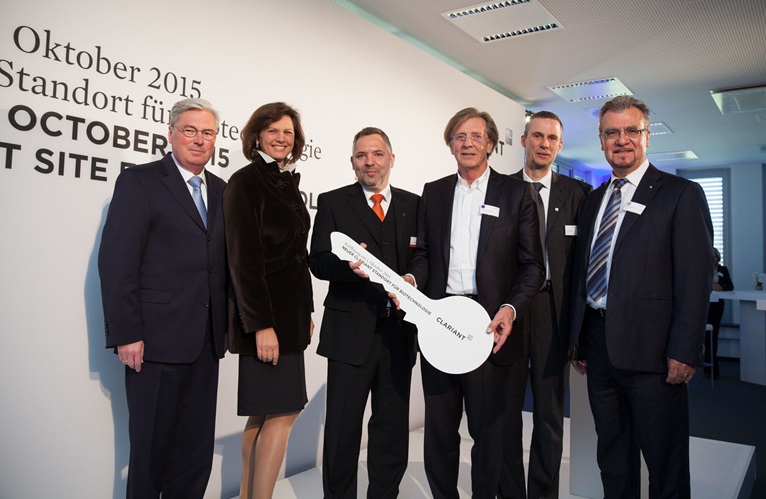
Clariant, a world leader in specialty chemicals, officially opened its new Group Biotechnology Research Center in Planegg near Munich last Thursday. In a ceremony attended by Ilse Aigner, the Bavarian Minister for Economic Affairs, Media, Energy and Technology, the key to the facility was symbolically handed over to CEO Hariolf Kottmann and the Head of Clariant’s Group Biotechnology André Koltermann.
The industrial enzymes market is growing with increase in the applications of industrial enzymes. The industrial enzymes market was valued at USD 4.2 billion in 2014 and is projected to reach USD 6.2 billion by 2020, at a CAGR of 7.0% from 2015 to 2020. To say this is a new report published by ReportLinker, a market research company headquartered in France.
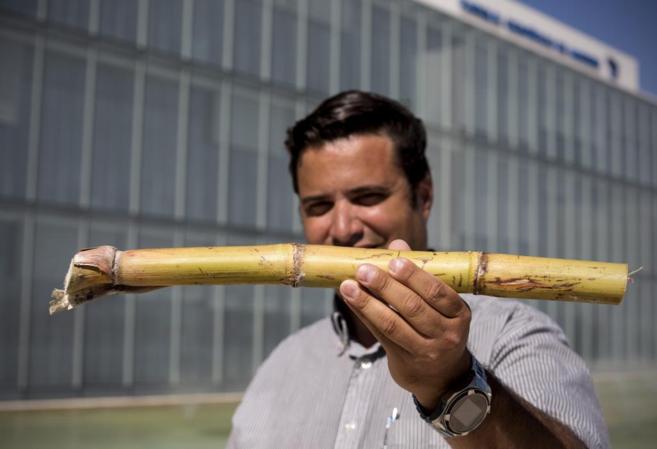
“A biobased economy starts from the feedstock and ends at the consumer, and the processing is just the middle: we need thus to tackle the 3 steps if we really want to call it “economy”. Also, we need to bring new technologies regardless of where they come from. Brazil for example may be thought of a place of soccer and samba but the hard fact is that it is the only economy in the world which uses biofuels widely. We should study examples such as that, bring them to Europe, and stop thinking we have the answers, but the H2020 rules basically forbid that, as we found out ourselves”. To say this – in this exclusive interview with Il Bioeconomista – is Al Costa, Ceo of Alkol Biotech, a Spanish genetic engineering company focused on the research of new crops.
With Costa we talk about crops, the role of farmers and the policies to support the bioeconomy.
Interview by Mario Bonaccorso
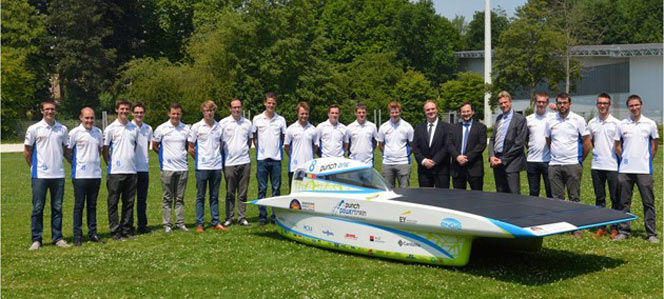
Solvay, Cardolite Corporation and SHD Composite Materials Ltd are supporting the Punch Powertrain Solar Team from the University of Leuven in building the Punch One, a Belgian solar car based on bio-based resins.
The Punch One, that will run the Solar Challenge in Australia in October, is produced with carbon fiber prepregs impregnated with Epicerol®-based BisA epoxy and cured with a hardener based on cashew nutshell liquid (CNSL), a natural renewable chemical raw material.

“EPA is proposing to change the rules in the middle of the game.” The representatives of advanced and cellulosic biofuels industry – a nonprofit educational organization advocates for the adoption of advanced biofuels as an energy security, military flexibility, economic development and climate change mitigation/pollution control solution – recently sent a letter to President Barack Obama regarding the U.S. Environmental Protection Agency’s renewable fuel standard (RFS) volume requirement proposal.
In the letter it was emphasized that the May 29th proposal represents a broken promise that is negatively impacting investments and partnerships in advanced biofuels, is sending projects and jobs overseas, and is at odds with the president’s initiatives to combat climate change.
 IL BIOECONOMISTA