Exclusive interview with Jukka Kantola, NISCluster: EU policies for the use of biomass are short-sighted

image

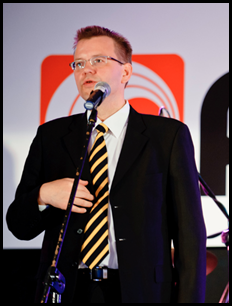
“At the moment focus in European policies is to endorse biomass utilization for the energy applications. This is short-sighted, as on those applications biomass does not bring the best added value. Also there is not enough biomass in Europe to meet up all energy and climate target in EU-level. Biomass is more valuable on chemical and material applications”. To say it, in this exclusive interview with Il Bioeconomista, is Jukka Kantola, CEO of NISCluster, a Finnish private bioeconomy company with a focus on the woody biomass. With Kantola we talk about the bioeconomy in Finland, the EU policies and the different uses of biomass.

Interview by Mario Bonaccorso

Continue reading →

The EU Parliament voted on new legislation aimed at reducing the use of single-use plastic carrier bag

image
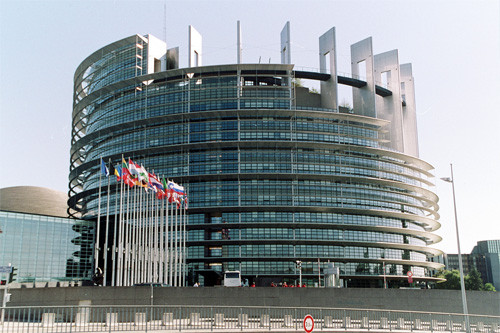
European Parliament, Strasbourg

Europeans use about 100 million plastic carrier bags every year. Some of these are dropped as litter, ending up in the environment, where long-standing plastics accumulate and harm wildlife. The European Parliament today voted on new EU legislation aimed at reducing the use of single-use plastic carrier bags.

Continue reading →

From Cologne the European bioindustry calls for a policy that encourages more biochemicals

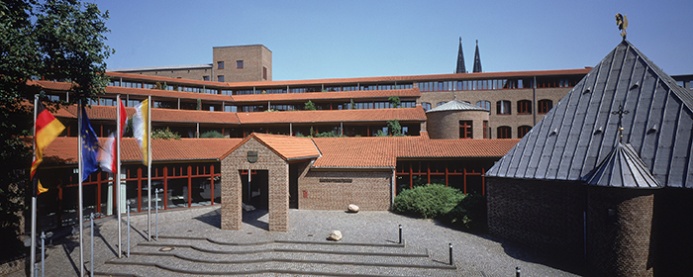
Maternushaus, venue of the conference
Maternushaus, venue of the conference in Cologne

Three days of interesting debate with regard to the future development of bio-based materials. This was the Seventh International Conference on bio-based materials, organized by the nova-Institut from April 8 to 10 in Cologne. With the presence of some of the major European players – companies, univerties and research centers – the three days in the beautiful German city on the Rhine have been an opportunity to discuss on the progress of research on bio-based materials, the political support to the bio-based economy in Europe and in the member states and what measures are necessary to enable the Old Continent to be competitive in international markets.

Continue reading →

Scotland aims at playing a leading role in the £360 bln global industrial biotechnology market

John Swinney, Finance Secretary of Scotland

A new innovation centre for industrial biotechnology is forecast to increase industrial biotechnology-related turnover to up to £3 billion by 2030, create 1500 jobs within five years and put Scotland at the forefront of a global transformation. Funded by the Scottish Funding Council and supported by Scottish Enterprise and Highlands & Islands Enterprise, the new Industrial Biotechnology Innovation Centre (IBioIC) – hosted at the University of Strathclyde – is a key element of the National Plan for Industrial Biotechnology – Towards a Greener, Cleaner 2025. It brings together academic and private sector partners to play a leading role in the potential £360 billion global industrial biotechnology market. Industrial biotechnology is the use of biological substances, systems and processes to produce intermediate and final products such as pharmaceuticals, chemicals, materials and energy – both cost-effectively and with minimal adverse environmental impact.

Continue reading →

UN Report: Rising demand for energy, from biofuels to shale gas, is a threat to freshwater supplies

The UN Building in New York City

Rising demand for energy, from biofuels to shale gas, is a threat to freshwater supplies that are already under strain from climate change, the United Nations said in a report last Friday. March 22 was World Water Day in the UN calendar. It urged energy companies to do more to limit use of water in everything from cooling coal-fired power plants to irrigation for crops grown to produce biofuels.

Continue reading →

Italian new government: “Demolition Man” Matteo Renzi doesn’t seem to have scrapped much

Renzi presents his government at the Quirinale Presidential Palace

A new government. The fourth in three years. The third of these four non-elected by a democratic vote. Welcome to Italy. Rudyard Kipling said about us: “An Italian is a good person. Two Italians a discussion. Three Italians three political parties.” That’s right, historically we divide and we don’t know the political stability.

The new government led by Matteo Renzi, who is 39 years old (he is the youngest premier in the history of the Italian Republic) and known as “Demolition man” for his plans to scrap the old political class, was created with the old ways of the old politics: a palace coup. The man – who certainly doesn’t lack ambition – grew up as an opponent of the Palace of power today is in the same Palace, without democratic legitimacy.

Continue reading →

Il Bioeconomista: 2013 in review

The WordPress.com stats helper monkeys prepared a 2013 annual report for this blog.

Here’s an excerpt:

The concert hall at the Sydney Opera House holds 2,700 people. This blog was viewed about 32,000 times in 2013. If it were a concert at Sydney Opera House, it would take about 12 sold-out performances for that many people to see it.

Click here to see the complete report.

South Africa launched the National Bioeconomy Strategy last Tuesday

Derek Hanekom, South African Minister of Research and Technology
Derek Hanekom, South African Minister of Science and Technology

The Minister of Science and Technology of South Africa, Derek Hanekom, launched the National Bioeconomy Strategy last Tuesday in Pretoria. The science-based Bioeconomy Strategy, approved by South African Cabinet in November last year, positions bio-innovation as essential to the achievement of government’s industrial and social development goals. The strategy calls for industry, science councils, government departments and academia to cooperate closely to ensure that biotechnology and bio-innovations are market relevant and find easier application in South Africa.

Continue reading →

The Chemical Industry will be more and more green and sustainable. This is the strong message that comes from Ecochem

Congress Center Basel, Switzerland

A great success. This was Ecochem, the event on sustainable chemistry and bio-based economy which was held in Basel November 19 to 21. The three-day conference saw the presence of the major players (more than 2000 attendees and approximately 200 speakers) of the global bioeconomy: the chemical industry which is investing strongly into biotechnology. But also giants of other sectors, like Nike that has begun research programs for the use of biological resources in its products, strategic consulting firm like McKinsey – which confirmed that the future of the chemical industry will be green and sustainable – young biotech companies like the German Evocatal and the Portuguese SilicoLife, and investors like Sofinnova and Capricorn Venture.

Continue reading →

Exclusive interview with Sebastian Søderberg, VP Novozymes: “The Bioeconomy reconciles growth, jobs and sustainability”

Novozymes Headquarter

“The biobased economy has an unprecedented ability to reconcile growth, jobs, rural development and sustainability. The World Economic Forum estimates that by 2020, biorefining could generate globally over € 225 billion Euro per year across the whole biomass value chain. Policy makers around the globe are waking up to the potential of the biobased economy progressively”. To say it in this exclusive interview with Il Bioeconomista is Sebastian Søderberg, Vice President, Biomass Conversion, of Novozymes, the Danish biotech company with a strong focus on enzyme production and world leader in bioinnovation. With Søderberg we talk about bioeconomy, with a special focus on European policies to encourage the development of the sector: “A comprehensive policy – says the Danish top manager – should therefore stimulate both the demand (tax incentives, production support and feed in tariff) and supply (feedstock collection and supply-chain incentives) for biobased products as well as unlock the necessary investments for demonstration and first-of-its-kind commercial-scale plants (e.g. through the PPP on Biobased Industries)”.

Interview by Mario Bonaccorso

Continue reading →