Henkel and Shell Chemical LP have agreed to a five-year collaboration to replace up to 200,000 tonnes of fossil feedstocks used in the manufacture of surfactants with feedstocks that are based on renewable raw materials. The renewable-based surfactants will be used in Henkel’s laundry product brands, including many varieties of Persil®, Purex® and all® brands. Surfactants are an ingredient in cleaning products that help lather and lift dirt.
CJ Biomaterials, Inc., a division of South Korea-based CJ CheilJedang and leading producer of polyhydroxyalkanoate (PHA), and NatureWorks, an advanced materials company that is the world’s leading producer of polylactic acid (PLA), are collaborating on the development of sustainable materials solutions based on CJ Biomaterials’ PHACT™ Biodegradable Polymers and NatureWorks’ Ingeo™ biopolymers. The two companies will develop high-performance biopolymer solutions that will replace fossil-fuel based plastics in applications ranging from compostable food packaging and food serviceware to personal care, films, and other end products.
Finnish companies Metsä Group and VR are intensifying their cooperation on sustainability in logistics and have agreed a new joint target to halve emissions from transport covered by their cooperation by 2030. In addition, Metsä Group aims to transfer some of its current road transports to railways. For Metsä Group, the measures would represent a total emission reduction of around 14,000 tCO2e per year, which is equivalent to more than 25,000 average lorry journeys.
thank you very much, again. 2022 was another great year for Il Bioeconomista, which continues to be considered as the most authoritative blog at world level. The bioeconomy is increasingly a phenomenon that attracts the attention of global public opinion and gratifies us as journalists, observers of a reality that we have always defined as the industrial revolution of the Third Millennium.
Today, a little more than 10 years since its foundation, we can say that Il Bioeconomista confirms itself as the world’s leading blog on bieconomy. Thank you so much. Our readers are mainly Europeans, but a growing number of readers are from the United States, Turkey, Canada, Brazil, India, Australia and Malaysia.
For us, it’s a tremendous encouragement to move forward, to offer you a blog that informs and promotes discussion on bioeconomy. The year that has just ended was very important for the global bioeconomy, with significant progress in terms of industry, research and awareness of the institutions, with the launch of the US National Biotechnology and Biomanufacturing Initiative.
We are sure that 2023 will be another important year for the implementation of the bioeconomy. We will be again on your side to tell the facts and continue growing.
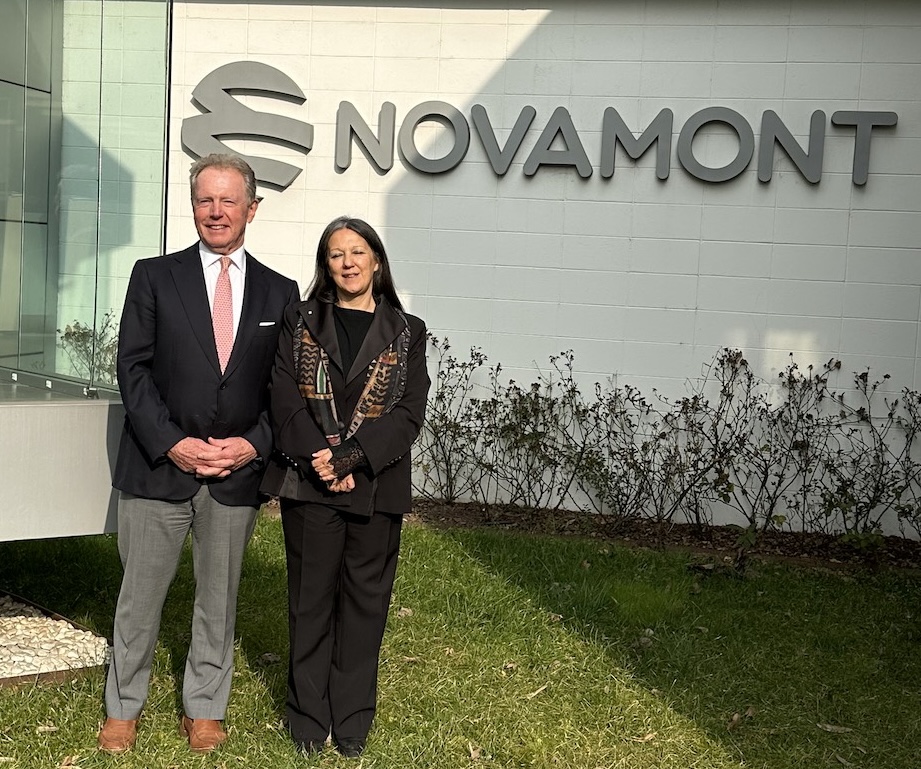
“The recognition of our sector through the application of specific NACE codes is an important element as it would allow a better measurement in the statistical field and the possibility of addressing specific legislative measures, such as financing or the creation of specific EER codes”. To say this – in this exclusive interview with Il Bioeconomista – is Giulia Gregori, Strategic Planning and Corporate Communication manager at Novamont, the Italy-headquartered company which is leading the way in the world bioplastics sector.
Our readers have voted. The most innovative bioeconomy CEO 2022 is Tom van Aken, CEO of Avantium, the Dutch company that is a pioneer in the emerging industry of renewable and sustainable chemistry. Avantium is headquartered in Amsterdam, employing approximately 200 people, with extensive R&D laboratories and three pilot plants in Geleen and Delfzijl, the Netherlands.
“Bioeconomy in everyday life” @ BioBased World 2015 in Frankfurt am Main
The circular bioeconomy is innovation, the result of the skills and passion of researchers and managers able to create value and new high-qualified jobs, reconciling economy, society and the environment. At the end of 2014 Il Bioeconomista launched a new initiative: The 10 Most Innovative Bioeconomy CEOs.
We have asked a panel of world bioeconomy experts to tell us the Chief Executive Officers that have stood out as the most innovative during the last year.
Now we ask you to choose the most innovative CEO responding to our survey (open till December 13 at 7 am, Western European Time).
The most innovative CEO 2016 was Ken Richards (CEO of Leaf Resources, Australia)
The most innovative CEO 2017 was Tony Duncan (CEO of Circa Group, Australia)
The most innovative CEO 2018 was Jürgen Eck (CEO of BRAIN AG, Germany)
The most innovative CEO 2019 was Alex Michine (CEO of MetGen, Finland)
The most innovative CEO 2020 was Simão Soares (CEO of SilicoLife, Portugal)
The most innovative CEO 2021 was Jennifer Holmgren (CEO of LanzaTech, USA)
This is the result of 2022 (in alphabetical order)
We receive and publish this post by Jukka Kantola, the founder of the World BioEconomy Forum. The World BioEconomy Forum is a global platform for circular bioeconomy stakeholders to share ideas and promote bio-based solutions.
We have witnessed that several economies are putting more efforts into the bioeconomy. Only in the last half year alone there have been multiple examples of work being carried out, despite other challenges, including the tail end of the pandemic, geopolitical tensions and energy prices.
The United Nations Climate Change Conference COP27 opened yesterday with the key aim of ensuring full implementation of the Paris Agreement. Discussions at COP27 begin near the end of a year that has seen devastating floods and unprecedented heat waves, severe droughts and formidable storms, all unequivocal signs of the unfolding climate emergency. At the same time, millions of people throughout the world are confronting the impacts of simultaneous crises in energy, food, water and cost of living, aggravated by severe geopolitical conflicts and tensions. In this adverse context, some countries have begun to stall or reverse climate policies and doubled down on fossil fuel use.
Evonik, one of the world’s leading silica producers, entered a strategic cooperation with the Pörner Group, Austria, and Phichit Bio Power Co., Ltd., Thailand, to supply sustainable ULTRASIL® precipitated silica to tire manufacturers. The key raw material for the sustainable silica is sodium silicate, which is derived from rice husk ash (RHA), an agricultural waste product, and produced exclusively with green energy.