PoliKompleks invests 30 million euros to construct a bioplastics plant in Russia

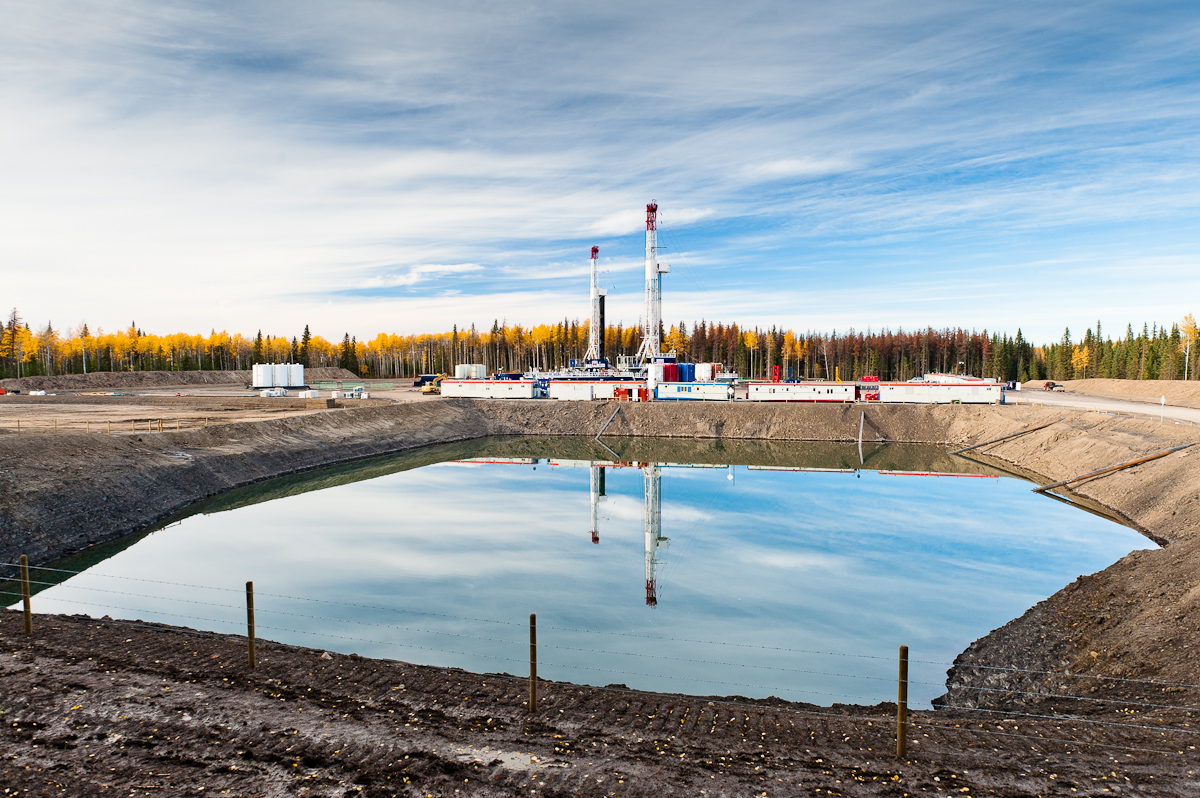
moscowPoliKompleks, a Russian industrial biotechnology company, plans to invest around 1,2 billion rubles, 30 million euros, to construct a bioplastics production complex in Russia’s far western enclave of Kaliningrad. To say it is Nikolai Tsukanov, governor of the Kaliningrad Region.

PoliKompleks has reached agreement to establish plants for products based on lactic acid and polylactides (PLA) for the manufacture of some 50,000 tpa of biocomposites. The complex will also have a biodegradable de-icing reagents plant with a capacity of around 12,000 tpa. The Russian company expected to reach an annual turnover of 1,4 billion rubles, approximately 34 million euros.
Continue reading

Shopping in Denmark for the Norwegian Seaweed Energy Solutions

seaweed.jpgSeaweed Energy Solutions, a Norwegian company focused on seaweed-to-fuel business, has reached an agreement to acquire 100 percent of Denmark’s Seaweed Seed Supply AS, a move that sharply reinforces SES’ position as Europe’s leading player in large-scale seaweed cultivation for renewable energy and other uses.

The acquisition of Seaweed Seed Supply marks a key step for SES in its strategy of pioneering large-scale seaweed farming due to Seaweed Seed Supply’s position as Denmark’s leading commercial producer of seaweed for fish and livestock feed on a sustainable basis. Financial terms of the agreement were not disclosed.

With the purchase, Seaweed Seed Supply’s goal of increasing production to 100,000 tons by 2017 from the current 5,000 tons capacity can become a reality. SES technology will be introduced in Denmark and the two companies will jointly improve and adapt the technology to the local environment.

Continue reading

Mossi & Ghisolfi acquires IntegRex PTA technology license for use in Texas PTA-PET new plant

Mossi-Ghisolfi-I.jpgMossi&Ghisolfi Group announced last Wednesday a Licensee Agreement with Alpek, the largest petrochemical company in Mexico and the second largest in Latin America, for IntegRex PTA, Purified terephthalic acid, technology. The technology will be used in the construction of M&G’s previously announced 1,200,000 MT per annum PTA plant at Corpus Christi, Texas. M&G also announced, Alpek purchased for a price of $350 million a multiyear sourcing agreement covering rights 400,000 MT of PET, Polyethylene terephthalate, (made with 336,000 MT of integrated PTA) per year.

Continue reading

Martin Schnee, Breslin AG: “Investments into alternative sources might be re-thought”

shale gas in usa“Shale gas might be a game changer by bringing gas, coal and finally oil prices down. And cheap oil will no drive industries to make high investments into alternative raw materials”. To say it is Martin Schnee, partner of Breslin, one of the most important transaction strategic advisory companies in Europe in the field of bioeconomy, with offices in Zurich, London, Frankfurt am Main and Munich. In the context of the development of the bioeconomy, Schnee warns against the increasingly important role played by shale gas, a natural gas that is found trapped within shale formations. Shale gas has become an increasingly important source of natural gas in the United States since the start of this century, and interest has spread to potential gas shales in the rest of the world. In 2000 shale gas provided only 1% of U.S. natural gas production; by 2010 it was over 20% and the U.S. government’s Energy Information Administration predicts that by 2035, 46% of the United States’ natural gas supply will come from shale gas. Schnee speaks with us about bioeconomy from an investment point of view, considering that “alternative energy and biomaterials from alternative sources might make a large contribution to Europe’s future growth”.

Interview by Mario Bonaccorso

Continue reading

Chatham House: UK biofuel policy may need to be modified

biodieselUK biofuel policy may need to be modified. To say it is a report published by Chatham House, a british think tank focused on “Costs and Consequences of Expanding Biofuel Use in the United Kingdom”. According to Rob Bailey, author of the report, “in its present form the RTFO (Renewable Transport Fuel Obligation, editor’s note) may not be an appropriate instrument for achieving the RED (Renewable Energy Directive, editor’s note) target economically. Its volumetric target incentivizes suppliers to minimize cost per litre by supplying ethanol, thereby also minimizing the amount of energy supplied by biofuels. This runs counter to the objective of the RED to increase the share of energy from biofuels.

Continue reading

In EU Synpol project aims at converting waste into bioplastics

only plasticsWaste can be base of new bioplastics. There are many waste resources hidden in our communities. Municipal solid waste (MSW), agricultural residues and sewage sludge from water treatment plants contains lots of reusable carbon fractions. To recover them means recovering a valuable product as well as preserving the environment. The European Commission is working in order to develop the Synpol (“Biopolymers from syngas fermentation”) project, that is funded under the Food, agriculture and fisheries, and biotechnology Theme of the EU’s Seventh Framework Programme (FP7) to the tune of € 7.5 million.

Continue reading

Versalis and Genomatica together for the production of butadiene from non-food biomass

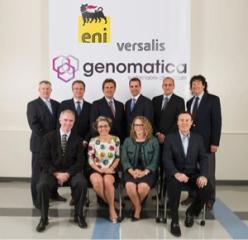
versalis-genomatica.jpgVersalis (Group Eni) and Genomatica announced the signing of a definitive joint development and licensing agreement to establish a technology joint venture for bio-based butadiene.
The two companies will work together to develop a complete ”end-to-end’ process for the production of butadiene from non-food biomass.
The resulting process will be licensed across Europe, Asia and Africa by the newly-created joint venture. Future Licensees of the process, including Versalis, will provide the capital required for the construction and operation of their own plants, and be responsible for the use and sale of the resulting butadiene.
Versalis will provide over $20 million in funding to Genomatica to support development of the integrated end-to-end process. It will also aim to be the first to license the process and build commercial plants.

 
Continue reading

European Bioplastics publishes data on land-use for bioplastics

sugar-cane.jpgThe surface required to grow sufficient feedstock for today’s bioplastic production is less than 0.006 percent of the global agricultural area of 5 billion hectares. This is the key finding published by European Bioplastics (the association representing the interests of Europe’s bioplastics’ industry), based on figures from the Food and Agriculture Organization of the United Nations (FAO) and calculations of the Institute for Bioplastics and Biocomposites (IfBB, University Hannover, Germany).
In a world of fast growing population with an increasing demand for food and feed, the use of feedstock for non-food purposes is often debated controversially. The new brochure “ Bioplastics- facts and figures” published by European Bioplastics, moves the discussion on to a factual level.
Of the 13.4 billion hectares of global land surface, around 37 percent (5 billion hectares) are currently used for agriculture. This includes pastures (70 percent, approximately 3.5 billion hectares) and arable land (30 percent, approximately 1.4 billion hectare).


Continue reading

UK’s Biome Bioplastics to investigate new source of organic chemicals for bioplastic manufacture

wood in ukThe UK’s innovation agency, the Technology Strategy Board, has awarded a grant to a consortium led by Biome Technologies, to investigate a bio-based alternative for the oil derived organic chemicals used in the manufacturer of bioplastics.

The research will be undertaken by the group’s bioplastic division Biome Bioplastics, one of the UK’s leading developers of natural plastics, in conjunction with the University of Warwick’s Centre for Biotechnology and Biorefining.

The £150,000 grant (approximately 215,000 €) is part of the Technology Strategy Board’s ‘Sustainable high value chemical manufacture through industrial biotechnology’ technical feasability competition, which funds projects that apply sustainable bio-based feedstocks and biocatalytic processes in the production of chemicals.

Continue reading

Sprin Technologies: Trieste’s response to the Danish giant Novozymes

trieste“Currently what happens is that innovation created in Italy is then exploited abroad, due to a  lack of direct access to on-site manufacturing facilities or industrial pilot plants. Closer cooperation between SMEs and large companies could accelerate the  scale-up and industrialization steps, which often represent  demanding  investments for SMEs and –in particular at this rather difficult economical stage that translate in very unlikely access to credit, making it not always affordable”.

To say it is Sara Cantone, co-founder and Chief Operating Officer of Sprin, a spin-off of the University of Trieste founded in December 2007 that operates in the research, development, production and commercialization of advanced products for implementing sustainable chemical processes. In particular, Sprin – that since 2010 has had the participation of  Venture Capital, AlAdInn Venture – is focused on the production of immobilized enzymes and the supply of services for the development of bio-catalyzed processes. With Cantone, we talk about the bioeconomy and in particular the role played by the enzymes in its development.

Interview by Mario Bonaccorso


Continue reading