Repsol receives the first ship carrying used cooking oil for its new renewable fuels plant in Cartagena

Buque con aceite usado en el complejo industrial de Cartagena

Repsol’s industrial complex in Cartagena received the first ship with used cooking oil to be used as a raw material in Spain’s first renewable fuels plant. The ship, that arrived from Huelva in southern Spain, unloaded 7,500 tons of used cooking oil.

Continue reading

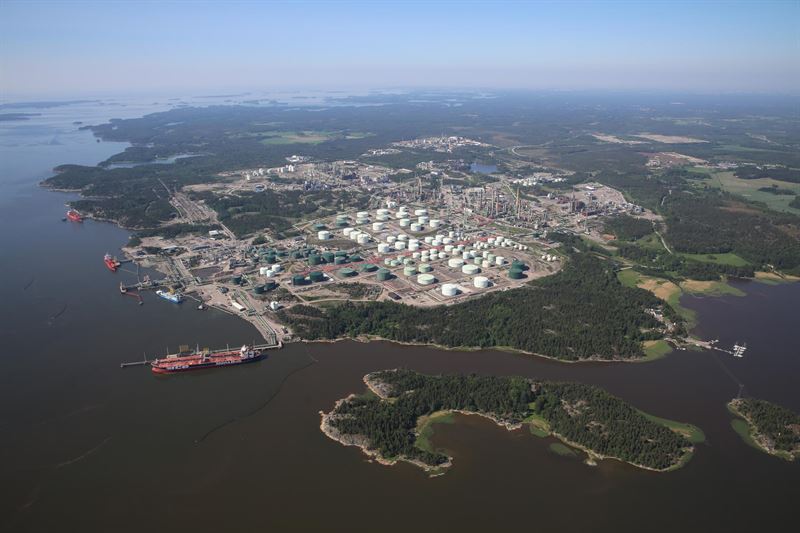
Neste’s crude oil refinery in Finland to be gradually transformed into a renewables and circular solutions refining hub

C23DFA4C-06EE-46D5-B6D3-9646D7BF3F9F

Neste begins a gradual transformation of its crude oil refinery in Porvoo, Finland into a leading renewable and circular solutions refining hub. The planned transformation will proceed in phases, and requires multiple separate investment decisions during the next decade before targeted completion in the mid 2030s. 

Continue reading

Metsä Group invested in Swedish startup FineCell that turns pulp into added-value biomaterial

Metsä - Kuura
Metsä – Kuura

Metsä Group made its second Swedish investment in FineCell, developer of the FineCell technology and producer of CellOx dry cellulose powder. The company will use the €1 million seed funding to improve its material application know-how, engage with potential customers, and finalise the material needed for making an investment decision concerning a demo production facility. The funding round lead by Metsä Group’s innovation company Metsä Spring consists of a group of investors, including EIT InnoEnergy and the company’s founder. 

Continue reading

The Most Innovative Bioeconomy CEO 2023 is Thomas Philipon, CEO TotalEnergies Corbion

9A1AC3BF-4F31-4BEA-AE9F-BF070A186BFC

Our readers have voted. The most innovative bioeconomy CEO 2023 is Thomas Philipon, CEO of TotalEnergies Corbion, a global technology leader in Poly Lactic Acid (PLA) and lactide monomers. PLA is a biobased, recyclable, and biodegradable polymer made from annually renewable resources, offering a reduced carbon footprint versus traditional plastics. TotalEnergies Corbion, headquartered in the Netherlands, operates a 75,000 tons per year PLA production facility in Rayong, Thailand. The company is a 50/50 joint venture between TotalEnergies and Corbion.

Continue reading

The 10 Most Innovative Bioeconomy CEOs 2023. Now choose the number 1

6D9CB783-2F19-4D5E-B438-62E9ABA9BBAD

The circular bioeconomy is innovation, the result of the skills and passion of researchers and managers able to create value and new high-qualified jobs, reconciling economy, society and the environment. At the end of 2014 Il Bioeconomista launched a new initiative: The 10 Most Innovative Bioeconomy CEOs.

We have asked a panel of world bioeconomy experts to tell us the Chief Executive Officers that have stood out as the most innovative during the last year.

Now we ask you to choose the most innovative CEO responding to our survey (open till December 13 at 7 am, Western European Time).

The most innovative CEO 2016 was Ken Richards (CEO of Leaf Resources, Australia)

The most innovative CEO 2017 was Tony Duncan (CEO of Circa Group, Australia)

The most innovative CEO 2018 was Jürgen Eck (CEO of BRAIN AG, Germany)

The most innovative CEO 2019 was Alex Michine (CEO of MetGen, Finland)

The most innovative CEO 2020 was Simão Soares (CEO of SilicoLife, Portugal)

The most innovative CEO 2021 was Jennifer Holmgren (CEO of LanzaTech, USA)

The most innovative CEO 2022 was Tom van Aken (CEO of Avantium, Netherlands)

This is the result of 2023 (in alphabetical order)

Catia Bastioli, Novamont (Italy)

John Bissel, Origin Materials (USA)

Annika Bresky, Stora Enso (Sweden)

Marc Delcourt, Global Bioenergies (France)

Jennifer Holmgren, LanzaTech (USA)

Dave Kettner, Virent (USA)

Thomas Philipon, TotalEnergies-Corbion (France/Netherlands)

Christophe Schilling, Genomatica (USA)

Frederic van Gansberghe, Futerro (France)

Niklas von Weymarn, Metsä Spring (Finland)

Here the survey closed

PANGAIA and Avantium partner to use plant-based PEF in the apparel collection

opening-pilot-plant-avantium-1
Avantium’s pilot plant in the Nerherlands

Avantium, a leading technology provider in renewable chemistry, will partner with PANGAIA, a purpose- driven materials science and apparel company. Under this partnership, PANGAIA will purchase Avantium’s plant-based and recyclable material PEF (polyethylene furanoate) for use in their apparel collection with the goal of creating fossil-fuel free and recyclable materials and products.

Continue reading

Emirates operated an Airbus 380 demonstration flight with Neste’s SAF

B2EAA692-AD28-4752-B3AF-1253E937647C
Photo: Emirates A380 taking off on 100% SAF. Source: Emirates

Emirates, one of the world’s largest international airlines, has become the first airline to operate an Airbus A380 demonstration flight with one of the aircraft’s four engines powered with Neste’s sustainable aviation fuel (SAF). Emirates’ flight demonstrates the potential of SAF as a more sustainable drop-in replacement for fossil-based jet fuel, matching its technical and chemical requirements. SAF can currently be used in up to 50% blends with conventional fossil jet fuel. 

Continue reading

An exclusive interview with Nicolò Giacomuzzi-Moore, Acting Executive Director CBE JU

017ADA83-F000-4EAC-88C8-1E27E59F86EB

“The bioeconomy can be a catalyst for sustainable systematic change and transition, tackling key economic, societal and environmental challenges”. To say it – in this exclusive interview with Il Bioeconomista – is Nicolò Giacomuzzi-Moore, Executive Director ad interim of CBE JU, Circular Bio-based Europe Joint Undertaking.

Interview by Mario Bonaccorso

Continue reading

Neste and Mitsui Chemicals Group enable sustainable food packaging for CO-OP brand in Japan

IMG_0273
Neste’s headquarter in Espoo, Finland

Neste, Mitsui Chemicals and Prime Polymer, a subsidiary of Mitsui Chemicals, are working together to provide more sustainable food packaging solutions for CO-OP, a brand of the Japanese Consumers Co-operative Union (JCCU). In the first phase of the collaboration, bio-based raw materials will replace fossil ones in the production of the packaging material for a seaweed snack. Going forward, the companies intend to introduce bio-based raw materials also to packaging for further products. 

Continue reading

Compostable Coffee Capsules Made with NatureWorks’ Ingeo Biopolymer Score Highest Sustainability Marks in New Study 

75AD0F90-1599-4A65-927F-60DD1E6CE895

new study reveals that coffee capsules made with Ingeo™️ PLA biopolymer from NatureWorks outperform aluminum, conventional plastics, and other compostable capsules when it comes to sustainability performance. The independent study conducted by Netherlands-based Wageningen Food & Biobased Research, a part of Wageningen University & Research (WUR), assessed the environmental impact and circularity of single-use coffee capsules made from compostable biobased materials, aluminum, and conventional plastics through multiple end-of-life scenarios including industrial composting, recycling, incineration, and landfill. The study also accounted for the fate of the spent coffee grounds within these capsules, finding that compostable capsules keep both the coffee grounds and capsule materials in the loop via organics recycling, making them the most sustainable option. The thermoformed Ingeo-based capsules used in the study were produced by NatureWorks’ partner and food packaging producer, Flo SpA.

Continue reading