Amyris, a US leading synthetic biotechnology company in Clean Health and Beauty markets, launched Terasana Clinical, a clean skin care brand. The launch represents the first of three the company has prepared this summer. Terasana Clinical’s first skincare product, Clear + Control Healthy Skin Serum – the company claims – addresses dry skin, flaking, irritation and redness with its moisturizing and anti-inflammatory properties which are designed to clear and balance the skin’s appearance.
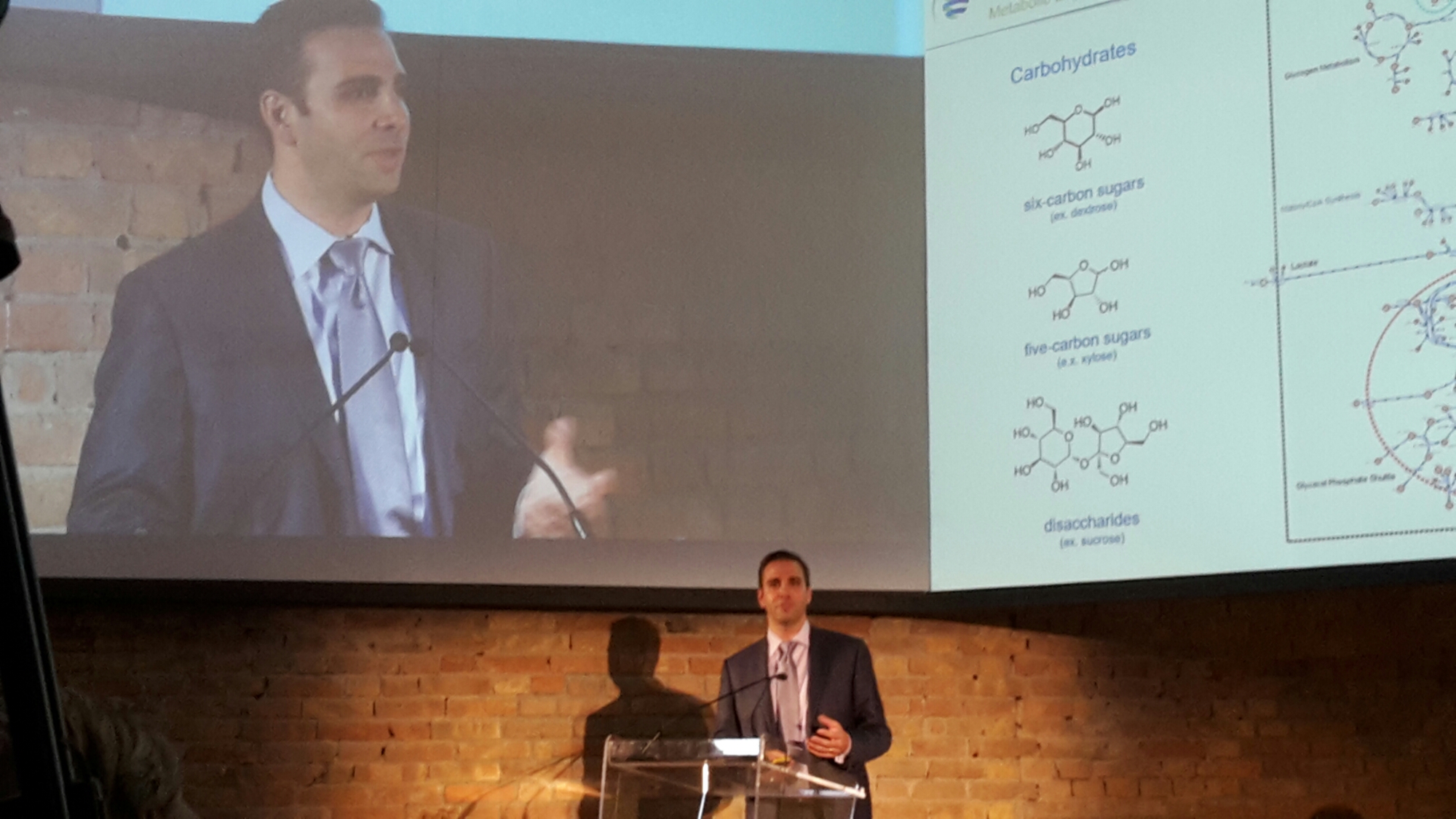
Christophe Schilling, CEO of Genomatica during his speech at the Grand Opening of Mater Biotech’s plant in Bottrighe di Adria, Italy
lululemon Athletica inc. signed a multi-year collaboration with sustainable materials leader Genomatica to bring renewably-sourced, bio-based materials into lululemon’s products. This represents lululemon’s first-ever equity investment in a sustainable materials company and Genomatica’s largest partnership within the retail industry. Together, the two companies will create a lower-impact, plant-based nylon to replace conventional nylon, which is the largest volume of synthetic material currently used to make lululemon products.
Austria-headquartered ALPLA Group acquired the Slovak company Panara, a global packaging specialist, to step up its activities in the research field of alternative, sustainable raw materials for packaging. Panara is focusing on the development of fully bio-based and biodegradable plastics.
Canadian company Enerkem joined forces with Shell to provide an end-to-end technical solution for converting hard-to-recycle waste into jet fuel by combining Enerkem’s waste gasification technology and Shell’s Fischer-Tropsch technology. The partners in the project have decided to repurpose the current project waste-to-chemicals to focus on SAF production. The project would process up to 360,000 tonnes per annum of recycling rejects and produce up to 80,000 tonnes of renewable products, of which around 75% could be SAF and the remainder used for road fuels or to feed circular chemicals production.
Trentino is the center of gravity of the bioeconomy. The International Forum on Industrial Biotechnology and Bioeconomy (IFIB) will be held in Trento this year at the Museum of Science (MUSE). And in this long Covid-19 era, it will be both physica (only for invited people)l and digital.
Christophe Schilling, CEO of Genomatica during his speech at the Grand Opening of Mater Biotech’s plant in Bottrighe di Adria, Italy
US biotech company Genomatica closed $118 million in Series C funding to accelerate the global commercialization and expansion of sustainable materials, with the potential to reduce greenhouse gas emissions by 100 million tons per year. Leading life science investor Novo Holdings led the round, with additional participation by existing and new investors including Viking Global Investors, Casdin Capital and others. Genomatica will use the investment to scale production for its portfolio of products and continue investing in new technologies to amplify the impact of sustainable materials across a range of industries.
Biotechnology company LanzaTech partnered with lululemon athletica inc., an athletic apparel company, to create the world’s first yarn and fabric using recycled carbon emissions that would otherwise be emitted to the atmosphere as pollution. LanzaTech uses nature-based solutions to produce ethanol from waste carbon sources, and is working with partners India Glycols Limited (IGL) and Far Eastern New Century to convert ethanol to polyester.
After a challenging time during the pandemic, for the first time in over a year the ethanol industry will gather at large in Iowa, hoping also to welcome innovations that provide a substantial boost in efficiency and counteract other production challenges. At the Fuel Ethanol Workshop (FEW), the world’s largest ethanol event, Novozymes will be introducing two advanced technologies, in yeast and fiber, that have significant potential to achieve this and more.
“By continuing to combine the biological synergies and sustainability of our enzymes, yeast, and technical service platforms, Novozymes is establishing new performance expectations for ethanol production,” said Brian Brazeau, Novozymes’ President for North America and Vice President, Agricultural & Industrial Biosolutions, Americas. “We love taking on tough challenges to create something meaningful and sustainable for our customers and the world – and we cannot wait to bring these two new innovations to FEW this year after such an extraordinary time for the industry.”
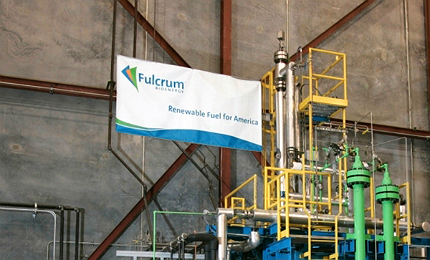
Fulcrum BioEnergy, Inc., a pioneer in the production of low-carbon fuels, completed construction of the world’s first commercial-scale plant converting household garbage into low-cost, zero-carbon transportation fuels. Through Fulcrum’s revolutionary process, the Sierra BioFuels Plant located east of Reno, Nevada, will convert 175,000 tons of prepared municipal solid waste (MSW) into approximately 11 million gallons of zero-carbon syncrude annually, which will then be upgraded to transportation fuels such as sustainable aviation fuel, renewable diesel and renewable gasoline – Fulcrum FuelTM. With construction complete, start-up and commissioning on the plant has commenced and fuel production is expected to begin during the fourth quarter of 2021.
Clariant, a focused, sustainable and innovative specialty chemical company, and India Glycols Limited (IGL), a leading company in the manufacturing of green technology-based chemicals, successfully created their 51-49% joint venture for renewable ethylene oxide (EO) derivatives after receiving all necessary regulatory approvals. The joint venture will operate under the name Clariant IGL Specialty Chemicals Private Limited.




 IL BIOECONOMISTA