Michael Carus, Ceo of nova-Institut, with the representatives of the three companies awarded in Cologne. Copyright: nova-Institut
Last Tuesday in Cologne, at the 9th International Conference on Bio-based Materials organized by the nova-Institut, the Innovation Award “Bio-based Material of the Year 2016” was awarded to three innovative materials in suitable applications. The competition focused on new developments in the bio-based economy, which have had (or will have) a market launch in 2015 or 2016.
Another brick towards the European Bioeconomy. The European Commission organises from 12 to 13 April in Utrecht, The Netherlands, the EU Bioeconomy Stakeholders’ Conference. Four years on from the launching of the EU’s Bioeconomy Strategy, Brussels in collaboration with the Dutch Presidency analyses the achievements and the opportunities ahead in the two-day conference.
Italian biotech company Bio-on announces the launch of a new collaboration with Italeri S.p.A., a production and distribution leader in the modelling sector. Thanks to this agreement, the manufacture of scale models will be done for the first time with the special grade Minerv PHA Supertoys, the new type of bioplastic developed by Bio-on laboratories.
FedEx, the global courier delivery services company headquartered in Memphis, Tennessee, entered into an agreement with Colorado-based Red Rock Biofuels to purchase alternative jet fuel made from wood waste. Starting in 2017, FedEx will blend the first 6 million gallons of this jet fuel at its Oakland hub, ultimately producing at least 48 million gallons over an 8 year term.
The Energy Technologies Institute is seeking partners for a new bioenergy project which aims to improve understanding of the future of biomass logistics in the UK.
The ETI is a public-private partnership between global energy and engineering companies, such as BP and Shell, and the UK Government. Its role is to act as a conduit between academia, industry and the government to accelerate the development of low carbon technologies. It brings together engineering projects that develop affordable, secure and sustainable technologies to help the UK address its long term emissions reductions targets as well as delivering nearer term benefits.
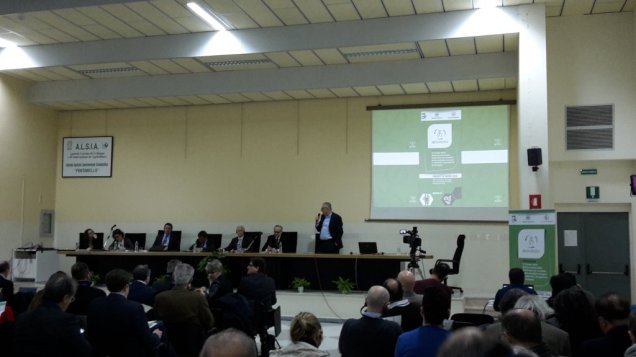
Raffaele Liberali in Metaponto (Basilicata, Italy)
Italy will have its own strategy on bioeconomy by next summer. This was announced by Mario Calderini, representative of the Ministry of Education, University and Research, yesterday in Metaponto, Basilicata, during the launch event of the regional bioeconomy cluster. Good news, then, for the bioeconomy in Italy, where it seems that the issue is increasingly on the agenda of the institutions.
“They are on a journey of no return anyway. They are a “mining” industry, and all mines eventually become exhausted. The question is whether some or all of the petrochemical industry will realize this fact and act to change their feedstocks and practices so that their businesses can continue long term based on sustainable feedstocks and sustainable practices.” To say it – in this exclusive interview with Il Bioeconomista – is Bruce E. Dale, a highly-ranked academic in the Top 100 People in Bioenergy (Bioenergy Digest). Professor Dale received his doctorate in chemical engineering from Purdue University in 1979. He is currently University Distinguished Professor of Chemical Engineering at Michigan State University. He serves as Editor in Chief and Founding Editor of Biofuels, Bioproducts and Biorefining. Dale has won the Charles D. Scott Award (1996), the Sterling Hendricks Award (2007) and the Award of Excellence of the Fuel Ethanol Workshop (2011). He is a Fellow of the American Institute of Chemical Engineers (2011) and a Fellow of the American Institute of Medical and Biological Engineers (2016).
His research interests are cellulosic biofuels, the relationship between energy and societal wealth, life cycle assessment and the design of sustainable systems for producing fuels, chemicals, food and animal feed.
The German chemical giant BASF and the Dutch leading chemical technology company Avantium today announced that they have signed a letter of intent and entered into exclusive negotiations to establish a joint venture (JV) for the production and marketing of furandicarboxylic acid (FDCA) produced from renewable resources, as well as marketing of polyethylenefuranoate (PEF), based on this new chemical building block.
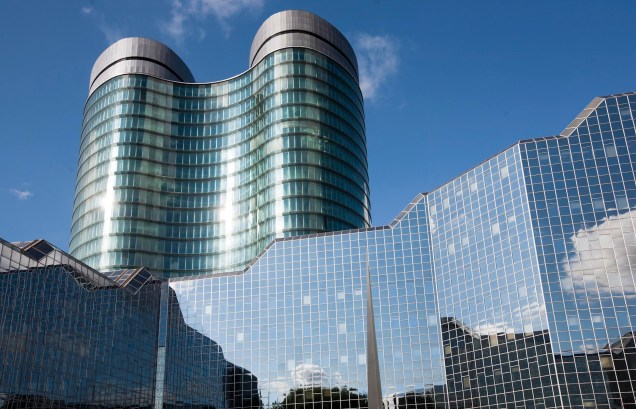
Berlaymont, European Commission’s Headquarter in Brussels
We receive and publish with pleasure this comment by James Cogan related to the land use impacts of biofuels comsumption in Europe. James is a technology, industry and policy analyst collaborating with PNO Innovation in Brussels and with a number of public and private organisations with stakes in the future of biofuels and transport energy. We are delighted to promote the debate.
On March 10 2016 the European Commission was obliged to release an essential report on the land use impacts of biofuels consumption in Europe as determined by the Commission’s own policy on the matter. The Commission has had the report since the Summer of 2015. The report goes a long way to answering the question of how much better are biofuels for the environment than continued use of fossil fuels. In recent years some parts of the Commission have been sharply critical of conventional biofuels yet unable to produce evidence as to why. Reaching a fact-based consensus on the matter is essential for transport decarbonisation for 2030.
So what are the implications of the report findings for EU and member state transport energy planners who urgently require robust and practical guidance?
Stora Enso, the Northern European leading provider of renewable solutions in packaging, biomaterials, wood and paper on global markets, is investing a total of approximately 63 million euro to further improve competitiveness in strategic growth areas in China and Sweden in the Consumer Board and Biomaterials divisions. The Nordic company will invest 31 million euro in a new polyethylene (PE) coating line in the new consumer board mill in Beihai, China. The Beihai Mill is expected to be in operation during the second quarter of 2016, as communicated earlier. The investment will enhance Stora Enso’s strategy for profitable growth and supports competitiveness by enabling short lead-times and full quality control for PE-coated prime Food Service Board (FSB). The investment is expected to be completed in mid-2017.






 IL BIOECONOMISTA