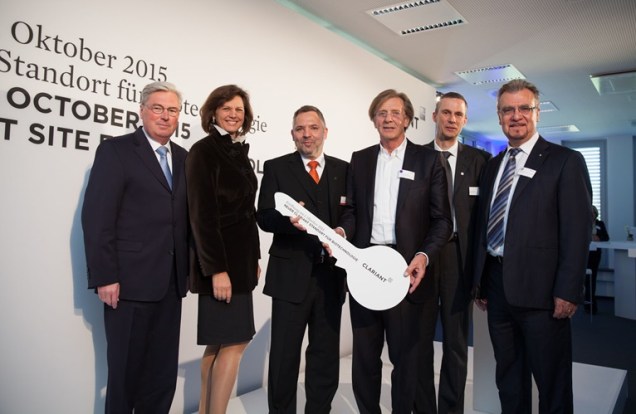
Clariant, a Swiss leader in specialty chemicals, and French industrial biotech company Global Bioenergies last Tuesday announced the development of a new bio-based polymer for cosmetic creams and lotions, which is derived from renewable isobutene.
Clariant, a Swiss leader in specialty chemicals, and French industrial biotech company Global Bioenergies last Tuesday announced the development of a new bio-based polymer for cosmetic creams and lotions, which is derived from renewable isobutene.

“We need an ambitious and long-term bioeconomy policy framework to enable the creation of a Bioeconomy Single Market. The framework needs to ensure predictability to investors and companies, enhance risk-taking capacity and define priority pathways to move towards a low carbon economy, where a circular bioeconomy becomes a growth engine”. Marc Palahí, director of the European Forest Institute, talks to Il Bioeconomista. In this long and exclusive interview, released after the Second edition of the European Bioeconomy Summit, he talks about the next steps which are needed to place the bioeconomy at the core of the EU industrial, climate and sustainability agenda.
Interview by Mario Bonaccorso

Dear Readers,
thank you very much, again. 2017 was another very positive year for Il Bioeconomista: 12% more visits to our blog.
Il Bioeconomista confirms itself as one of the world’s leading blog on bieconomy. Our readers are mainly Europeans, but a growing number of readers are from Turkey, the United States, Canada, Brazil, India, Australia, Japan and Malaysia.
The year that has just ended was very important for the global bioeconomy. And we are sure that the best has yet to come. 2018 will be another relevant year for the implementation of the bioeconomy, waiting for the pre-announced new strategy on bioeconomy in the European Union. We will be again on your side to tell the facts and continue growing.
Happy new year!
Mario Bonaccorso
 There is a new partnership in the Italian bioeconomy. Bio-on, a leading player in the new eco-sustainable chemical industry, signed a strategic agreement with Kartell, through its parent company Felofin which takes a 2% stake in Bio-on with a 10 million euro investment.

Neste’s growth program for renewable products takes a step forward. The Board of Directors of the Finnish company has decided that Neste’s additional production capacity for renewable diesel, renewable aviation fuel and raw materials for various biochemical uses will be located in Singapore. The decision initiates technical design of the new production line, with the aim of a final investment decision by the end of 2018. If the project proceeds as planned, production at the new production line will begin by 2022.
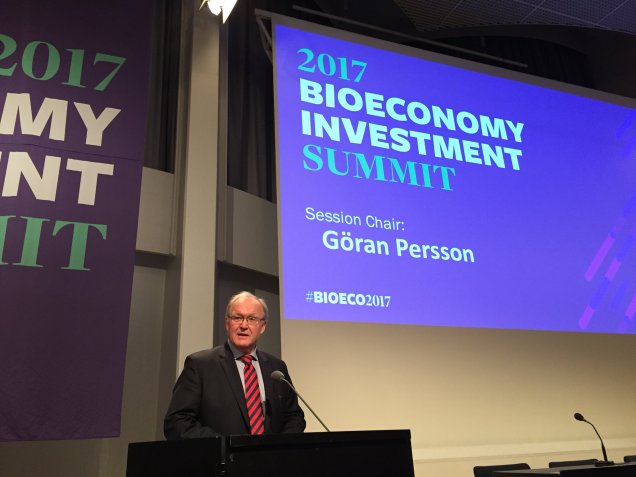
“It’s time to deliver!” This is, extremely briefly, the message that comes from the second edition of the Bioeconomy Investment Summit, which was held in Helsinki last Thursday, December 14. In this invitation made at the opening of the summit by the former Swedish prime minister, Göran Persson, it can be synthesized the will of over 300 summit participants to move rapidly towards the creation of new markets for the bioeconomy and to accelerate the transition to a new, more sustainable economy, which finally could leave the GDP behind as an indicator of welfare of the countries. “From the sustainable perspective, GDP is a misleading measure of success”, said Robert Costanza, professor at the Australian National University.

“To increase awareness of the financing opportunities promoted by the European Union to support the development and growth of the European bio-based sector, focusing particularly on demonstration and flagship projects”. This is the aim of a new report presented yesterday by the Bio-based Industries Consortium (BIC).
“BBI JU calls see project proposals receiving excellent evaluation scores, but are often not granted due to budget limitations”.
The report outlines the opportunities available for financing these activities, allowing companies to pursue their investments in Europe.

The second edition of the Bioeconomy Investment Summit is going to start today in Helsinki, Finland, at Finlandia Hall, organized by the European Commission and the European Forest Institute. Over 30 speakers from across the globe are going to share their views on how we can bring together the economy and the environment.
As the world population keeps growing and living standards improve in many third world countries, there is an ever-increasing demand for textiles and textile fibres. The global textile market currently amounts to about 90 Mtons per annum, but is projected to exceed 140 Mtons by 2025.
 Our readers have voted: the most innovative bioeconomy CEO 2017 is Tony Duncan, CEO of Circa Group, the Australian company headquartered in Melbourne that is converting waste biomass into advanced biochemical materials. For the second consecutive year is the CEO of an Australian company to win the award (in 2016 was Ken Richards, CEO of Leaf Resources).

