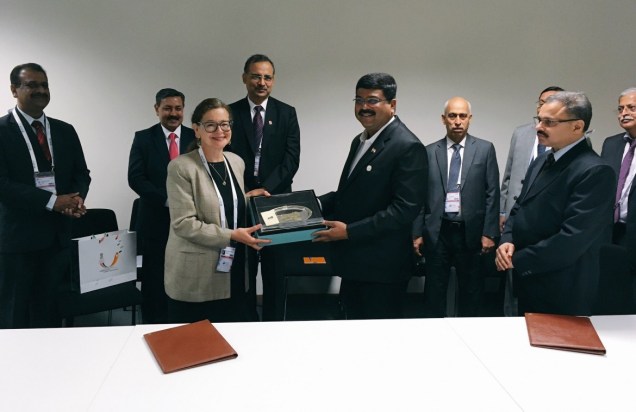
“Imagine wearing yoga pants made from recycled carbon!” said LanzaTech Ceo, Jennifer Holmgren. “We want people to have a choice of where their carbon comes from. Fresh fossil or recycled, ‘carbon smart’, products. Much like the idea of buying organic, fair trade or recycled products, we see a future where you can walk into a store and make a conscious decision to buy everything from a chair to running shoes made from recycled carbon. This future is now possible through advancements in synthetic biology which enable the production of targeted molecules.”



 “Growing the Irish Forest Bioeconomy”. This is the title of
  Titan Hemp, a leading provider of hemp commodities and extracts based in Seattle (USA), has formed a joint venture with Green Growers Technology Alliance (GGTA) to create a new company, Titan BioPlastics, a manufacturing and development entity focused on creating plant-based composites and products for a wide variety of manufacturing applications, including packaging, nanotechnology, bio-polymers, construction, and bioplastics.
 There is a new Brazilian-Danish partnership in the world bioeconomy. Braskem, the Americas’ leading producer of thermoplastic resins, and Danish-based Haldor Topsoe, a world leader in catalysts and surface science, have signed a technological cooperation agreement to develop a pioneering route to produce monoethylene glycol (MEG) from sugar. The agreement calls for the construction of a demonstration plant in Denmark, with operation slated to begin in 2019.

 ExxonMobil and Renewable Energy Group (REG) have demonstrated the ability to convert sugars from a variety of non-edible biomass sources into biodiesel by utilizing REG’s patented fermentation technology
