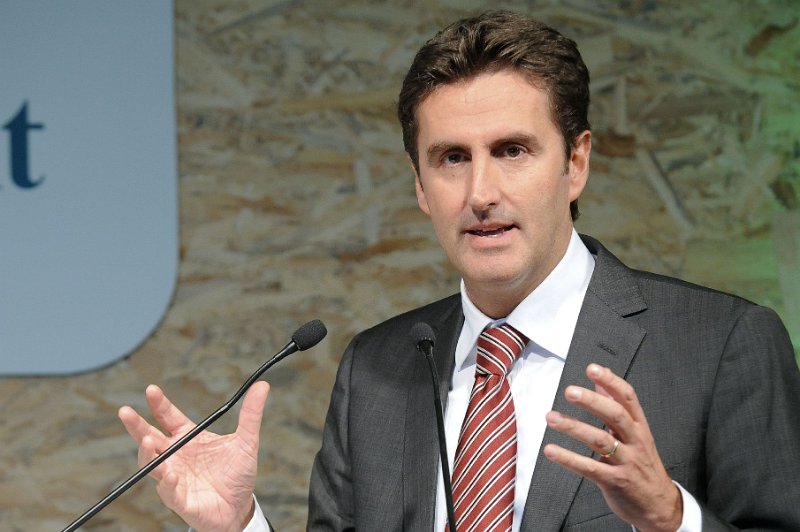
Marc Delcourt, co-founder and CEO of Global Bioenergies
French Global Bioenergies, one of the few companies worldwide, and the only one in Europe, that is developing a process to convert renewable resources into hydrocarbons through fermentation, announces having reached the first milestone of the BioMA+ project which is financed by the French “Investissements d’Avenir” State program. The project aims at developing a renewable value chain to methacrylic acid, a key constituent of acrylic paints. Achieving this first milestone result unlocks a €1.7 million payment.
Led by growth in the U.S. and Brazil, the global capacity to produce bio-based materials and chemicals (BBMC) from emerging technologies will rise to over 7.4 million metric tons in 2018, more than tripling from 2008 levels, according to Lux Research.
Missoula, Montana: here is located the headquarter of Rivertop
Rivertop Renewables, a Montana-based producer of novel performance chemicals derived from all natural resources, has begun construction of its first commercial plant, located at DanChem Technologies, Inc.’s (DTI) facility in Danville, Virginia.
“At the regulatory level, US and EU are focused primarily on biofuels and neither has created significant incentives for bio-based chemicals that play an equally important role in the bioeconomy. The US has made tremendous investments in biofuel technology development, in pilot and demonstration biofuel facilities, and in feedstock production, logistics and infrastructure. The EU appears to be investing more in the development of Bioproducts than the US at the moment.” To say it, in this exclusive interview with Il Bioeconomista, is Jennifer Holmgren, Chief Executive Officer of Lanzatech, the company, set up in 2005 in New Zealand and based now also in the US, which is revolutionizing the way the world thinks about waste carbon by treating it as an opportunity instead of a liability. LanzaTech’s novel gas-to-liquid technology has opened up vast new sources for making low-carbon chemicals and fuels that displace petroleum without the environmental concerns associated with crop- and land-based bioproducts. This flexible technology has the potential to disrupt the current highly centralized petroleum-based energy system by enabling regional production of low-cost, energy from local wastes and residues.
The Mossi Ghisolfi Biorefinery in Crescentino, Italy
The next economic development of Malaysia will be biobased. Brooke Renewables and Hock Lee Group – which has experience in manufacturing of industrial glue and plywood and has investment in oil palm plantation – have presented a Letter of Intent (LOI) to the state government, marking their intention to invest in the 2G (second generation) bioethanol and biochemical plant as the first phase of the Sarawak Biomass Hub project.
Biofuels or biochemicals? nova-Institut proposes a reform of the RED
nova-paper #4 “Proposals for a Reform of the Renewable Energy Directive to a Renewable Energy and Materials Directive (REMD)” presents a reform proposal that aims at creating a level playing field for bio-based chemicals and materials with bioenergy and biofuels in Europe. It is fundamentally different from other reforms of the Directive being currently discussed because it opens the perspective to not only look at energy, but also at bio-based materials.
“At the moment focus in European policies is to endorse biomass utilization for the energy applications. This is short-sighted, as on those applications biomass does not bring the best added value. Also there is not enough biomass in Europe to meet up all energy and climate target in EU-level. Biomass is more valuable on chemical and material applications”. To say it, in this exclusive interview with Il Bioeconomista, is Jukka Kantola, CEO of NISCluster, a Finnish private bioeconomy company with a focus on the woody biomass. With Kantola we talk about the bioeconomy in Finland, the EU policies and the different uses of biomass.
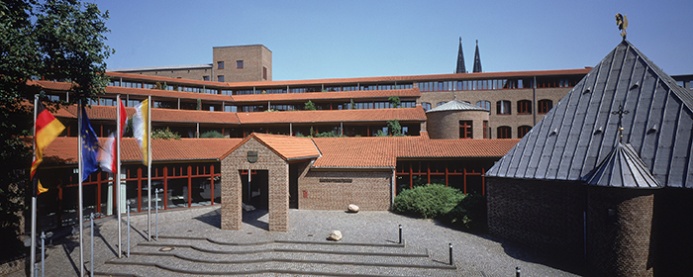
Three days of interesting debate with regard to the future development of bio-based materials. This was the Seventh International Conference on bio-based materials, organized by the nova-Institut from April 8 to 10 in Cologne. With the presence of some of the major European players – companies, univerties and research centers – the three days in the beautiful German city on the Rhine have been an opportunity to discuss on the progress of research on bio-based materials, the political support to the bio-based economy in Europe and in the member states and what measures are necessary to enable the Old Continent to be competitive in international markets.
Versalis (the chemichal subsidiary of Eni), Industrial Relations Eni and the trade unions have reached an important agreement on the project at the Porto Marghera site (close to Venice) to redesign production facilities and regain competitiveness.
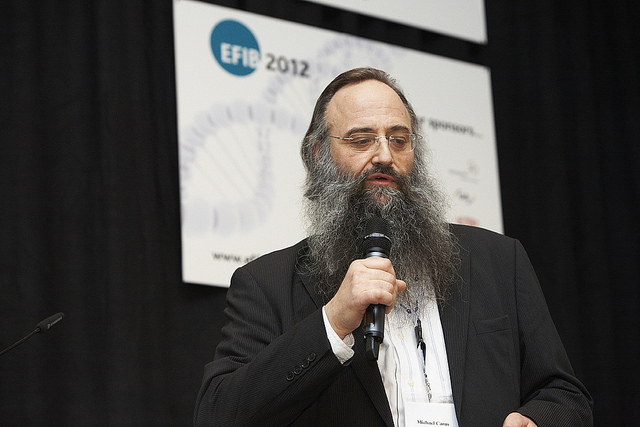
Michael Carus, managing director of the nova-Institut
“A comprehensive analysis of hurdles carried out by nova-Institut shows that the RED (which will in future be associated with the FQD – Fuel Quality Directive 9870 – in the transport sector) is one of the main causes of the longstanding and systematic discrimination between material and energy uses. The RED hinders the development of material use and therefore that of the whole bio-based economy. Unfavorable framework conditions combined with high biomass prices and uncertain biomass supplies deter investors from putting money into bio-based chemistry and plastics – even though these would produce higher value and greater resource efficiency”. To say it is Michael Carus, physicist and managing director of the nova-Institut, the German private and independent Scientific Institute specialized in the bioeconomy, one of the most prestigious at the European level. In this interview with Il Bioeconomista, Carus uses the phrase “Misallocation of biomass” to define the effects of the RED (Renewable Energy Directive), since “this is blocking higher value material uses like chemicals and plastics from coming to fruition”. And explains his point of view on the first generation vs. second generation biofuels issue.



 IL BIOECONOMISTA