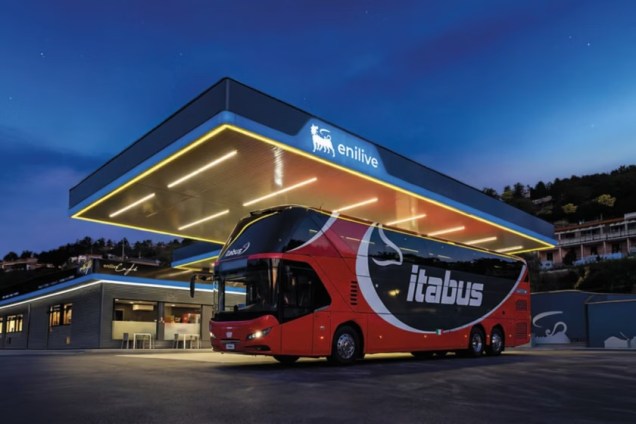
All the 100 vehicles in the Itabus fleet run on Enilive’s HVOlution diesel, a biofuel made from 100% renewable raw materials (in accordance with the European Renewable Energy Directive). Produced at Enilive’s biorefineries in Venice and Gela mainly from waste, such as used cooking oil and animal fats, and residues from the agri-food industry, HVOlution is a hydrogenated vegetable oil that can be used in all validated diesel engines and is available in more than 1,550 Enilive service stations in Italy. HVO diesel biofuel – according to the Italian company – contributes to the decarbonization of the transport sector, including heavy-duty vehicles: across the entire supply chain, in 2025 the average CO₂eq emissions reduction from Enilive HVO for traction use was 79.5%, if compared to the reference fossil mix.
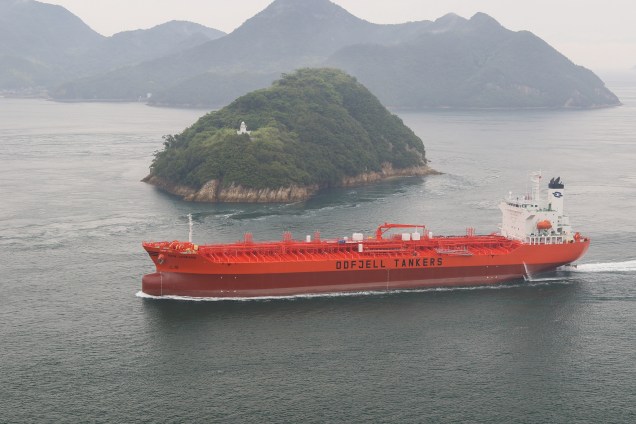
Odfjell has launched the first operational green corridor between Brazil and Europe. “Our chemical tankers are now sailing the 5,000-nautical-mile route between Brazil and Europe with substantially lower emissions. The corridor will operate 12-15 voyages per year, each lasting around 40 days”, states the Norwegian company.
”We have established an offtake of B24 sustainable biofuel blend in Rio Grande to secure long-term fuel availability. The Ports of Antwerp-Bruges, Rotterdam and Rio Grande are working together with our team to advance the green corridor through increased efficiency and optimized port-stay processes.”
“We do this to demonstrate that certified fuel, technology, and infrastructure are already available,” says CEO Harald Fotland. “Through this, we show that sustainable biofuel is a viable option for deep-sea shipping today.”
Fotland emphasizes that this is not a one-off demonstration but a long-term commitment.
“With this corridor, we integrate greener fuel as a new pillar in our decarbonization strategy. We activate the entire value chain to find ways to decarbonize our operations, and we are encouraged that key stakeholders are joining us in this groundbreaking initiative.”
Odfjell has taken independent action—self-funding the project and moving ahead without subsidies.
“By covering the additional cost ourselves, we eliminate the financial element and move directly into operational implementation. It may not be a perfect corridor yet, but a solid start. Its success depends on collaboration across the value chain, and we are committed to developing it further together with relevant stakeholders,” Fotland says.
This includes collaboration with ports to increase efficiency, with customers to maximize capacity utilization, and with fuel providers to increase the influx of green fuels.
In Brazil, the currently available sustainable biofuel quality is the so-called certified B24—a blend of 24% renewable biodiesel derived from waste and 76% VLSFO. Introducing biofuel marks another step in Odfjell’s decade-long work to reduce emissions. “We have already improved our carbon intensity by more than 54% compared to the 2008 benchmark, achieved through a wide range of technical and operational measures.”
“We hope to inspire broader industry action and welcome continued collaboration with regulators, ports, producers, other ship operators, and customers to accelerate the transition to low-emission maritime transport,” Fotland ends.
“We congratulate Odfjell on taking the lead and demonstrating what is possible when business and public authorities cooperate across national borders to reduce emissions. Green shipping corridors over long distances are still in their early stages, and this therefore represents an important first step on the path toward zero emissions. The ocean is the link in trade between Brazil and Norway. This new green shipping corridor is the result of Norway’s cooperation with Brazil on more climate-friendly shipping. We will continue this work with the aim that more vessels can gradually adopt a wider range of low- and zero-emission fuels.”
Eni, through its subsidiary Eni Natural Energies (ENE), and the Ministry of Agriculture, Rural Development, and Food Production of the Republic of Côte d’Ivoire signed a Memorandum of Understanding (MoU) to explore new opportunities for collaboration in the agricultural and agro-industrial sectors for the production of vegetable oil for bio-refining use.
Enilive commissioned its first plant to produce Sustainable Aviation Fuel (SAF) at the Gela biorefinery, in Sicily. Production has started at the plant, which has a capacity of 400,000 tonnes per year, representing almost a third of the expected European SAF demand in 2025 (Source: Wood Mackanzie), following the implementation of the ReFuelEU Aviation regulation.
Eni and MSC Group President signed a memorandum of understanding aimed at developing joint initiatives in the field of sustainability and energy transition. The two Italian companies – the first is an integrated energy company committed to the energy transition towards carbon neutrality by 2050, the second is a world leader in transport and cruise services – intend to extend the scope of their already fruitful business relationship to a broader geographic context and, in particular, to areas relating to sustainability and decarbonization of their operations.
Alex Michine, CEO MetGen, with the Frost & Sullivan Award in London. Michine was also awarded The Most Innovative Bioeconomy CEO in 2019 by our blog’s readers.
NewEnergyBlue, the clean-technology designer of biomass refineries that turn agricultural waste into highly decarbonized biofuels and biochemicals, and MetGen, the Finnish pioneer in advanced enzymes and lignin fractionization, began integrating their renewable technologies and business units to vigorously compete with fossil-carbon products not just environmentally but economically.
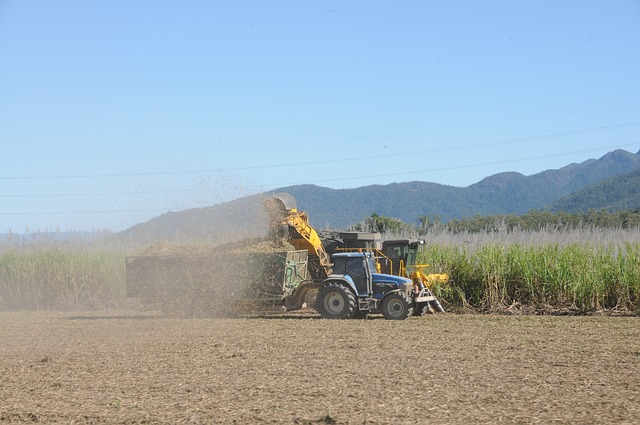
bp agreed to acquire Bunge’s 50% holding interest in its bp Bunge Bioenergia S.A. joint venture, one of Brazil’s leading biofuels-producing companies. Upon completion, bp will become sole owner of the industrial scale sugarcane and ethanol business, enabling bp to accelerate value creation through integration with bp’s trading and technology capabilities.
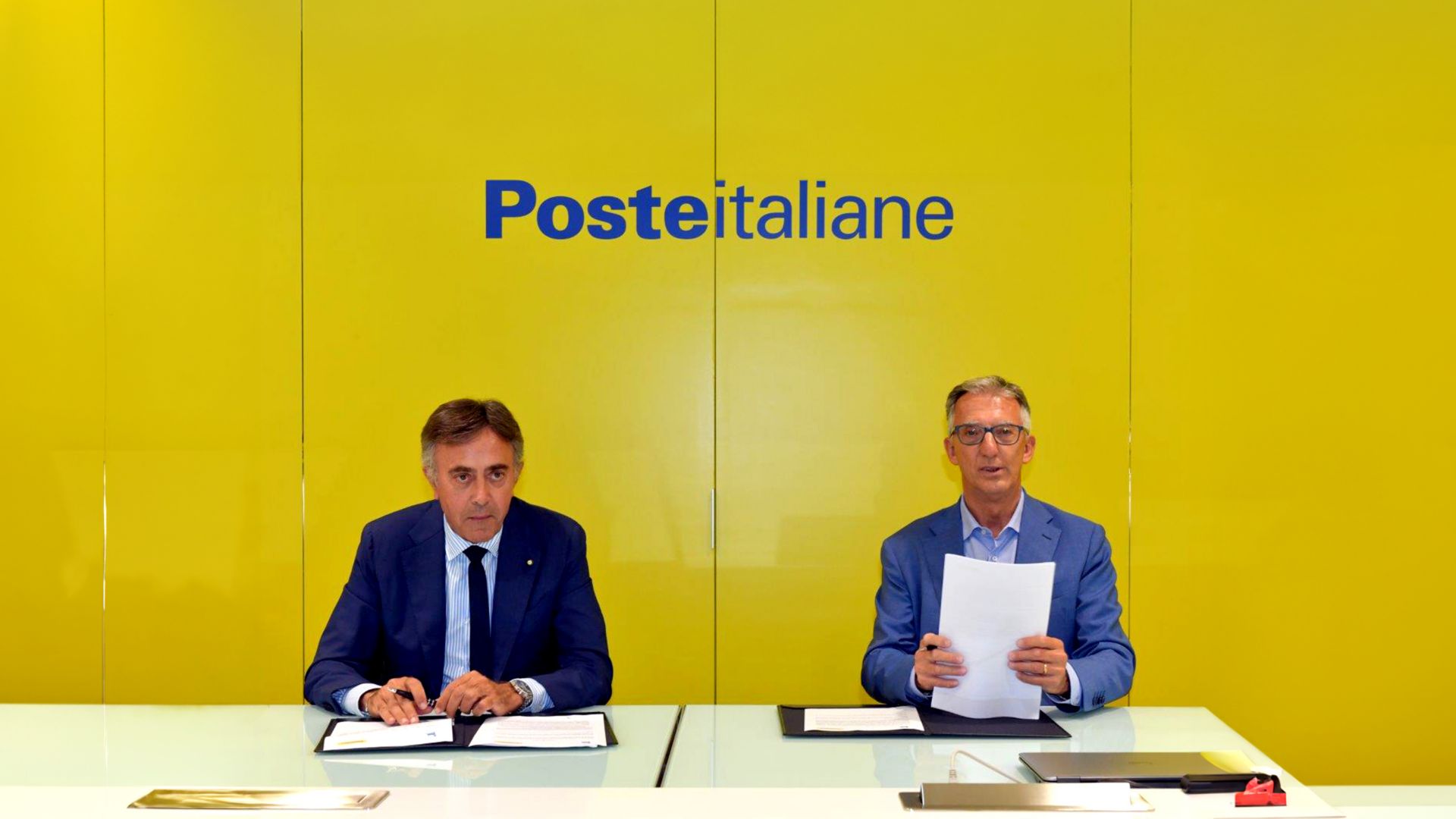
Poste Italiane’s ground and air fleet will run on biofuels supplied by Enilive, Eni’s company dedicated to mobility services and products. This will accelerate Poste Italiane’s progress towards achieving its energy transition and carbon neutrality goals set for 2030.
FS Italiane Group and Eni have signed a Letter of Intent with the objective of developing joint initiatives aimed at accelerating the energy transition towards new energy sources. The collaboration between the two industrial groups will involve identifying new opportunities in the transport, energy and materials sectors through feasibility studies, analysis and experimentation with innovative technological solutions.
Neste and the Singapore Airlines (SIA) Group have signed an agreement for the purchase of 1,000 tons of neat Neste MY Sustainable Aviation Fuel™. This will make SIA and Scoot, the two airlines in the Group, the first carriers to receive sustainable aviation fuel (SAF), produced at Neste’s refinery in the country, at Changi Airport.



 IL BIOECONOMISTA