The Port of Frederikshavn, in Denmark, and Steeper Energy, a Danish specialist energy project and technology development company , along with Aalborg University has entered into a partnership to establish the world’s first biomass-based plant to produce a sustainable marine fuel. The plant will produce sulphur-free fully renewable fuel for the several thousand vessels passing through the port annually. A new zero-tolerance law on sulphur content as well as the general acceptance that every part of society must do its part for climate change are the keys for success, according to the consortium.
European Parliament, BrusselsThe European Parliament called for a cap on the use of traditional biofuels and a speedy switchover to new biofuels from alternative sources such as seaweed and waste, in a vote on draft legislation yesterday. So called “first-generation” biofuels – from food crops – should not exceed 6% of fuel used in transport by 2020, amending the target from 10%.The measures aim to reduce greenhouse gas emissions that result from the increasing turnover of agricultural land to biofuel production.
New proposals which aim to limit the percentage of biofuels that can be used in transport fuels continue to divide opinion among European policymakers and stakeholders.
The fuel quality directive and renewable energy directive proposal, adopted by parliament’s environment committee, include new rules that take into consideration the impacts of producing biofuel crops.
There is persistent concern that biofuels compete with food production, drive up food prices and price volatility and so cause hunger.
Many people, including very dignified authorities, accept this simple causality chain. The reality is far more complex.
Michael Carus, managing director of the nova-Institut
“A comprehensive analysis of hurdles carried out by nova-Institut shows that the RED (which will in future be associated with the FQD – Fuel Quality Directive 9870 – in the transport sector) is one of the main causes of the longstanding and systematic discrimination between material and energy uses. The RED hinders the development of material use and therefore that of the whole bio-based economy. Unfavorable framework conditions combined with high biomass prices and uncertain biomass supplies deter investors from putting money into bio-based chemistry and plastics – even though these would produce higher value and greater resource efficiency”. To say it is Michael Carus, physicist and managing director of the nova-Institut, the German private and independent Scientific Institute specialized in the bioeconomy, one of the most prestigious at the European level. In this interview with Il Bioeconomista, Carus uses the phrase “Misallocation of biomass” to define the effects of the RED (Renewable Energy Directive), since “this is blocking higher value material uses like chemicals and plastics from coming to fruition”. And explains his point of view on the first generation vs. second generation biofuels issue.
According to the Global Renewable Fuels Alliance, a global biofuels federation representing over 65% of the world’s renewable fuels production from 44 different countries, 62 countries now have biofuels friendly policies in place whose ethanol production alone has replaced the need for over 2 million barrels of crude oil per day.
A fungus and E. coli bacteria have joined forces to turn tough, waste plant material into isobutanol, a biofuel that matches gasoline’s properties better than ethanol. University of Michigan research team members said the principle also could be used to produce other valuable chemicals such as plastics.
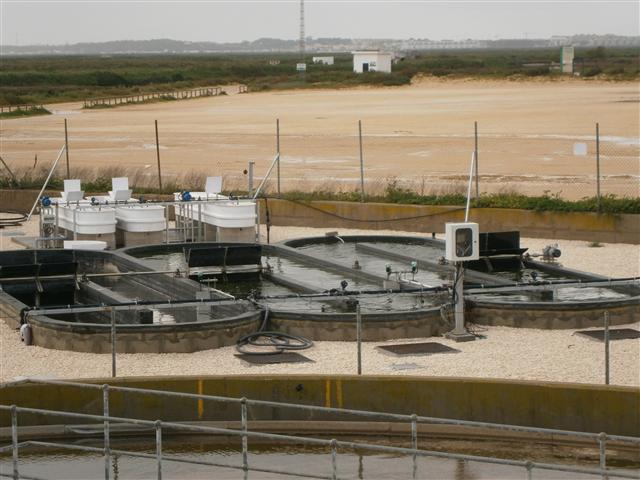
The raceways located at the Chiclana WWTP (march 2013)
A European Union-backed project to produce biofuels from algae moved a step forward last Thursday by producing its first crop of algae biomass at its site in Southern Spain. The “All-gas” project will cultivate fast-growing micro-algae by using the nutrients in wastewater and then by further processes generate biomethane which can be captured and used in transport fuel. Continue reading →
Alaska Airlines, a subsidiary of Alaska Air Group, and Hawaii BioEnergy LLC announced yesterday they have signed an agreement for the carrier to purchase sustainable biofuel for its aircraft. Founded in 2006, Hawaii BioEnergy is a consortium of three of Hawaii’s largest landowners (Kamehameha Schools, Grove Farm Company Inc., and Maui Land & Pineapple Inc.) and three venture capital companies who plan to use locally grown feedstocks to produce biofuels.
Building on President Obama’s plan to cut carbon pollution, the Energy Department announced last Tuesday four research and development projects to bring next generation biofuels on line faster and drive down the cost of producing gasoline, diesel and jet fuels from biomass. The projects – located in Oklahoma, Tennessee, Utah and Wisconsin – represent a $13 million Energy Department investment.









 IL BIOECONOMISTA