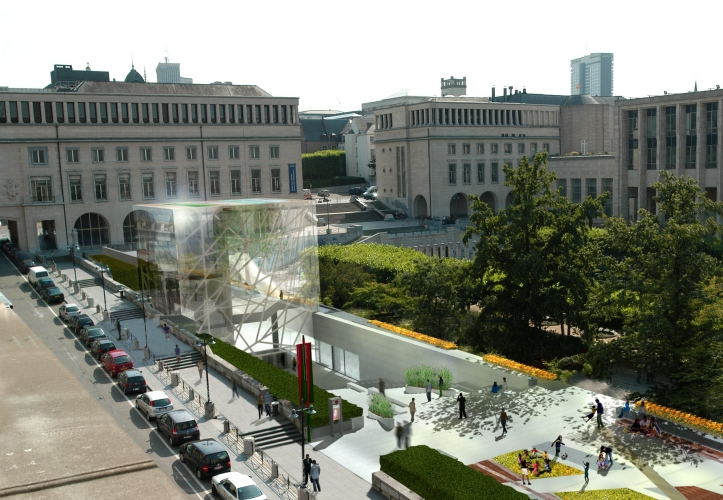
Everything is ready in Brussels to host the European Forum for Industrial Biotechnology and Bioeconomy. Taking place on 27-29 October at SQUARE Brussels Meeting Centre, EFIB 2015 – organised by EuropaBio and Smithers Rapra – will take advantage of the opportunity to increase engagement between policy makers and a broad range of stakeholders connected with the existing biobased value chain, and reach a new network of end users from a range of industries.
The British plan for the bioeconomy takes a step forward. Biome Bioplastics CEO, Paul Mines, has been appointed to the management board of the Lignocellulosic Biorefinery Network (LBNet), a government-funded body tasked with fostering cross-disciplinary communities in the industrial biotechnology sector. LBnet is an active community of industrial practitioners and leading academics generating economic value through novel chemical, material and fuel processes that use lignocellulosic biomass as an alternative to petroleum-derived inputs.
EuropaBio and Smithers Rapra, in association with IAR, unveil the highly-anticipated agenda for the European Forum for Industrial Biotechnology (EFIB) from 1-2 October 2014 taking place in Reims, the heart of Champagne-Ardenne (France). Committed to creating a forum to address opportunities and challenges for the biobased economy, EFIB is consistent in attracting an unrivalled calibre of speakers from across the fields of both policy and business. This year’s high level plenary includes a French ministerial address from this year’s host nation, complemented by the European Commission’s take on the future of the European biobased economy. Followed by a discussion on shale gas and how it is impacting investments and market development in petrochemical and biobased value chains, featuring representatives from Shell and European Bioplastics.
A new innovation centre for industrial biotechnology is forecast to increase industrial biotechnology-related turnover to up to £3 billion by 2030, create 1500 jobs within five years and put Scotland at the forefront of a global transformation. Funded by the Scottish Funding Council and supported by Scottish Enterprise and Highlands & Islands Enterprise, the new Industrial Biotechnology Innovation Centre (IBioIC) – hosted at the University of Strathclyde – is a key element of the National Plan for Industrial Biotechnology – Towards a Greener, Cleaner 2025. It brings together academic and private sector partners to play a leading role in the potential £360 billion global industrial biotechnology market. Industrial biotechnology is the use of biological substances, systems and processes to produce intermediate and final products such as pharmaceuticals, chemicals, materials and energy – both cost-effectively and with minimal adverse environmental impact.
“Sustainable production and use of bioresources from agriculture and forestry have a long tradition in Austria and besides the use of wood for construction, composite materials and energy production, the use of renewables and organic waste for the production of fibres, paper, chemicals, biodiesel, food&feed and pharmaceuticals are crucial to internationally leading Austrian industries active in production and engineering”. To say it in this exclusive interview with us is Anton Glieder, associate professor at the Institute of Molecular Biotechnology of Graz University of Technology and Scientific Director, Ceo and Cso of the Austrian Centre of Industrial Biotechnology (ACIB GmbH). With Glieder we talk about industrial biotechnology and the role of Austria in the European bioeconomy.
Bill and Melinda Gates: their Foundation supported the start-up of Amyris in 2005
The US biotech company Amyris aims at becoming a great player in the world bioeconomy. Founded in 2003 in the San Francisco Bay Area by a group of scientists at the University of California, Berkeley, Amyris – as anticipated during its prior quarter results call – has begun the production of its first fragrance oil at a specialty contract manufacturing facility. In 2014, building on the successful results of its initial fragrance oil production and based on feedback from its partner, Amyris plans to also produce this fragrance oil at its own Brotas production facility. The Brotas biorefinery currently produces Biofene, Amyris’s brand of farnesene, a renewable hydrocarbon used for a range of applications. Following planned improvements to the Brotas plant in early 2014, Amyris expects to be able to produce both Biofene and a range of other fermentation products, including its fragrance oils, at the plant.
This announcement follows the one of last December, when Amyris announced together with the French oil giant Total the formation of Total Amyris Biosolutions, a 50-50 joint venture that will produce market renewable diesel and jet fuel.
Arnaud Montebourg, French Minister of Industrial Renewal
France invests in the bioeconomy. Ademe, the Environment and Energy Management Agency, and the General Investment Commission have chosen the industrial biotech company Deinove and the Deinochem programme to solidify one of the key sectors of government support for industrial innovation.
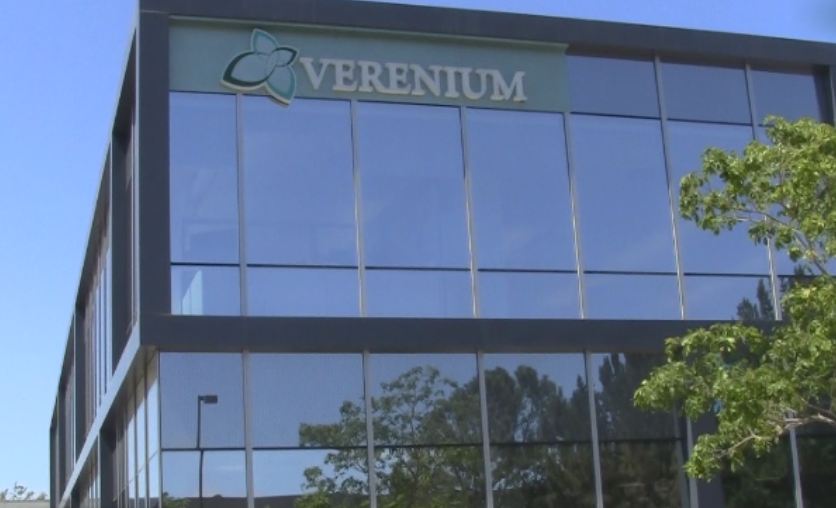
BASF grows in biotechnology field and closes the gap on market leaders DuPont and Novozymes in the $3 billion industrial enzyme industry. The German world’s leading chemical company yesterday announced that it has successfully completed the previously announced tender offer to purchase all outstanding shares of common stock of Verenium Corporation, San Diego, California, for US$4.00 per share in cash. The tender offer expired at 9:00 a.m. Eastern Standard Time (USA) on October 31, 2013. As of the expiration of the tender offer, 11,337,044 Verenium shares were validly tendered and not withdrawn in the tender offer, representing approximately 71% of Verenium’s outstanding shares, according to the depositary for the tender offer. Based on all outstanding shares and including all net financial liabilities, the enterprise value would be approximately US$62 million (approximately €48 million).
Approximately 250 delegates from EU, Tunisia, Russia, Turkey and Canada, 40 scientific presentations, 30 scientific posters and a round table on “The role of clusters in fostering the bioeconomy”. These are the numbers of IFIB, the Italian Forum on Industrial Biotechnology and Bioeconomy, which opens today to the world in Naples at Castel dell’Ovo (Egg Castle). Continue reading →
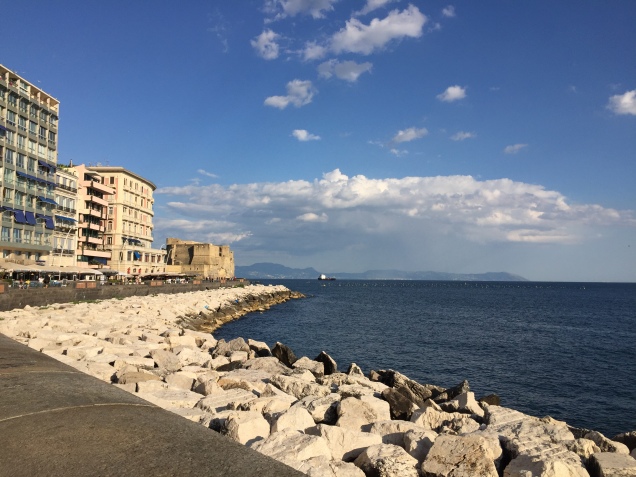
Naples will be the Euro-mediterranean capital of the bioeconomy for a couple of days. The Italian Forum on Industrial Biotechnology and Bioeconomy (IFIB) goes to the wonderful city of Southern Italy from 22 to 23 October 2013 at Castel dell’Ovo (Egg Castle), a seaside castle located on the former island of Megaride, now a peninsula, on the gulf of Naples .
With around 250 delegates in attendance from approximately twenty different countries from all around the world, the conference truly succeeds in its ambitious aim to transform from an Italian event to a Euro-mediterranean congress for the vibrant and dynamic sector of the bioeconomy.






 Approximately 250 delegates from EU, Tunisia, Russia, Turkey and Canada, 40 scientific presentations, 30 scientific posters and a round table on “The role of clusters in fostering the bioeconomy”. These are the numbers of IFIB, the Italian Forum on Industrial Biotechnology and Bioeconomy, which opens today to the world in Naples at Castel dell’Ovo (Egg Castle).
  IL BIOECONOMISTA