Neste, the Espoo-based world’s leading provider of sustainable renewable diesel and an expert in delivering drop-in renewable chemical solutions, and Clariant, a world leader in specialty chemicals, signed an agreement for a new partnership to join forces in developing and making new sustainable material solutions accessible to a variety of industries.
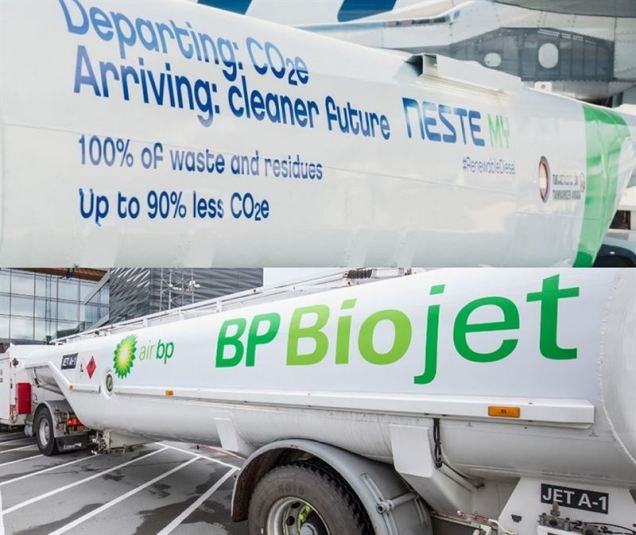
Neste, the world’s leading renewable products producer headquartered in Espoo (Finland), and Air BP, the international aviation fuel products and services supplier, entered into an agreement to explore opportunities to increase the supply and availability of sustainable aviation fuel for airline customers.
Neste, the world’s leading producer of renewable diesel headquartered in Espoo, Finland, UK-based chemical recycling company ReNew ELP, and Australian technology developer Licella are joining forces in a development project to explore the potential of using mixed waste plastic as a raw material for fuels, chemicals, and new plastics. In addition to studying liquefied waste plastic feasibility and sustainability as refinery raw material, the companies are also collaborating with the aim to facilitate regulatory acceptance for chemical recycling.
Neste, the world’s leading producer of renewable diesel based in Espoo, Finland, is now exploring ways to introduce liquefied waste plastic as a future raw material for fossil refining. The aim of the development project is to proceed to industrial scale trial during 2019. The company’s target is to process annually more than one million tons of waste plastic by 2030.
Neste, the Finnish producer of renewable fuels from waste and residues, acquired sole control and 51% of the shares of animal fat trader IH Demeter B.V., making Neste the controlling shareholder. The current owners shall remain as co-owners. The transaction is awaiting for and is subject to regulatory approval.
The Pasadena Fire Department, a California city northeast of Los Angeles, switched much of its fleet of apparatus from operating on petroleum diesel to using Neste MY Renewable Diesel, produced by the Finnish company Neste. The department plans to transition all its fleet apparatus to renewable diesel by 2019.
Neste’s growth program for renewable products takes a step forward. The Board of Directors of the Finnish company has decided that Neste’s additional production capacity for renewable diesel, renewable aviation fuel and raw materials for various biochemical uses will be located in Singapore. The decision initiates technical design of the new production line, with the aim of a final investment decision by the end of 2018. If the project proceeds as planned, production at the new production line will begin by 2022.
Starting in July, the airport buses at Helsinki Airport has been fuelled by diesel manufactured wholly from waste and residue. Finavia – a limited corporation owned fully by the Finnish state, which is responsible for maintaining and developing its 21 airports and Finland’s air navigation system – started a gradual conversion to using renewable diesel in all buses travelling between the terminal and aircraft at Helsinki Airport. It is also Finavia’s goal to encourage other companies operating at its airports to use renewable fuels.
Finnish Neste is focusing its raw materials research on waste plastics as a substitute for crude oil in the manufacture of oil products. The idea of “one’s waste is a valuable raw material to another” is central to the circular economy, and, for over a decade, it has inspired Neste’s development and production of renewable fuels. The company headquartered in Espoo already produces enough Neste MY Renewable Diesel, produced of waste and residues, to power more than two million cars for a year. This will enable Neste’s customers to reduce their greenhouse gas emissions by almost 7 million tons this year. Underpinning this progress is the company’s patented NEXBTL technology for refining low-quality waste fats into high-quality, fully renewable fuel. The same technology can be used to produce other renewable products also, such as renewable aviation fuel and raw material for bioplastics.
There is a new Finnish initiative to educate children in bioeconomy and climate change. Neste Corporation has launched an international environmental exchange that is open to schools throughout Finland. Pupils in schools can exchange experiences of climate change with their counterparts in schools abroad. The schools selected for the exchange will be given an EduCycle game. It is an augmented reality game created by Neste that makes it clear what climate change means in practice.

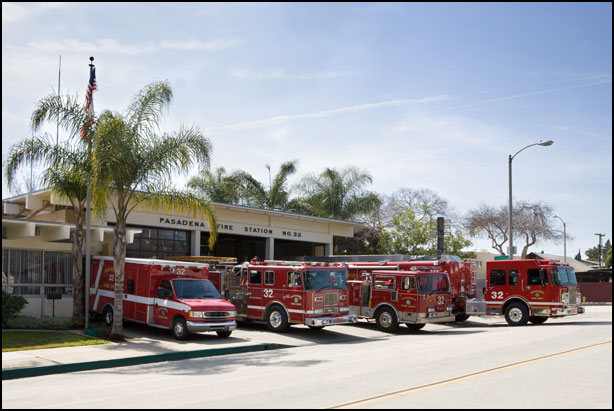 The Pasadena Fire Department, a California city northeast of Los Angeles, switched much of its fleet of apparatus from operating on petroleum diesel to using Neste MY Renewable Diesel, produced by the Finnish company Neste. The department plans to transition all its fleet apparatus to renewable diesel by 2019.
 Starting in July, the airport buses at Helsinki Airport has been fuelled by diesel manufactured wholly from waste and residue. Finavia – a limited corporation owned fully by the Finnish state, which is responsible for maintaining and developing its 21 airports and Finland’s air navigation system – started a gradual conversion to using renewable diesel in all buses travelling between the terminal and aircraft at Helsinki Airport. It is also Finavia’s goal to encourage other companies operating at its airports to use renewable fuels.
 IL BIOECONOMISTA