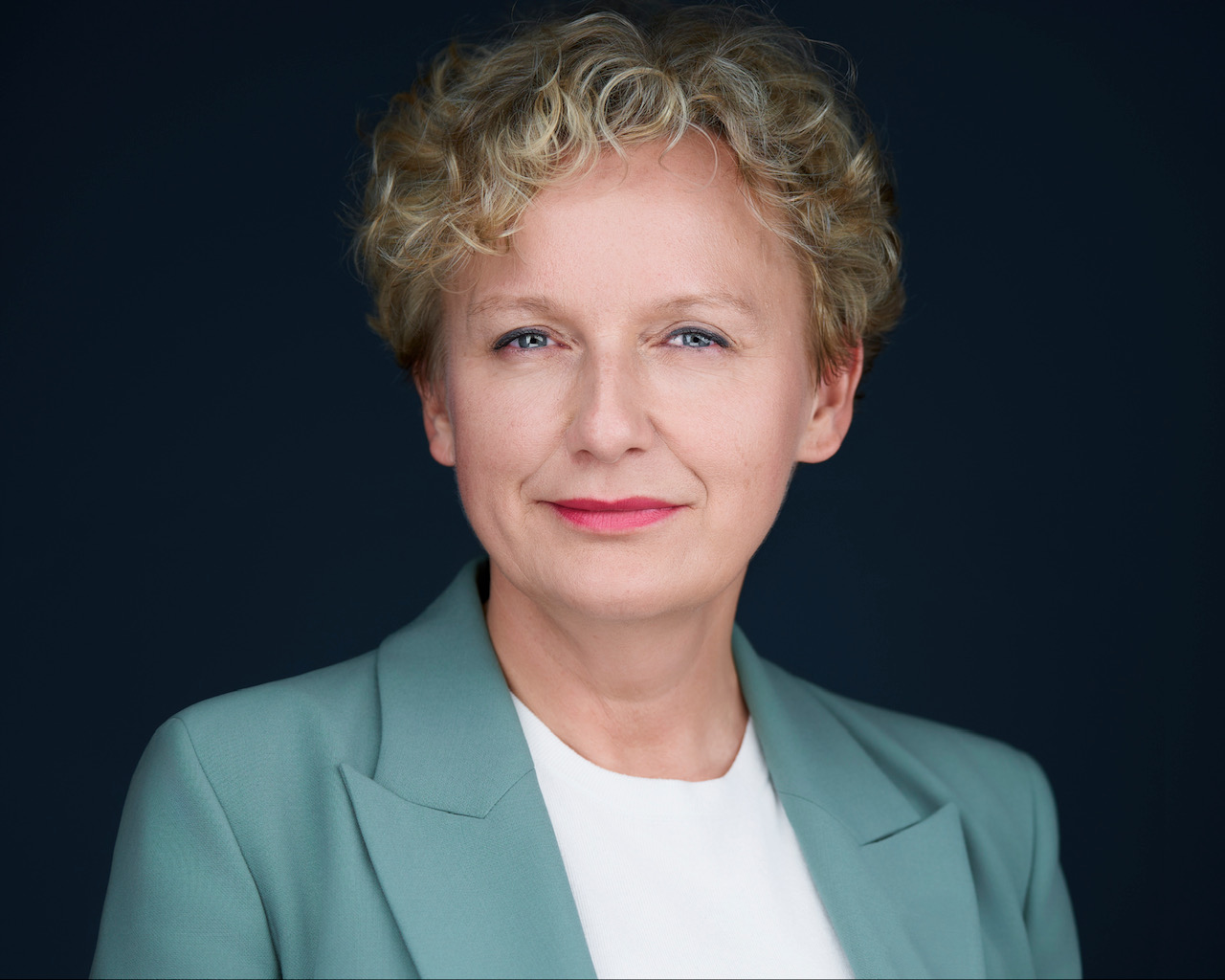
“The bioeconomy is directly linked to the priorities of this Commission: competitiveness, as set out in the Competitiveness Compass; decarbonisation of industry under the Clean Industrial Deal; and economic security, by reducing dependence on imported fossil feedstocks and critical inputs. It also contributes to nature restoration and climate resilience when it is built on sustainable biomass.” To say this in this exclusive interview with Il Bioeconomista, is Agata Kotkowska, Head of the Bioeconomy and Sustainable Materials at the DG Envi of EU Commission. Kotkowska talks with us about the next steps for the European bioeconomy after the Strategy launched last year and the Global Bioeconomy Summit, which was held three weeks ago in Dublin under the Irish Presidency of UE.
Interview by Mario Bonaccorso
1. Three weeks ago, the Global Bioeconomy Summit was held in Dublin. What do you think are the most significant takeaways from the summit?
The Global Bioeconomy Summit in Dublin, hosted by the Government of Ireland during its Presidency of the Council of the European Union together with the International Advisory Council on Global Bioeconomy (IACGB), showed that the conversation has matured. A few years ago the main focus was on research and innovation in a bioeconomy. Today the question is how to scale it, how quickly, and with what investment.
Three messages stand out for me. First, there is a broad international consensus that the bioeconomy is central to competitiveness, resilience and climate and biodiversity objectives at the same time. Second, the bottleneck is no longer the science. It is scale-up and deployment: first-of-a-kind plants, access to capital, and predictable demand. In the dialogue on engineering biology, partners from the United States and Japan described exactly the same challenges we face in Europe. Third, cooperation matters more than ever. No region can build resilient bio-based value chains alone, and the Summit confirmed strong interest in working with the European Union.
2. Many of the European speakers emphasised the need to move from strategies to implementation. What are the next steps in this direction?
That is exactly where we are. With the EU Bioeconomy Strategy adopted in November 2025, the Commission has set the direction. 2026 and 2027 are about delivery.
Our approach rests on three building blocks. The first is creating markets: giving bio-based products a fair chance through lead markets. The second is mobilising investment: building a pipeline of bankable projects and connecting them with public and private finance, including through the European Investment Bank (EIB) Group, national promotional banks and the future European Competitiveness Fund (ECF). The third is a regulatory environment that supports innovation: faster and more predictable pathways to market, and coherence across EU legislation.
Two new coordination mechanisms presented in Dublin, the Bio-based Europe Alliance earlier what this is and the Bioeconomy Investment Deployment Group, are concrete examples of this shift from strategy to action.
3. What are the expectations surrounding the Bio-based Europe Alliance presented in Dublin?
The Alliance addresses one of the most persistent barriers we hear from industry: the lack of secure, long-term demand. Many innovative bio-based companies have proven technologies but struggle to reach commercial scale because they cannot secure the offtake agreements investors require.
The Alliance brings together buyers and suppliers along the value chain, including brand owners, manufacturers, retailers and producers of bio-based materials, to work together in order to match supply with demand and to forge commitments that make investment decisions possible. Interest has been strong: we received more than 100 expressions of interest during the call. In the coming months, we will work with members together, and organise a first high-level plenary meeting with Commissioner Roswall planned for early 2027.
Our expectation is simple: the Alliance should translate into real contracts, real capacity and real products on the European market.
4. And what is the role of the Bioeconomy Investment Deployment Group?
If the Alliance works on the demand side, the Bioeconomy Investment Deployment Group works on the finance side. Its role is to close the gap between promising bio-based projects and the capital they need to be built in Europe.
The Group brings together venture capital funds, national promotional banks, private investors, the Commission and the European Investment Bank Group. It works on several work strands now. It also identifies where existing instruments are not fit for purpose, for example for first-of-a-kind plants, and where blending public and private finance can de-risk investment.
The Group was launched in The Hague in June and held its second plenary in Dublin. Our aim is to show measurable results: projects financed and plants built in Europe, rather than abroad.
5. The European Commission is working on the Circular Economy Act. What role will the circular bioeconomy have in this Act?
I cannot anticipate the content of a proposal that is still under preparation and will be decided by the College this year. What I can say is that the Commission sees circularity and the bioeconomy as two sides of the same coin. Both aim to keep resources in use, reduce dependence on fossil and imported raw materials, and create value within Europe.
The Circular Economy Act focuses on creating a genuine Single Market for secondary raw materials and stimulating demand for high-quality recycled materials. Bio-based materials and biowaste are an integral part of this picture: biowaste is a resource, and recycling and bio-based solutions are complementary ways of moving away from virgin fossil carbon. Our objective is coherence, so that the policy framework rewards sustainable, circular solutions.
6. A definition of bioeconomy and bio-based products is still missing in Europe. Will it be introduced with Biotech Act II?
Clarity on definitions is a recurring request from industry, investors and public buyers, and rightly so. Without a common understanding of what qualifies as bio-based and sustainable, it is difficult to design support schemes or communicate credibly with consumers.
The Commission is working on this as part of its follow-up to the Bioeconomy Strategy and in the preparation of Biotech Act II, which also looks at lead markets. I cannot pre-empt the final proposal to be tabled next year by the European Commission.
7. Dublin confirms that the bioeconomy is a global phenomenon. How crucial is developing this sector for European growth, competitiveness and resilience?
It is essential. The bioeconomy already represents 5% of the EU GDP, a significant share of the European Union’s economy and employment, much of it in rural and coastal regions. It is also strategic. Other countries, including the United States, China and India, are investing heavily in biomanufacturing and bio-based industries. If Europe does not scale up its own capacity, we risk seeing technologies developed in European laboratories commercialised elsewhere.
The bioeconomy is directly linked to the priorities of this Commission: competitiveness, as set out in the Competitiveness Compass; decarbonisation of industry under the Clean Industrial Deal; and economic security, by reducing dependence on imported fossil feedstocks and critical inputs. It also contributes to nature restoration and climate resilience when it is built on sustainable biomass.
Europe has strong assets: world-class research, a solid industrial base, and a policy framework that is now moving decisively towards implementation. The task ahead is to turn these assets into investment, jobs and products made in Europe.

