 Bolloré, the French pioneer in ultra-thin packaging, launched the first ultrathin packaging shrink film on a basis of green polyethylene called B-Nat®.
Author: Il Bioeconomista
The Giro goes green with Novamont
 The Giro, one of three three-week Grand Tours that include the Tour de France and Vuelta a España, goes green. After the success of the first edition in 2016, the Ride Green project will once again accompany this year’s Giro d’Italia, the competition which for 100 years has showcased sporting competitiveness, the passion of the race fans and the beauty of Italy.
Neste and Fazer Bakery support together the bio-circular economy
 Finnish oil refining and marketing company Neste and Fazer Bakery, the leading bakery company in Finland and Russia’s major markets of St Petersburg and Moscow, are joining forces with their “Doughnut Trick campaign”. The oil that was used to fry Fazer Bakery’s May Day doughnuts will be recycled by refining it to produce Neste MY renewable diesel. The value of the fuel will be donated to the Finnish chapter of the charity SOS Children’s Village International. The amount of diesel that’s made from the oil used to fry every three doughnuts is enough to drive a distance of about one kilometer.
Ford is increasingly bio-based: the new frontier is bamboo
 “You’ve probably sat on it, built with it, and maybe even eaten it, but did you know that your car could be next to benefit from bamboo, one of the world’s strongest natural materials?” This question is asked by the Ford Motor Company, the global automotive and mobility company based in Dearborn, Michigan, with about 201,000 employees and 62 plants worldwide. While investment in research has led to breakthroughs in new materials like super strong carbon fiber and lightweight aluminum, nature’s wonder material may have been growing all along and as much as three feet in a day. Soon, some surfaces inside Ford’s vehicles could be made from a combination of bamboo and plastic to create super hard material.
Carrefour joined forces with Air Liquide to open the first of its biomethane stations in France
 Carrefour, the French multinational retailer headquartered in Boulogne Billancourt, has kicked off roll-out of its bioNGV (a 100% renewable energy using waste to produce biogas) service stations, so it can expand its fleet of vehicles running on biomethane. Its aim before the end of 2017 is to have
9 service stations so that 200 lorries can make clean, silent deliveries to 250 urban stores in Paris, Marseille, Lyon, Bordeaux and Lille.
Carrefour, the French multinational retailer headquartered in Boulogne Billancourt, has kicked off roll-out of its bioNGV (a 100% renewable energy using waste to produce biogas) service stations, so it can expand its fleet of vehicles running on biomethane. Its aim before the end of 2017 is to have
9 service stations so that 200 lorries can make clean, silent deliveries to 250 urban stores in Paris, Marseille, Lyon, Bordeaux and Lille.
Elevance Renewable Sciences partnered with Chemtura for lubricant applications

A new biogas plant will convert residues from the factories of Novozymes and Novo Nordisk
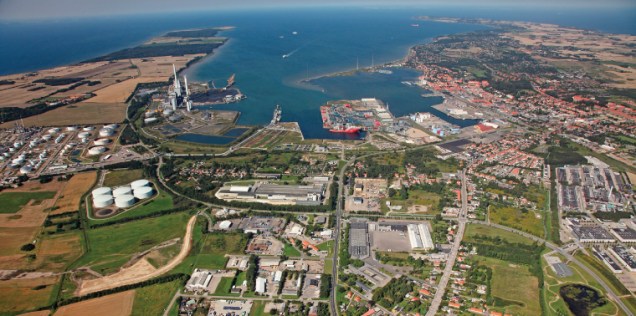
DONG Energy and Bigadan is to build a large-scale biogas plant that will reuse residues from the production facilities of Novozymes and Novo Nordisk in Kalundborg on Zealand. The four companies have just signed an agreement which, from spring 2018, will carry yet another significant contribution to the Danish production of green energy from biogas. The new biogas plant in Kalundborg will convert residues from the factories of Novozymes and Novo Nordisk in Kalundborg to bio natural gas which can be fed directly into the Danish natural gas grid.
EU Parliament votes to ban the use of palm oil in biofuels

The European Union should introduce a single certification scheme for palm oil entering the EU market and phase out the use of vegetable oils that drive deforestation by 2020 to counter the impact of unsustainable palm oil production, such as deforestation and habitat degradation, particularly in South-East Asia. This is what said MEPs in a resolution voted last week.
Butamax Advanced Biofuels acquires Nesika Energy to expand the bio-isobutanol business
 Butamax Advanced Biofuels LLC, a 50/50 joint venture between BP and DuPont, combining expertise in fuels with industrial biotechnology, announced the acquisition of Nesika Energy, LLC and its state-of-the-art ethanol facility in Scandia, Kansas. Butamax will now start the detailed engineering work to add bio-isobutanol capacity to the facility, while continuing to produce ethanol before and after adding this capacity.
UK ETI launched a new project to make bioenergy cheaper and more efficient
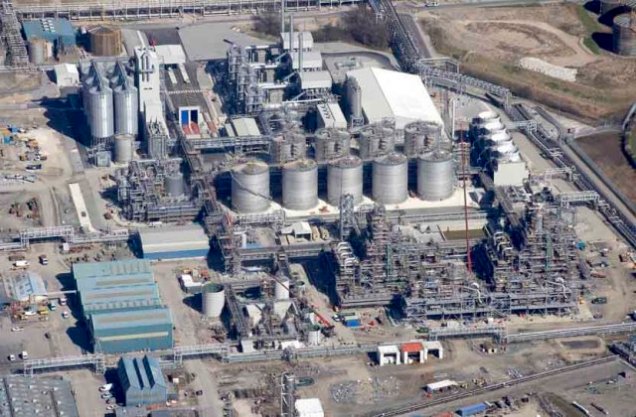
The Energy Technologies Institute (ETI), a public-private partnership between global energy and engineering companies and the UK Government. launched a new biomass feedstock improvement process project which aims to show how the removal of impurities and contaminated material from sustainable biomass could make bioenergy cheaper and more efficient, consequently delivering better greenhouse gas savings.
 IL BIOECONOMISTA