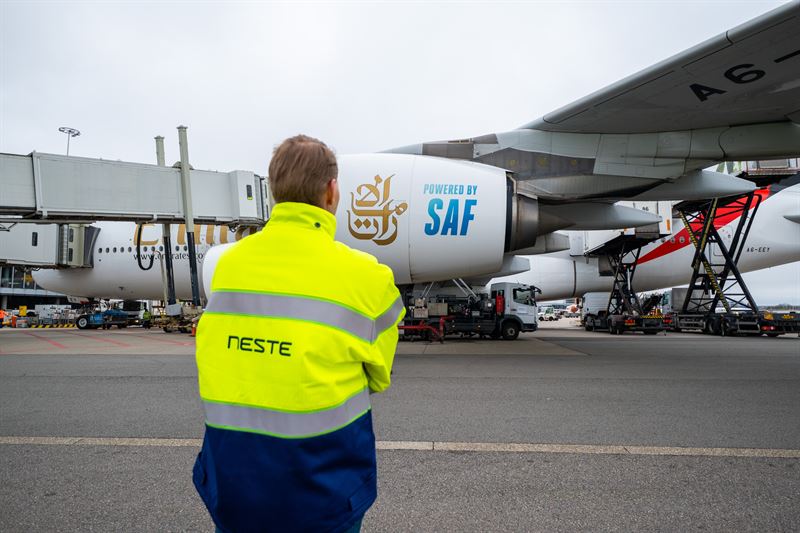
Photo: Emirates A380 refueling at Amsterdam Airport Schiphol. Source: Emirates
Neste has started supplying sustainable aviation fuel (SAF) to Emirates at Amsterdam Airport Schiphol, expanding the partnership the two companies announced in October last year. Over 6,000 tons (2 million gallons) of blended SAF will be supplied into the fueling system at Amsterdam Airport Schiphol over the course of 2024.
Eni, a global energy company, Fincantieri, one of the world’s largest shipbuilding groups, the only one active in all high-tech marine industry sectors, and RINA, a multinational inspection, certification, and engineering consultancy, have signed an agreement to develop joint initiatives for the energy transition. The partnership formalises the commitment to develop joint projects, in line with the partners’ strategies, to decarbonise the maritime sector in the medium to long term with the goal of Net Zero by 2050. Additionally, the establishment of a permanent global observatory regarding future technological, regulatory, and market developments will be evaluated.
TotalEnergis Corbion is a global technology leader in Poly Lactic Acid (PLA) and lactide monomers.
Together with TotalEnergies Corbion, Korean water producer Sansu is developing an embossed label water bottle made of Luminy® PLA bioplastics to speed adoption of recycled PLA as feedstock. This innovation is set to revolutionize recycled PLA production processes – both companies claim – marking a significant leap towards a more sustainable future.
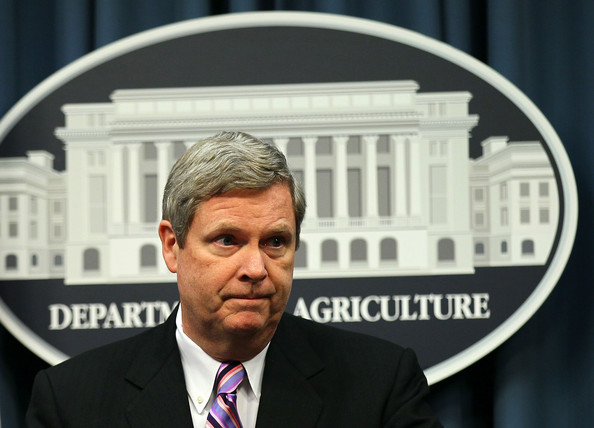
The U.S. Department of Agriculture (USDA) honored last 8 March the second annual National Biobased Products Day, a celebration to raise public awareness of biobased products, their benefits and their contributions to the U.S. economy and rural communities. “Bioproducts offer opportunities for more revenue streams for small and mid-sized farmers while giving consumers more in-demand, clean options for everyday items.”
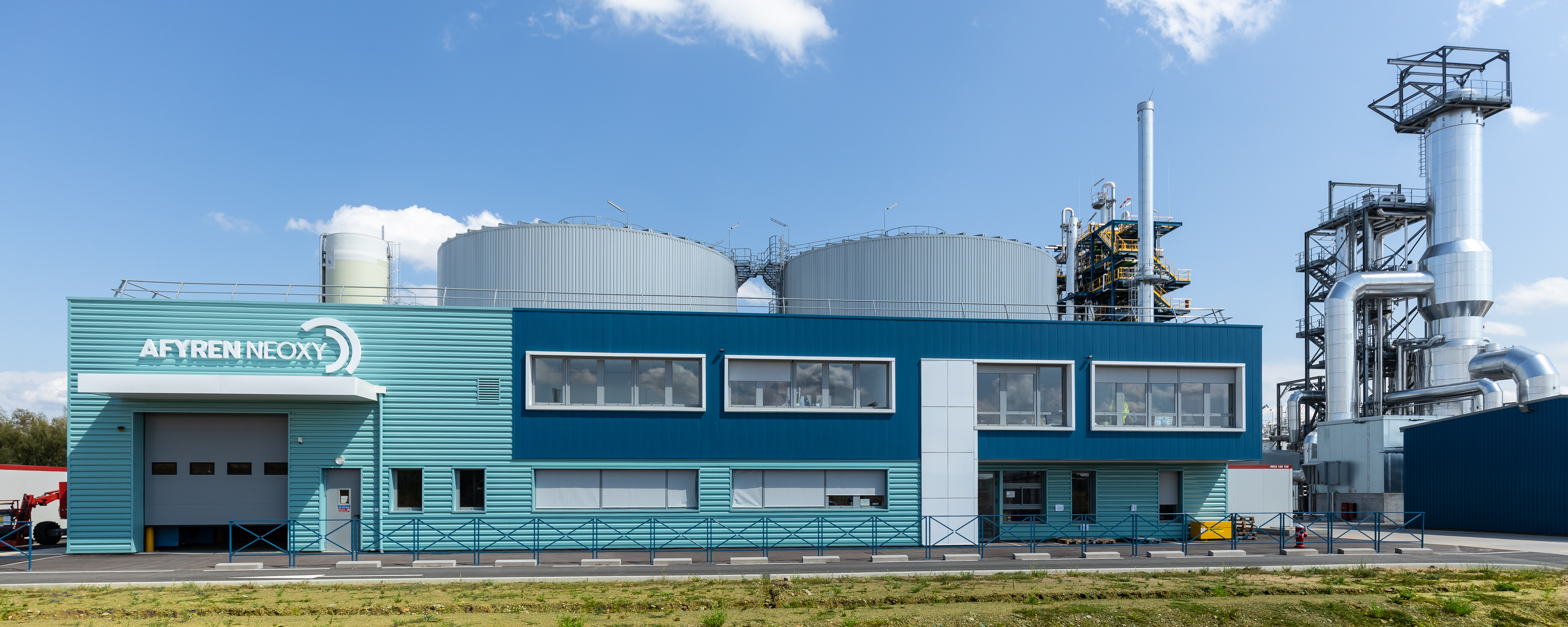
Afyren, a greentech company that offers manufacturers natural, low-carbon ingredients produced using unique fermentation technology based on a completely circular model, and Suez, a world leader in circular solutions for water and waste management, are working together on a new way of creating value from organic waste.
Equal opportunity and equal treatment in the labour market are at the core of decent work. Unfortunately, women around the world still face additional hurdles to access employment, and once in employment, to access decision-making positions and jobs in certain sectors or of certain characteristics. This horizontal and vertical gender segregation of employment, combined with the unequal distribution of unpaid work (including household and childcare activities), results in differences in working conditions such as the gender pay gap and the over-representation of women in part-time jobs.
Reims is worldwide known as the capital of Champagne, the excellent sparkling wine that is made in theChampagne region of France using the traditional method (méthode traditionnelle). Founded by the Gauls, Reims became a major city in the Roman Empire and played later a prominent ceremonial role in French monarchical history as the traditional site of the coronation of the kings of France. From 19 to 21 March Reims will be also the capital of the industrial biotechnology and bio-based economy.
Airbus and TotalEnergies signed a strategic partnership to meet the challenges of aviation decarbonization with sustainable aviation fuel. In line with the objective of achieving net carbon neutrality of aviation by 2050, this partnership aims to contribute to the reduction of the sector’s CO2 emissions, in which Sustainable Aviation Fuels (SAF) play a key role. SAF supplied by TotalEnergies – the Franch company claims – can reduce up to 90% CO2 emissions over lifecycle compared to their fossil fuel equivalent. These are biofuels produced from waste and residues from the circular economy (animal fats, used cooking oils, etc.) and “e-jets”, synthetic fuels for aviation.
“In future, I believe that regulation, consumer behaviour and sustainability will force the traditional petrochemical industry to rethink and find alternative ways to move forward.” To say it – in this exclusive interview with Il Bioeconomista – is Bertel Karlstedt, the new CEO of Circa Group, the Oslo-headquartered biochemical company, which is listed on Euronext.




 IL BIOECONOMISTA