One of the most crucial problems affecting the world today is the scarcity of potable water. In a bid to make clean water available at low cost, Ramakrishna Mallampati, a PhD candidate at the National University of Singapore (NUS), experimented with water treatment techniques using materials that are easily available, and came up with novel ways to purify water using the peels of apples and tomatoes. This is the first time that the peels of the two fruits have been used to remove different types of pollutants in water.
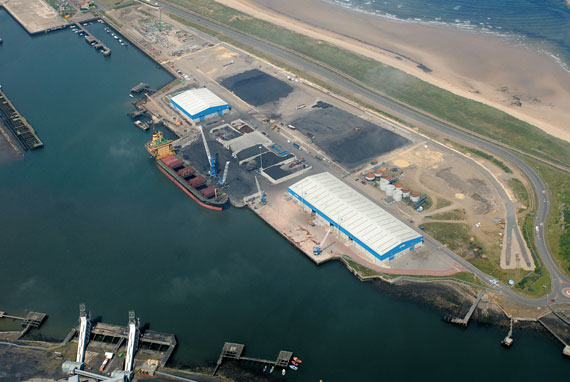
Computer-generated aerial view of the North Blyth biomass power station
North Blyth Energy Ltd has been given permission to build the 100mw plant at Battleship Wharf, Blyth Harbour. Parent company RES, leading British renewable energy company, said the project would provide “significant investment” and jobs in the area. Once operational the 100mw power station will be able to generate low carbon electricity to power the equivalent of over 170,000 UK households every year using sustainably sourced wood-based fuel.
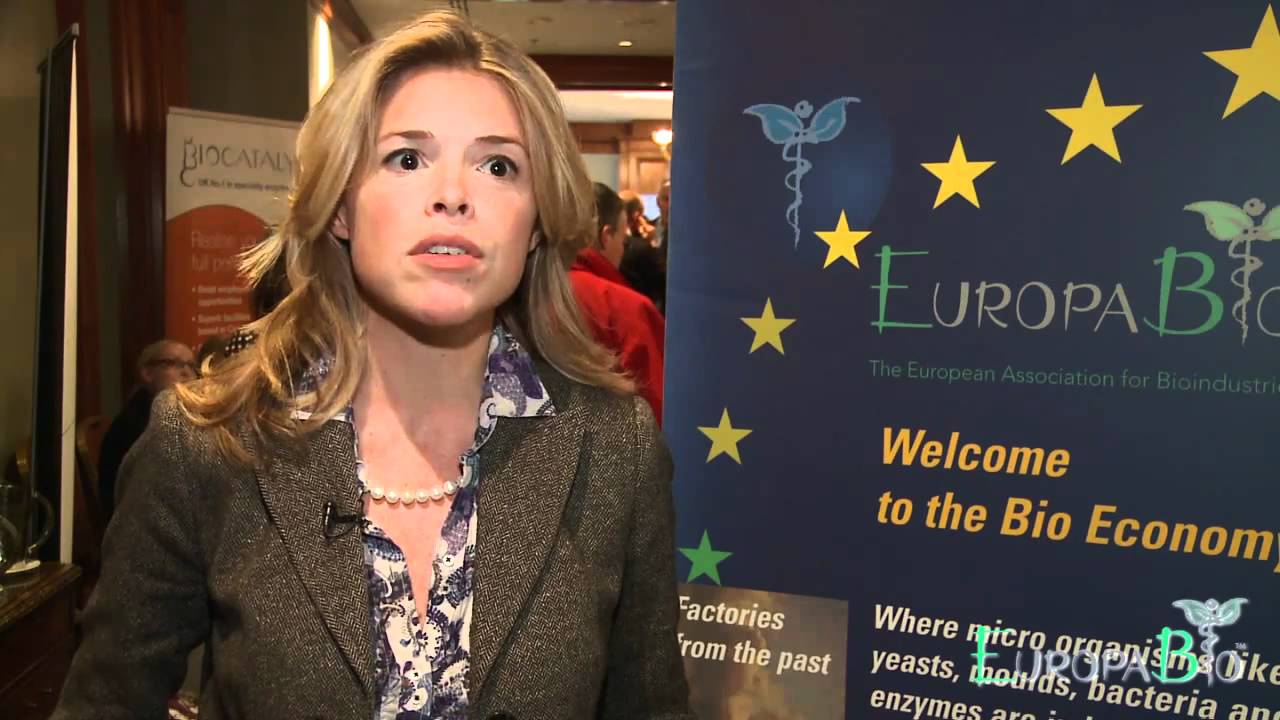
“We believe that EFIB (European Forum for Industrial Biotechnology and Bio-based Economy, editor’s note), taking place during the first European Biotech Week, contributes to increase the awareness of Europeans to the bioeconomy.” To say it is Nathalie Moll, Secretary General of EuropaBio, The European Association for Bioindustries, one of the organizers, with Smithers Rapra, of the event which will be held in Brussels from 30 September to 2 October. In this interview with Il Bioeconomista, Moll talks about EFIB – “a single platform for European business leaders, innovators and policymakers to meet, discuss and shape the future of the bioeconomy” – and the latest development of European Bioeconomy, focusing on the Public Private Partnership for Biobased industries (Bridge), “a multisector initiative whose vision is that of a society and economy which increasingly makes everyday products, such as food, feed, textiles, chemicals and fuels, from locally sourced biomass and wastes, rather than from fossil fuels.”
Alaska Airlines, a subsidiary of Alaska Air Group, and Hawaii BioEnergy LLC announced yesterday they have signed an agreement for the carrier to purchase sustainable biofuel for its aircraft. Founded in 2006, Hawaii BioEnergy is a consortium of three of Hawaii’s largest landowners (Kamehameha Schools, Grove Farm Company Inc., and Maui Land & Pineapple Inc.) and three venture capital companies who plan to use locally grown feedstocks to produce biofuels.
Europe’s first multi-purpose fermentation plant for the continuous production of bio-based chemicals has been recently inaugurated in Leuna, Saxony-Anhalt (Germany). Built at a cost of around 20 million euros, the facility will enable the German multinational conglomerate corporation ThyssenKrupp, one of the world’s largest steel producers (more than 43 billion euros in revenue), to further expand its research and development activities in the area of biochemicals based on renewable raw materials.
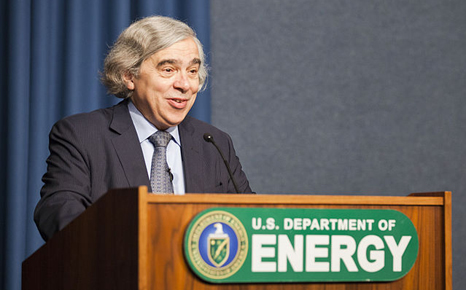
Building on President Obama’s plan to cut carbon pollution, the Energy Department announced last Tuesday four research and development projects to bring next generation biofuels on line faster and drive down the cost of producing gasoline, diesel and jet fuels from biomass. The projects – located in Oklahoma, Tennessee, Utah and Wisconsin – represent a $13 million Energy Department investment.
David Newman, Secretary General of Assobioplastiche
Marine litter caused by plastic bags is threatening the oceans and causing already an ecological disaster . The European Commission is pushing for an ambitious resource efficiency agenda and is struggling to reduce landfills and enforce waste prevention across all Member States. Europe is a leader in the bioeconomy. What do all these facts have in common? More than we think. Italy demonstrated to the world that substituting traditional plastic bags with reusable and biodegradable and compostable ones can be, even at times of crisis, a solution to trigger separate collection rates, enhance waste prevention and unleash new investments in ground breaking technologies. We discussed the Italian case study and the recent reaction of UK against the Italian ban on plastic bags recently reported by several UK media with David Newman, Secretary General of Assobioplastiche, the Italian Bioplastic and Biodegradable and Compostable material Association.
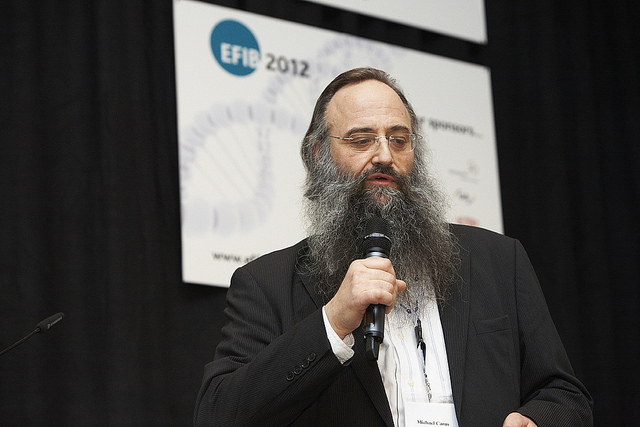
Michael Carus, managing director of the nova-Institut
Food or non-food: Which agricultural feedstocks are best for industrial uses? This is the title of the new paper published by the German nova-Institut led by Michael Carus, who is one of the author, together with Lara Dammer. In less than ten pages the two authors analyze one of the most controversial issues of the bioeconomy, also underlined by the recent decision of the European Parliament’s environment committee to limit the share of food-based biofuel used in cars and trucks to 5.5% of the total consumption. Continue reading →
National Prawn Company (NPC) of Saudi Arabia and German firm Basf have agreed to collaborate in the field of algae technology. “The signed contract is marking once more the ability of Saudi Companies to be equal partners with World Class enterprises like Basf. It also shows that we are capable of offering solutions for domestic and global needs,” said NPC’s chairman Sulaiman Bin Abdul Aziz Al Rajhi.
The European Parliament’s environment committee voted last Thursday in favor of limiting the share of food-based biofuel used in cars and trucks to 5.5% of total consumption. It said the change would address concerns that biofuels of this kind are raising food prices and may not be as environmentally beneficial as originally hoped. However, it means that to meet its 2020 mandate that 10% of Europe’s transport energy comes from renewable sources, the bloc will be relying on a much-faster expansion of electric cars and commercially unproven biofuels made from nonfood crops.






 IL BIOECONOMISTA