VTT Technical Research Center’s headquarter in Tampere
We receive and publish with pleasure this contribution sent by professor Olli Dahl (Aalto University, Finland), who presents a list of all the main investments and their products in Finnish bioeconomy, and considers whether the country’s forest resources can cope with so much new potential capacity in the forest industry sector.
“The Ipo (Initial public offering, editor’s note) of Versalis is not yet in Eni’s plans”, Massimo Mondazzi, CFO of the Italian oil giant, said last Friday during a conference call with analysts answering the question about the chemical quotation hypothesis. “We want to maintain and strengthen Versalis, there are no Ipo projects. The option is not in the plans,” he said.
“We simply have no choice. We have to massively scale up bioenergy, and do it fast”, said Paolo Frankl, Head of the Renewable Energy Division at the International Energy Agency (IEA). “Sustainable bioenergy is an indispensable component of the necessary portfolio of low-carbon technologies in ALL climate-change mitigation scenarios”, said Frankl, based on the findings of a key upcoming report on the matter. “And there is a major, major gap between what we need and what is happening today in terms of the speed of deployment and the scale of investments in bioenergy”. The declarations were made as part of the Biofuture Summit, the first major conference of the Biofuture Platform, a coalition of twenty country governments, industry and the research community launched in November 2016 during UNFCCC COP23 in Marrakesh, aimed at the development of a modern, sustainable, low-carbon bioeconomy.
Biofore Concept Car. Full rights owned by UPM. Photographer: Sami Kulju
Finnish pulp and paper giant UPM moves forward with the development of biochemicals business by evaluating the potential of building a biorefinery in the Chemical Park Frankfurt-Höchst in Germany. The new-to-the-world biorefinery would combine novel technologies and utilize sustainable wood raw material in an innovative way. This opportunity is the outcome of more than five years of extensive technology development and piloting.
Australia-based Leaf Resources has secured a license for an innovative biodegradable coating product for the packaging market. The product is based on lignin and also utilizes glycerol, two of the products that Leaf’s Glycell process will produce. According to the company, “Leaf’s Glycell process break down plant biomass at lower temperature and pressure and generate a higher yield of cellulose than conventional approaches”.
Ahead of the UN Climate Conference in Bonn, COP 23, 6-17 November, the Irish company Europe Renewables Ltd and UN Climate Change have partnered to boost the deployment of biofuels in the transport sector.
The U.S. bioeconomy moves forward (despite of Trump). The University of Arizona has received a five-year grant of up to $15 million from the U.S. Department of Agriculture’s National Institute of Food and Agriculture to lead a new center focusing on the mass production of biofuels and bioproducts in the Southwestern U.S.
Statoil, Shell and Total entered CO2 storage partnership. The three partners aims at maturing the development of carbon storage on the Norwegian continental shelf (NCS). The project is part of the Norwegian authorities’ efforts to develop full-scale carbon capture and storage in Norway.
More than 300 delegates from EU, USA, Russia, Turkey, Israel, Latin America and Canada, 40 presentations, 20 scientific posters and a round table on “The role of Shared pilot facilities in fostering the bioeconomy”. These are the numbers of IFIB, the Italian Forum on Industrial Biotechnology and Bioeconomy, which opens today to the world in Rome at Palazzo Rospigliosi.
Marco Astorri“Bio-on’s ‘mission’ is to contribute to the protection of ecosystems and natural resources management in an integrated approach, environmentally, economically, socially, technically sustainable”. Marco Astorri, founder and CEO of Bio-on, one of the most dynamic and innovative biotech companies in Europe, talks to Il Bioeconomista. In this long and exclusive interview, the CEO of Bio-on talks about the bioeconomy, the bioplastics and the next steps of the company headquartered in Bologna. “It is necessary – he states – to make a step forward to more circular processes where wastes and co-products of already existing production systems could become raw materials of innovative industrial processes, obtaining added values, reducing emissions and requiring as less oil as possible.”


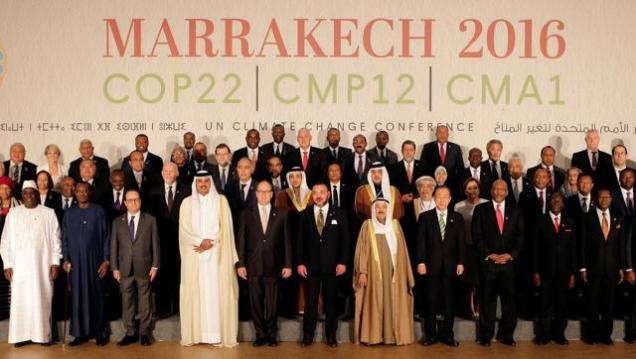 Ahead of the UN Climate Conference in Bonn, COP 23, 6-17 November, the Irish company Europe Renewables Ltd and UN Climate Change have partnered to boost the deployment of biofuels in the transport sector.
 The U.S. bioeconomy moves forward (despite of Trump). The University of Arizona has received a five-year grant of up to $15 million from the U.S. Department of Agriculture’s National Institute of Food and Agriculture to lead a new center focusing on the mass production of biofuels and bioproducts in the Southwestern U.S.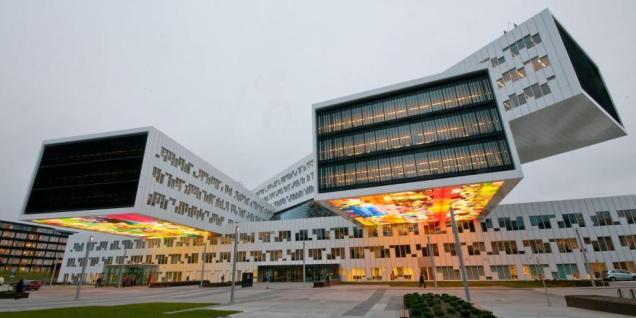
 More than 300 delegates from EU, USA, Russia, Turkey, Israel, Latin America and Canada, 40 presentations, 20 scientific posters and a round table on “The role of Shared pilot facilities in fostering the bioeconomy”. These are the numbers of IFIB, the Italian Forum on Industrial Biotechnology and Bioeconomy, which opens today to the world in Rome at Palazzo Rospigliosi.
 IL BIOECONOMISTA