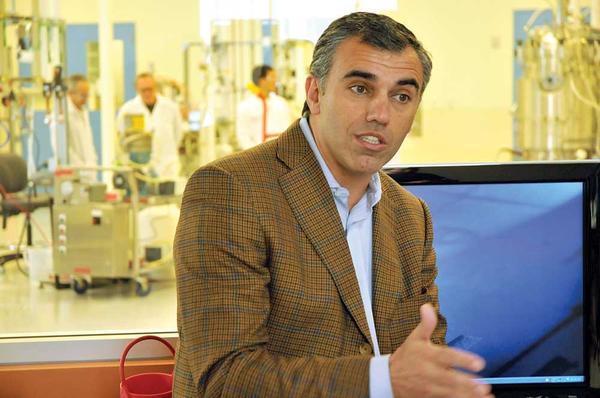
Christian Kemp Griffin, Ceo of CelluComp: “Investments should be made in the bioeconomy because it is the future”

Christian Kemp-Griffin, Ceo of CelluComp

“Investments should be made in the bioeconomy because it is the future. Although it is still in the early years of development, there is little doubt that this area will become important.” To say it, in this exclusive interview with Il Bioeconomista, is Christian Kemp Griffin, executive director and Ceo of CelluComp, a dynamic material science company based in Scotland that develops high performance products based on sustainable resources. With Kemp-Griffin we talk about CelluComp and the development of the bioeconomy.

Interview by Mario Bonaccorso

Continue reading

Leaders of Sustainable Biofuels: It’s time to act quickly to decarbonise the EU transport sector

The Mossi Ghisolfi Biorefinery in Crescentino, Italy

“It is time to act quickly and in a targeted manner in order to ensure the much needed decarbonisation of the European transport sector”. To say it is Piero Cavigliasso, director public affairs Biochemtex (Mossi Ghisolfi Group) and president of the Leaders of Sustainable Biofuels, an European group which brings together big companies such as Clariant, UPM, British Airways and Dong Energy

“Our companies – Cavigliasso writes in an note – re-confirm the willingness to further deploy and supply the most innovative technologies to produce advanced biofuels from currently unused, underutilized or otherwise wasted raw materials in order to contribute to the EU objectives outlined in the strategy (European Strategy for Low Emission Mobility, published by the European Commission last 20 July, editor’s note).”

Continue reading

The bioplastic developed by Bio-on is now available in the database “Materials Library”

The Library in New York

The cutting-edge bio-plastic Minerv-PHA developed by Bio-on is now available in the prestigious database “Materials Library” of Material ConneXion, the world’s largest resource for innovative and sustainable materials and processes. This resource, both as a physical samples library and an online searchable database, with thousands of references, aims to collect only the most interesting materials from the point of view of innovation, technical characteristics and possible application.

Continue reading

Tom Vilsack: “The bioeconomy is a catalyst for economic development in rural America”

Tom Vilsack, US Agriculture Secretary

Agriculture Secretary Tom Vilsack last Monday announced that the U.S. Department of Agriculture (USDA) is seeking applications for funding to help support the development of advanced biofuels, renewable chemicals and biobased products.
“The bioeconomy is a catalyst for economic development in rural America, creating new jobs and providing new markets for farmers and ranchers,” Vilsack said. “Investing in the businesses and technologies that support the production of biofuels and biobased products is not only good for farm incomes. The whole economy benefits from a more balanced, diversified and consumer-friendly energy portfolio, less dependence on foreign oil and reduced carbon emissions.”

Continue reading

Cellulac formally requests Metabolix shareholders to consider merger proposal

Cellulac yesterday formally requested Metabolix shareholders to consider merger proposal. Cellulac plc is an industrial biochemicals investment technology company, that have been interested in Metabolix Inc., ($MBLX) for some time and after their announcement, in May 2016, of a strategic review, Cellulac made a formal proposal via the CEO to merge both companies.

Continue reading

An interview with John Melo, Ceo of Amyris: “What’s good for the planet should be good for business and we are making this a reality”

John Melo, President & Ceo of Amyris

“I expect 30% of jet fuel to be renewable by 2030 and we hope to have at least 1/3 of this market share”. John Melo talks to Il Bioeconomista. In this exclusive interview the President & Ceo of Amyris, the California-based company which has been named the #1 company in the 50 Hottest Companies in the Advanced Bioeconomy (“Hot 50”) contest, talks about his company and the bioeconomy, the role played by the U.S. government and the public opinion. “To me – Melo says – ecology and economy must go together. Producing less CO2 emissions should cost less, not more. When this happens ecology and climate are working in the same direction. What’s good for the planet should be good for business and we are making this a reality”.

Interview by Mario Bonaccorso

Continue reading

Basf and Linde complete pilot project at National Carbon Capture Center in Alabama

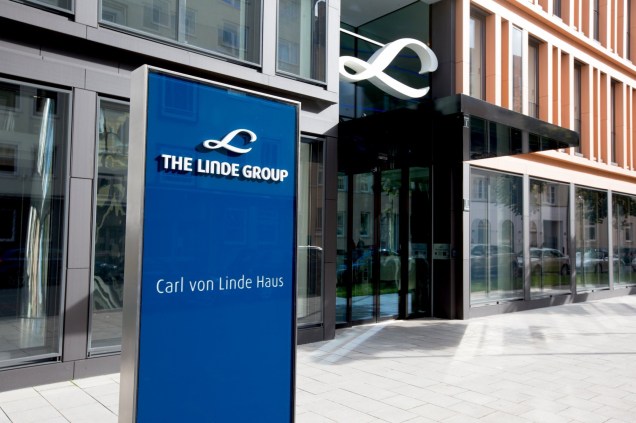
Linde AG Head Office, Munich, Germany Exterior of Carl von Linde Haus, Klosterhofstrasse 1
Linde AG Head Office, Munich, Germany
Exterior of Carl von Linde Haus, Klosterhofstrasse 1

German chemical colossus Basf and The Linde Group, one of the leading gases and engineering companies in the world, successfully completed a joint pilot project to improve capture of carbon dioxide (CO2) from flue gas at a coal fired power plant at the National Carbon Capture Center (NCCC). The NCCC is a U.S. Department of Energy (DOE) research facility managed and operated by Southern Company, in Wilsonville, Alabama. Since January 2015, the project operated a pilot plant under a cooperative agreement with DOE’s National Energy Technology Laboratory (NETL). Based on the successful completion, Basf and Linde will begin larger-scale testing and explore commercial opportunities.

Continue reading

Tim Dummer, VP Rennovia: The industry will migrate to widespread adoption of bioproducts

Tim Dummer, VP Commercialization Rennovia

“With equivalent performance and equivalent costs we anticipate that the industry will migrate to widespread adoption of these bio-based products over time (similar to previous industry shifts to more competitive petro-derived processes)”. To say it, in this exclusive interview with Il Bioeconomista, is Tim Dummer, VP Commercialization at Rennovia, a specialty chemical company focused on the creation of novel processes for the cost advantaged production of chemicals from renewable feedstocks. Rennovia led by Robert Wedinger and based in Santa Clara, California, is developing processes for the production of biobased glucaric acid, adipic acid, 1,6-hexanediol, hexamethylenediamine (HMD), and other important building blocks for a wide range of functional materials. With Dummer we talk about Rennovia and the future of the chemical industry.

Interview by Mario Bonaccorso

Continue reading

Ford and Jose Cuervo use tequila producer’s plant byproduct to develop bioplastics

Ford Motor Company is teaming up with Jose Cuervo® to explore the use of the tequila producer’s agave plant byproduct to develop more sustainable bioplastics to employ in Ford vehicles.
Ford and Jose Cuervo are testing the bioplastic for use in vehicle interior and exterior components such as wiring harnesses, HVAC units and storage bins. Initial assessments suggest the material holds great promise due to its durability and aesthetic qualities. Success in developing a sustainable composite could reduce vehicle weight and lower energy consumption, while paring the use of petrochemicals and the impact of vehicle production on the environment.

Continue reading

The South African Airways Group operated Africa’s first sustainable biofuel flights

SAA planeThe South African Airways Group (SAA) last Friday operated Africa’s first sustainable biofuel flights. The flights on Boeing 737-800s between Johannesburg and Cape Town made history as  the first sustainable biofuel flights to have taken place on the African continent. They used home-grown feedstock from the Marble Hall area in the Limpopo region of South Africa as part of Project Solaris, a biofuels project named after the energy tobacco plant used (a technology made in Italy). The nicotine-free, hybridised tobacco plant lends itself to the production of biofuel as the Solaris plant produces small leaves and prodigious flowers and seeds that are crushed to extract a vegetable crude oil. The Solaris plant is ideally suited for this purpose as the remaining seedcake is used as a high protein animal feed supplement that also contributes to food security.

Continue reading