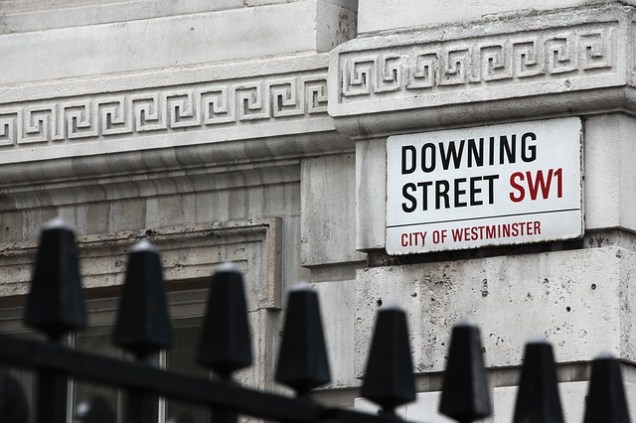
UK is finally on board. The government led by Theresa May launched last week the National Bioeconomy Strategy “Growing the Bioeconomy. Improving lives and strengthening our economy: A National Bioeconomy strategy to 2030”.

UK is finally on board. The government led by Theresa May launched last week the National Bioeconomy Strategy “Growing the Bioeconomy. Improving lives and strengthening our economy: A National Bioeconomy strategy to 2030”.

Our readers have voted: the most innovative bioeconomy CEO 2018 is Jürgen Eck, CEO of BRAIN AG, the industrial biotech company headquartered in Zwingenberg (Germany) which is developing innovative solutions and products for successful applications in chemistry and in the cosmetics and food industries.. He succeeds to Ken Richards (Leaf Resources) and Tony Duncan (Circa Group), respectively most innovative CEO 2016 and 2017, both from Australia.

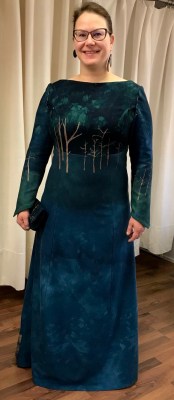
Today is the Independency Day of Finland. And the bioeconomy is one of the protagonists of the celebration: Marisanna Jarva, member of Finnish parliament is dressing on Arbron™, a highly processed and ecologically produced textile fiber raw material that is designed by Finnish company KaiCell Fibers to fulfil the fiber demand in the growing textile industry.
The bioeconomy is innovation, the result of the skills and passion of researchers and managers able to create value and new high-qualified jobs. At the end of 2014 Il Bioeconomista launched a new initiative: The 10 Most Innovative Bioeconomy CEOs.
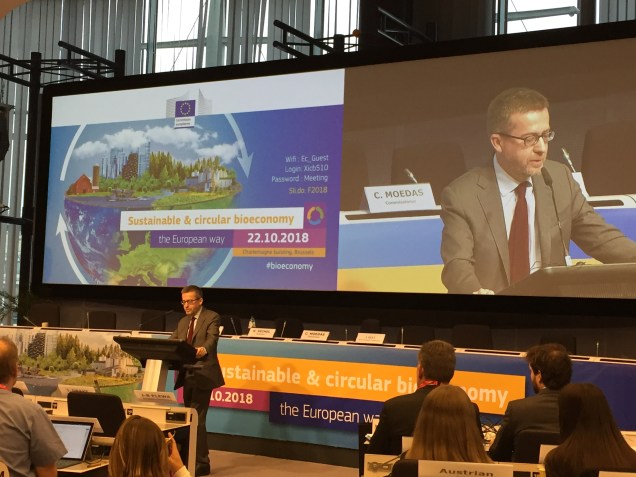
We have asked a panel of world bioeconomy experts to tell us the Chief Executive Officers that have stood out as the most innovative during the last year.
Now we ask you to choose the most innovative CEO responding to our survey (open till December 8 at 2 pm, Western European Time).
The most innovative CEO 2016 was Ken Richards (CEO of Leaf Resources)
The most innovative CEO 2017 was Tony Duncan (CEO of Circa Group)
This is the result in 2018 (in alphabetical order)
Catia Bastioli, Novamont (Italy)
Vincent Chornet, Enerkem (Canada)
Veronique de Bruijn, Photanol (Netherlands)
Marc Delcourt, Global Bioenergies (France)
Jürgen Eck, BRAIN AG (Germany)
Jennifer Holmgren, LanzaTech (New Zealand-USA)
E. James Macias, Fulcrum Bioenergy (USA)
David Sudolsky, Anellotech (USA)
Sean Sutcliff, Green Biologics (UK)
Stéfanie Triau, Bioserie (Hong Kong)

The U.S. Environmental Protection Agency granted oil major Chevron Corp a 2017 hardship waiver from U.S. biofuel laws for its Utah refinery earlier this year, according to a source familiar with the company’s operations. This is what the International press agency Reuters makes known.

There is a new initiative in the European bioeconomy. The universities of Hohenheim (Germany), Bologna (Italy), Eastern Finland (Finland), AgroParisTech (France), BOKU Vienna (Austria) and Wageningen University and Research (Netherlands), some of leading European universities in the field of the bioeconomy, are planning to join forces in research, teaching/education, and innovation in this subject area.
Yesterday, in an event under the umbrella of the Austrian EU-presidency, the “FTP (Forest-based Sector Technology Platform) Vision 2040 of the European Forest-based Sector” was launched. The venue, the very prestigious Marmorsaal in the premises of the Federal Austrian Ministry of Sustainability and Tourism, was fully packed with representatives from some 20 European countries.
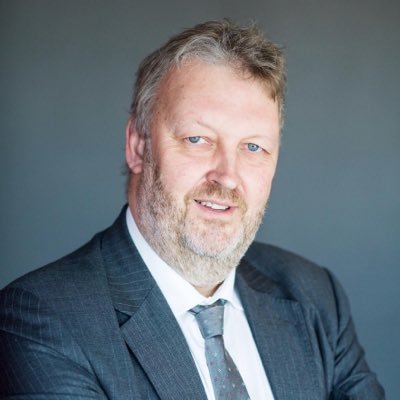
“The Bio-based industry grows really strong in confidence. In just a few years, it moved mountains by creating new value chains. This means new partnerships between sectors that never worked together before”. Dirk Carrez, executive director of BIC, which represents the private sector in a Public-Private Partnership (PPP) with the European Commission, also known as the Bio-based Industries Joint Undertaking (BBI JU), talks to Il Bioeconomista. In this long interview with us he talks about the main achievements of the bio-based industry in Europe and its new vision 2050. “Only with a renewed BBI JU will we be able to effectively work towards realising the Circular Bio-Society”, he says.
Interview by Mario Bonaccorso

Italian bioplastics company Bio-on signed today an agreement with the Russian TAIF JSC group, which will acquire a license to build the Russian Federation’s first plant producing 100% natural and biodegradable PHAs bioplastic, in the Republic of Tatarstan.

“We need to put emphasis in ensuring that the areas and actions identified in the new Bioeconomy Strategy are strategically integrated in other European policies and Programmes to ensure coherence, scale and synergies; CAP; Industrial Policy, European Investment Bank portfolio, Strategic Partnership for the Implementation of the Paris Agreement, etc.” To say it – in this exclusive interview with Il Bioeconomista – is Marc Palahí, director at the European Forest Institute. He talks with us, on his way to China, just after the publication of the updated EU bioeconomy strategy.
Interview by Mario Bonaccorso