U.S. environmental group the League of Conservation Voters launched a $2 million campaign to press this year’s candidates for state and local office to embrace clean energy, citing a lack of leadership on the issue in Washington.
According to the International press agency Reuters, the effort seeks to tap into increasing local-level leadership on climate change since President Donald Trump took office on a vow to roll back environmental regulation and promote fossil fuels production.
The marine biotechnology is high on the political agenda. Around 70 experts, company representatives and policy makers met at the European Parliament on March 21 to discuss what is needed for a successful European blue bioeconomy. The debate at the fully booked event revealed: the potential of the oceans is uncontested among experts, but its exploration requires close cooperation and knowledge sharing, a strong focus on sustainability, political commitment and finally, investor and consumer enthusiasm.
The Bio-based Industries Consortium (BIC), the private partner in the Bio-based Industries Joint Undertaking (BBI JU), has published three new Country Reports mapping the potential and identifying opportunities for expanding the bio-based industry in Poland, Portugal and Romania.
“Europe is becoming a very attractive area to invest in bio-based Industries: where BIC members were announcing a portfolio of 2bn euros investment in 2014 the same survey announced 5 bn euros investments in 2017”. To say it – in this long, exclusive interview with Il Bioeconomista – is Philippe Mengal, executive director of the BBI JU. The Bio-Based Industries Joint Undertaking is a €3.7 billion Public-Private Partnership between the EU and the Bio-based Industries Consortium. Operating under Horizon 2020, it is driven by the Vision and Strategic Innovation and Research Agenda (SIRA) developed by the industry
According to Mengal, “The next decade is a critical period for the EU. We need to reinvent our economy to face the challenges of climate change and resource constraints. Europe is committed to excelling in smart, sustainable growth and mobilizing investment to create new products and new markets is key”.
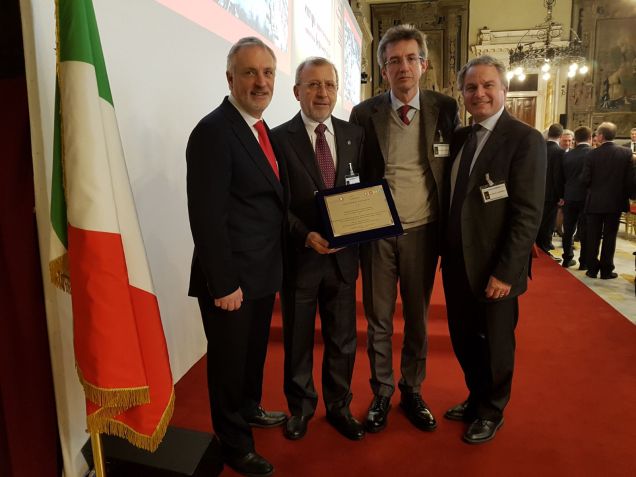
Giovanni Sannia, University of Naples Federico II, and Danilo Porro, University of Milano Bicocca, with the Prize
The master BioCirce received yesterday at the Parliament, from the President of the Italian Republic, the Italiadecide (Italy decides) prize for teaching innovation. BioCirce is the first European Master in Bioeconomy in the Circular economy. To organise it are four Italian universities from North to South (University of Turin, University of Milan Bicocca, University of Bologna and University of Naples Federico II), with the support of three of the main Italian bioeconomy players (Novamont, GFBiochemicals and Science Park of Lodi) and the Italian leading banking Group Intesa Sanpaolo, which is the only financial global partner of the Ellen McArthur Foudation.
Masdar, Abu Dhabi’s renewable energy company, signed a strategic partnership agreement with Bee’ah to develop the UAE’s waste-to-energy (WtE) sector. This partnership will help contribute to the UAE Government’s Vision 2021 which targets, among other goals, diverting waste from landfills by 75 per cent by 2021. Waste-to-energy is the process of generating energy in the form of electricity or heat from the primary treatment of waste.
Mariagiovanna Vetere at Circular Bioeconomy Arena Meeting in Milan on November 22, 2017
“With the Plastic Strategy the Commission presented an ambitious plan but it focuses only on mechanical recycling of conventional plastics and falls short in considering and evaluating the big benefits for the environment and for the ‘green’ jobs in Europe that bioplastics can provide”. Mariagiovanna Vetere, NatureWorks Public Affairs manager for Europe, talks to Il Bioeconomista.
New York City announced first-in-the-nation goal to divest from fossil fuels. Mayor Bill de Blasio, Comptroller Scott M. Stringer and other trustees of the City’s $189 Billion pension funds announced a goal to divest City funds from fossil fuel reserve owners within five years, which would make New York City the first major US pension plan to do so. In a first-in-the-nation step towards the goal of divestment, the Mayor and Comptroller will submit a joint resolution to pension fund trustees to begin analyzing ways to divest from fossil fuel owners in a responsible way that is fully consistent with fiduciary obligations. In total, the City’s five pension funds hold roughly $5 billion in the securities of over 190 fossil fuel companies. The City’s move is among the most significant divestment efforts in the world to date.
In this early 2018 it seems the main problem for Italians is the price of biodegradable bags for fruit and vegetables. Many Italians complain about the cents to buy the biodegradable bags but say nothing about toxic clouds that devastate the territory from North to South. What are we talking about for the benefit of our non-Italian readers?
Marc Palahi at the European Bioeconomy Summit in Helsinki
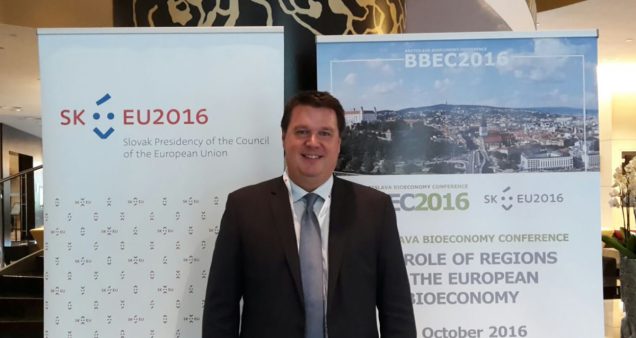
“We need an ambitious and long-term bioeconomy policy framework to enable the creation of a Bioeconomy Single Market. The framework needs to ensure predictability to investors and companies, enhance risk-taking capacity and define priority pathways to move towards a low carbon economy, where a circular bioeconomy becomes a growth engine”. Marc Palahí, director of the European Forest Institute, talks to Il Bioeconomista. In this long and exclusive interview, released after the Second edition of the European Bioeconomy Summit, he talks about the next steps which are needed to place the bioeconomy at the core of the EU industrial, climate and sustainability agenda.
 U.S. environmental group the League of Conservation Voters launched a $2 million campaign to press this year’s candidates for state and local office to embrace clean energy, citing a lack of leadership on the issue in Washington.
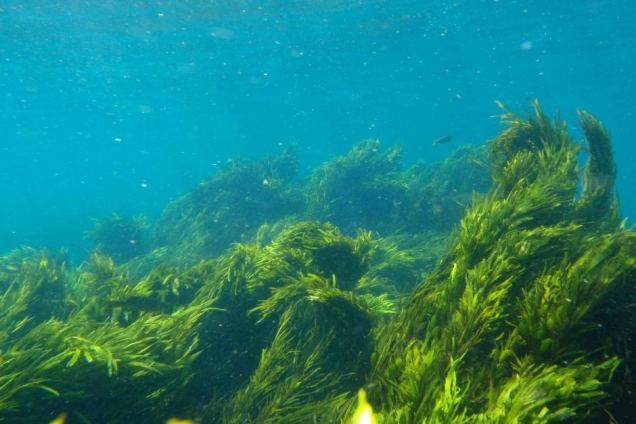 The marine biotechnology is high on the political agenda. Around 70 experts, company representatives and policy makers met at the European Parliament on March 21 to discuss what is needed for a successful European blue bioeconomy. The debate at the fully booked event revealed: the potential of the oceans is uncontested among experts, but its exploration requires close cooperation and knowledge sharing, a strong focus on sustainability, political commitment and finally, investor and consumer enthusiasm.
 Masdar, Abu Dhabi’s renewable energy company, signed a strategic partnership agreement with Bee’ah to develop the UAE’s waste-to-energy (WtE) sector. This partnership will help contribute to the UAE Government’s Vision 2021 which targets, among other goals, diverting waste from landfills by 75 per cent by 2021. Waste-to-energy is the process of generating energy in the form of electricity or heat from the primary treatment of waste.
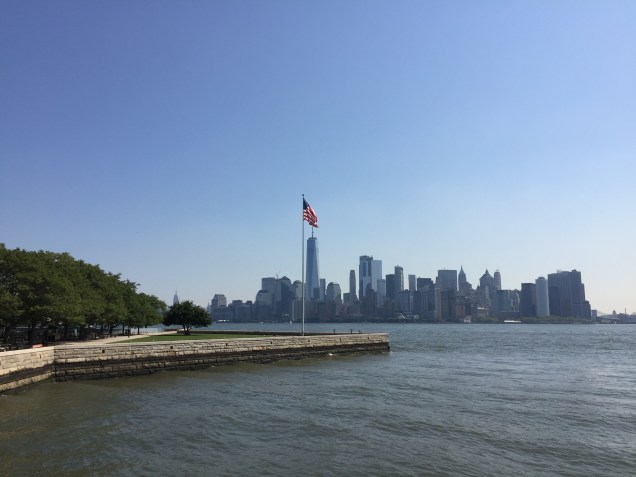 New York City announced first-in-the-nation goal to divest from fossil fuels. Mayor Bill de Blasio, Comptroller Scott M. Stringer and other trustees of the City’s $189 Billion pension funds announced a goal to divest City funds from fossil fuel reserve owners within five years, which would make New York City the first major US pension plan to do so. In a first-in-the-nation step towards the goal of divestment, the Mayor and Comptroller will submit a joint resolution to pension fund trustees to begin analyzing ways to divest from fossil fuel owners in a responsible way that is fully consistent with fiduciary obligations. In total, the City’s five pension funds hold roughly $5 billion in the securities of over 190 fossil fuel companies. The City’s move is among the most significant divestment efforts in the world to date.
 In this early 2018 it seems the main problem for Italians is the price of biodegradable bags for fruit and vegetables. Many Italians complain about the cents to buy the biodegradable bags but say nothing about toxic clouds that devastate the territory from North to South. What are we talking about for the benefit of our non-Italian readers?
 IL BIOECONOMISTA