
“We need an ambitious and long-term bioeconomy policy framework to enable the creation of a Bioeconomy Single Market. The framework needs to ensure predictability to investors and companies, enhance risk-taking capacity and define priority pathways to move towards a low carbon economy, where a circular bioeconomy becomes a growth engine”. Marc Palahí, director of the European Forest Institute, talks to Il Bioeconomista. In this long and exclusive interview, released after the Second edition of the European Bioeconomy Summit, he talks about the next steps which are needed to place the bioeconomy at the core of the EU industrial, climate and sustainability agenda.
Interview by Mario Bonaccorso
 There is a new partnership in the Italian bioeconomy. Bio-on, a leading player in the new eco-sustainable chemical industry, signed a strategic agreement with Kartell, through its parent company Felofin which takes a 2% stake in Bio-on with a 10 million euro investment.

 Our readers have voted: the most innovative bioeconomy CEO 2017 is Tony Duncan, CEO of Circa Group, the Australian company headquartered in Melbourne that is converting waste biomass into advanced biochemical materials. For the second consecutive year is the CEO of an Australian company to win the award (in 2016 was Ken Richards, CEO of Leaf Resources).
 The bioeconomy is innovation, the result of the skills and passion of researchers and managers able to create value and new high-qualified jobs. At the end of 2014 Il Bioeconomista launched a new initiative: The 10 Most Innovative Bioeconomy CEOs.
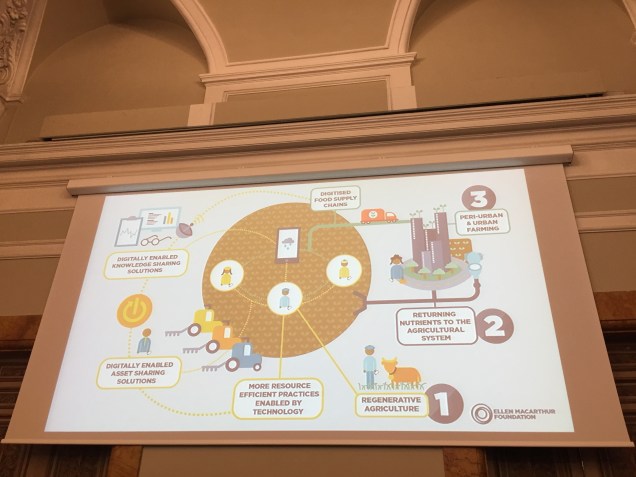
 More than 300 delegates from EU, USA, Russia, Turkey, Israel, Latin America and Canada, 40 presentations, 20 scientific posters and a round table on “The role of Shared pilot facilities in fostering the bioeconomy”. These are the numbers of IFIB, the Italian Forum on Industrial Biotechnology and Bioeconomy, which opens today to the world in Rome at Palazzo Rospigliosi.
