The 10 Most Innovative Bioeconomy Chief Executive Officers in 2016

imageThe bioeconomy is innovation, the result of the skills and passion of researchers and managers able to create value and new high-qualified jobs. At the end of 2014 Il Bioeconomista launched a new initiative: The 10 Most Innovative Bioeconomy CEOs.

We have asked a panel of world bioeconomy experts to tell us the Chief Executive Officers that have stood out as the most innovative during the last year. This year we want to engage our readers, asking you to choose the most innovative CEO responding to our survey.

This is the result in 2016 (in alphabetical order)

Continue reading

Who is afraid of the bioeconomy?

Bioeconomy every day @ BioBased World 2015 in Frankfurt am Main

There is nothing more difficult to take in hand, more perilous to conduct, or more uncertain in its success, than to take the lead in the introduction of a new order of things.

Continue reading

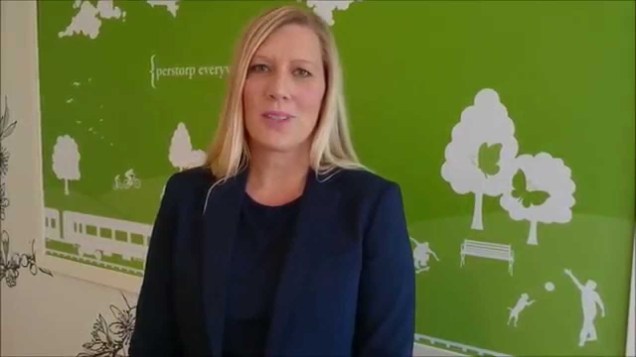
Bioplastics: Perstorp calls for action

Linda Zellner
Linda Zellner

Perstorp, a world leading specialty chemicals group headquartered in Sweden, has initiated a campaign called “Time to act” where they are launching “The Challenge”, a quiz with the aim to spread knowledge. For each person joining, Perstorp will make a donation to preserve our planet. The initiative is in line with Perstorp’s focus on sustainability and its aim to offer sustainable solutions. The motto is: No-one can do everything but everyone can do something!

Continue reading

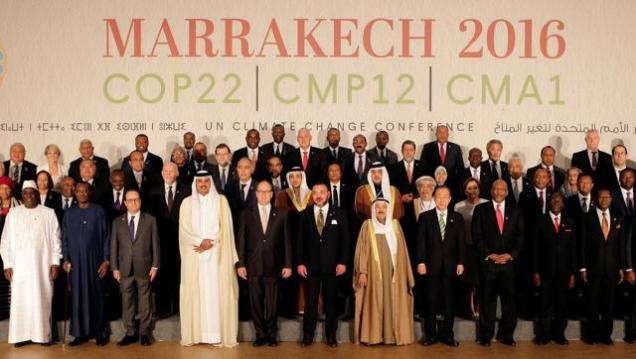
The Biofuture Platform launched at COP22 by a coalition of bioeconomy leading countries

marrakech-cop22Yesterday, at COP22, in Marrakech (Morocco), a coalition of leading countries in the clean energy and the bioeconomy fields announced the launching of the Biofuture Platform, a new collective effort to accelerate development and scale up deployment of modern sustainable low-carbon alternatives to fossil based solutions in transport fuels, industrial processes, chemicals, plastics and other sectors.
Continue reading

Novozymes broke ground for its new innovation campus in Lyngby

Peder Hold Nielsen, CEO Novozymes

Danish biotech giant Novozymes last week broke ground for its new innovation campus in Lyngby, close to the Technical University of Denmark and seven kilometers from Novozymes’ headquarters in Bagsværd.

Continue reading

Finally Italy has its own bioeconomy strategy

Paolo Bonaretti in Rimini

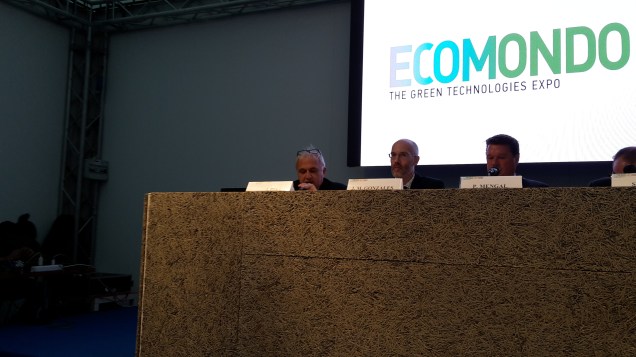
Finally Italy has its own strategy on bioeconomy. This was announced by Paolo Bonaretti, representative of the Ministry of Economic Development, last week in Rimini, Emilia Romagna Region, during an event on the bioeconomy in the Mediterranean organized within the Ecomondo Fair, with the presence, among others, of John Bell, Director for BioEconomy, DG Research & Innovation EU Commission, and Philippe Mengal, executive director of the Bio-based Industries Joint Undertaking. Good news, then, for the bioeconomy in Italy. The new strategy will be published on the web site www.agenziacoesione.gov.it starting from 20th November for an open public consultation, which will last a month.

Continue reading

Amyris launches the consumer beauty brand Biossance in Sephora’s retail stores

sephoraBiossance™, the consumer beauty brand from Amyris, Inc., the US integrated renewable products company, announced its planned launch in Sephora’s retail stores where the brand’s expansive line of high-performance skin care products will be available to consumers. The rollout to initial participating stores will begin in February 2017 and coincide with launching on Sephora online. Additional in-store and online marketing activities with Sephora to highlight the Biossance brand shortly following launch are planned.
Continue reading

Inside the Scottish bioeconomy. An interview with Roger Kilburn, CEO IBioIC Scotland

Roger Kilburn, CEO IBioIC

“Scotland has under 10% of the UK population and over 30% of the land mass giving it considerably more capacity for growing biomass as feedstock for the bioeconomy. Scotland has great research capabilities, a strong base of SMEs looking to develop its bio-capabilities and the joined up support of the government with all its agencies in developing this opportunity”. Roger Kilburn, CEO IBioIC (Industrial Biotechnology Innovation Centre) Scotland, talks to Il Bioeconomista. In this long, exclusive interview, he talks about UK and Scottish bioeconomy, the role of industrial biotechnology and Brexit. “The fundamental reasons for developing the bioeconomy – he says – are the positive impact it has on sustainability, the environment and the ability to produce new and improved materials. None of these fundamentals are affected by Brexit”.

Interview by Mario Bonaccorso

Continue reading

From Bratislava: there is no EU bioeconomy without regions

John Bell, EU Commission, in Bratislava

Another brick towards the European Bioeconomy, starting from regions. The European Commission together with the Slovak Presidency, and under the auspices of Standing Committee of Agricultural Research (SCAR), organised today in Bratislava a conference on the role of EU regions in developing a sustainable European Bioeconomy. The aim of the conference was “to discuss with national and regional stakeholders the new bioeconomy context for the agriculture, forestry and fisheries, the role of research and innovation to overcome the big societal challenges ahead of us and also to identify the barriers in the regions in adapting the bioeconomy strategy”.

Continue reading

Scottish IBioIC announces over £3 million of investment across six game changing projects

Scottish Exhibition and Convention Center, Glasgow

Scotland is set to create waves among the global biotechnology arena as its Industrial Biotechnology Innovation Centre (IBioIC) announces over £3 million of investment across six game changing synthetic biology projects including greener skincare products, more sustainable plastics and improvements to personalised medicine therapies.

Continue reading