SECI, the holding belonging to the Maccaferri family, launched the bioplastics project to be carried out at the San Quirico production site using the Bio-on technology. The project will be carried out by the company Sebiplast s.r.l., a controlled company of the SECI Group, in the production site where today stands the sugar factory Sadam S.p.A.
UPM Raflatac is extending its range of film face materials for the European market with a new white plant-based material that provides a sustainable alternative to fossil-based films for a wide variety of end uses. “RafBio PE White – UPM claims – performs just like standard PE film, and its excellent flexibility makes it ideal for the squeezable bottles and contoured containers that are widely used in home and personal care applications”.
Last December Tony Duncan, CEO of Circa Group, was nominated by our readers the Most Innovative Bioeconomy CEO 2017. In this long interview with Il Bioeconomista, he talks about this recognition, what is innovation, the bioeconomy and the next steps of his company.
Interview by Mario Bonaccorso
First of all, congratulations for the recognition as The Most Innovative Bioeconomy CEO 2017. What is innovation in the bioeconomy, from your point of view?
Thank you – it was certainly a surprise to be nominated, and the result is very much a confirmation of Circa’s approach and the efforts of the team over the past 9 plus years – staff, shareholders, researchers and partners!
Aaron Equipment Company in conjunction with Reich Brothers and Phoenix Equipment Corporation recently acquired the BP Verenium Biofuels plant including over 40 acres of real estate and equipment located in Jennings, LA. The group plans to first offer the plant in its entirety and then piece meal to the buying public. Consisting of a full plant made up of hundreds of individual pieces of equipment and components, the liquidation marks Aaron Equipment’s expansion into the trendy biofuels equipment market after eight decades of providing new, used and reconditioned processing equipment to other industries. The sale offers a unique opportunity to save money while getting into or extending one’s reach in the sustainable fuels game.
Mariagiovanna Vetere at Circular Bioeconomy Arena Meeting in Milan on November 22, 2017
“With the Plastic Strategy the Commission presented an ambitious plan but it focuses only on mechanical recycling of conventional plastics and falls short in considering and evaluating the big benefits for the environment and for the ‘green’ jobs in Europe that bioplastics can provide”. Mariagiovanna Vetere, NatureWorks Public Affairs manager for Europe, talks to Il Bioeconomista.
UK biotech company Ingenza has joined forces with leading universities and industrial partners to participate in the ConBioChem collaboration, a translational project focused on the development of novel platform technologies for the continuous bio-production of commodity chemicals.
Italy-based Aquafil and Californian biotech company Genomatica join forces to create sustainable caprolactam, a key ingredient to producing 100% sustainable nylon. The collaboration between the two companies aims to develop a commercially-advantageous bioprocess (Genomatica’s GENO CPL process) to make caprolactam using plant-based renewable ingredients, rather than the crude oil-derived materials traditionally used by the nylon industry.
Bio-on, Italian eco-sustainable chemical company, and Gruppo Hera, one of Italy’s main multi-utility providers, have reached an agreement for the supply of clean energy thanks to the realisation and management of a new technological-energy hub that will house a newly designed trigeneration plant. The deal was signed by Bio-on S.p.A. with Hera Servizi Energia, a subsidiary of Gruppo Hera, and will guarantee clean electric energy for the new plant producing innovative biopolymers that Bio-on is currently constructing in Castel San Pietro Terme, outside Bologna (Emilia Romagna Region).
Synvina, the joint venture between Avantium and BASF, plans to extend the pilot phase in order to optimize future commercial-scale production. The company headquartered in Amsterdam has now completed a broad feasibility assessment for commercial-scale production of FDCA (furandicarboxylic acid) in its Reference Plant intended to be built in Antwerp. FDCA is the main building block for the new polymer PEF (polyethylenefuranoate). The assessment looked at product performance, market appetite and technical process.
In this early 2018 it seems the main problem for Italians is the price of biodegradable bags for fruit and vegetables. Many Italians complain about the cents to buy the biodegradable bags but say nothing about toxic clouds that devastate the territory from North to South. What are we talking about for the benefit of our non-Italian readers?


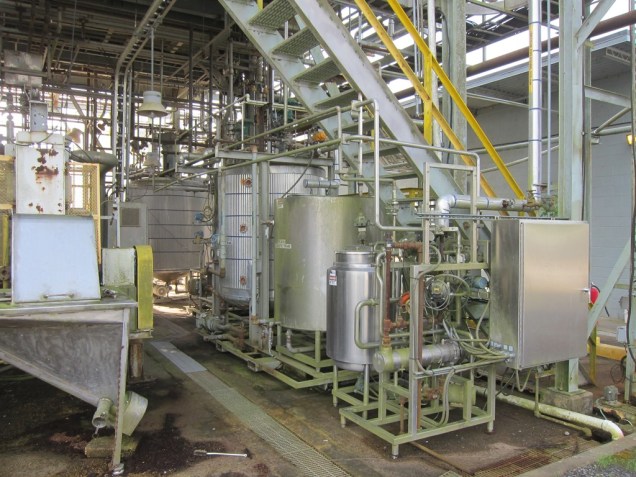 Aaron Equipment Company in conjunction with Reich Brothers and Phoenix Equipment Corporation recently acquired the BP Verenium Biofuels plant including over 40 acres of real estate and equipment located in Jennings, LA. The group plans to first offer the plant in its entirety and then piece meal to the buying public. Consisting of a full plant made up of hundreds of individual pieces of equipment and components, the liquidation marks Aaron Equipment’s expansion into the trendy biofuels equipment market after eight decades of providing new, used and reconditioned processing equipment to other industries. The sale offers a unique opportunity to save money while getting into or extending one’s reach in the sustainable fuels game.

 Italy-based Aquafil and Californian biotech company Genomatica join forces to create sustainable caprolactam, a key ingredient to producing 100% sustainable nylon. The collaboration between the two companies aims to develop a commercially-advantageous bioprocess (
 In this early 2018 it seems the main problem for Italians is the price of biodegradable bags for fruit and vegetables. Many Italians complain about the cents to buy the biodegradable bags but say nothing about toxic clouds that devastate the territory from North to South. What are we talking about for the benefit of our non-Italian readers?
 IL BIOECONOMISTA