In Ireland a multi-disciplinary research team, led by Teagasc (Agriculture and Food Development Authority), and including the Technology Centrefor Biorefining and Bioenergy (TCBB) at NUI Galway, Crop Science & Biosystems Engineering at UCD and the Environmental Sustainability & Health Institute at Dublin Institute of Technology, has been funded by a 2014 DAFM/Stimulus research grant to address how Ireland can maximise national income, exports and job creation thanks to the bioeconomy.
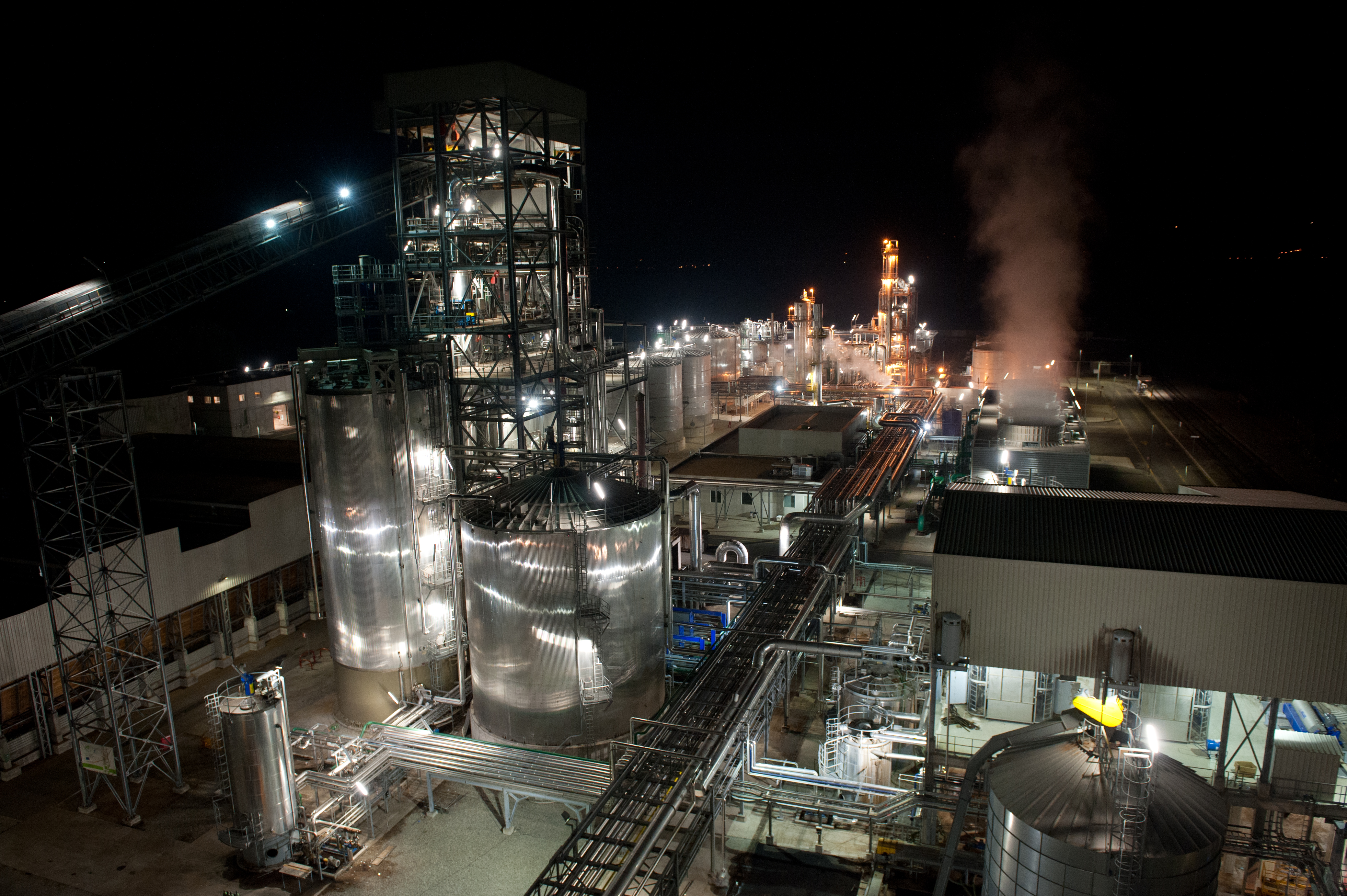
In addition to Italy, Brazil, Malaysia and China, also Slovak Republic will have a biorefinery to produce second-generation bioethanol, which will use Proesa technology developed by the Mossi Ghisolfi Group. Biochemtex and Beta Renewables signed a definitive agreement with Energochemica SE – a Slovakian chemical and power industry holding company – for the construction of a 2nd Generation Ethanol plant and the annexed Energy Block for the generation of power and steam.
Evolva Holding SA has completed the placing of all shares earmarked to satisfy certain liabilities and transaction expenses related to the Allylix acquisition, a privately held yeast fermentation company with a focus on high-value ingredients, as announced on 16 December 2014. A total of 6.1 million shares were sold between 16 and 19 December. One Swiss investment fund acquired a block of five million shares. The transaction has no impact on the number of outstanding Evolva shares.
Denmark’s Novozymes , the world’s largest enzymes producer, will stick to its plans to develop transportation fuel made from agricultural waste, despite an oil price rout that has left oil-based products cheaper for consumers. Some analysts have expressed concern that a lower crude oil price might dampen investor interest in alternatives, but Novozymes said on Thursday that it aims to provide enzymes to 15 advanced bioethanol plants by 2017, up from five, generating 1 billion Danish crowns ($165.7 million) in revenue.
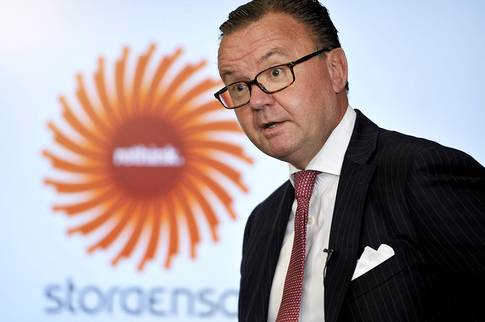
Stora Enso, the Finnish pulp and paper manufacturer, will concentrate its new biomaterials business development in an Innovation Centre that will be located in the Stockholm area in Sweden. The centre, which will open during the second quarter of 2015, will host research, application, business development, and strategic marketing. The centre will boost innovation by identifying business opportunities in the renewable materials market and linking them with leading innovation and research centres in business and academia. It will be staffed with Stora Enso employees currently working in Sweden, Finland and Germany. It will initially employ a little less than 60 people and is estimated to employ around 75 people by year end 2015. Stora Enso’s other R&D units are not affected by this change and will remain in their current locations.
“At the regulatory level, US and EU are focused primarily on biofuels and neither has created significant incentives for bio-based chemicals that play an equally important role in the bioeconomy. The US has made tremendous investments in biofuel technology development, in pilot and demonstration biofuel facilities, and in feedstock production, logistics and infrastructure. The EU appears to be investing more in the development of Bioproducts than the US at the moment.” To say it, in this exclusive interview with Il Bioeconomista, is Jennifer Holmgren, Chief Executive Officer of Lanzatech, the company, set up in 2005 in New Zealand and based now also in the US, which is revolutionizing the way the world thinks about waste carbon by treating it as an opportunity instead of a liability. LanzaTech’s novel gas-to-liquid technology has opened up vast new sources for making low-carbon chemicals and fuels that displace petroleum without the environmental concerns associated with crop- and land-based bioproducts. This flexible technology has the potential to disrupt the current highly centralized petroleum-based energy system by enabling regional production of low-cost, energy from local wastes and residues.
UPM and WWF Finland have engaged in a dialogue on the status of wood-based liquid biofuels in Finland and present a list of joint measures to be carried out to promote sustainability.
Marc Delcourt, co-founder and Ceo of Global Bioenergies
Marc Delcourt, co-founder and Chief Executive Officer of Global Bioenergies, has clear ideas: “Our aim is to take advantage of the existing infrastructures of the petrochemical industry by producing exactly the same molecules through sustainable processes. By this way, the end of oil will not mean the end of the existing industrial world”.
His company is one of the most dynamic industrial biology companies in Europe. It is developing more efficient ways to convert renewable resources such as agricultural waste, sugar and starch into chemical key building blocks and drop-in fuels, drastically decreasing C02 emissions as well as generating new jobs in rural areas.
After his scientific training (Ecole Normale Supérieure, PhD in Molecular Biology in Canada), Delcourt turns towards R&D activities in the field of bioprocesses and founds in 1997 the industrial biotech company Biométhodes. He leaves Biométhodes in 2008 to found Global Bioenergies. In this interview we talk with him about Global Bioenergies and the bioeconomy.
Biofore Concept Car premiered at the Geneva International Motor last spring. Copyright: UPM. Photographer: Sami Kulju
“Biofuels are expected to play a major role in road transport but the regulatory environment remains uncertain. Legislation is required for the EU to grow in locally produced sustainable biofuels. Therefore the rules need to extend beyond 2020. The long lasting policy processes are now creating uncertainty. Industry and investors need a stable, long term regulatory framework for biofuels”. To say this was Marko Janhunen, Vice President of Stakeholder Relations, UPM Biorefining, last Thursday in Brussels in the framework of CEPI European Paperweek, where the Finnish company presented its Biofore Concept Car, an example of how new biomaterials can be applied in the automotive industry.
Global Bioenergies, one of the few companies worldwide and the only one in Europe that is developing a process to convert renewable resources into hydrocarbons through fermentation announces having succeeded in the production of bio-sourced butadiene by direct fermentation. It is the first time ever an entirely biological production process – i.e. without any chemical step – is reported for butadiene, one of the most important petrochemical building blocks.






 IL BIOECONOMISTA